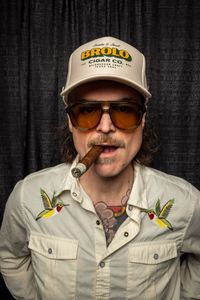
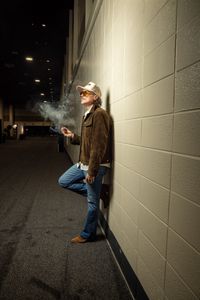
Brolo Cigars are only available through retailers. Support your local brick & mortar.

Explore "The Slow Burn"

The Slow Burn is where we write about the things that tend to surface when life gets quiet enough to notice them...friendship, struggle, craft, nostalgia, purpose, and the people we share the road with.


Sometimes cigars are the story. Sometimes it's about tobacco. Most of the time, it’s about life.

The Stephens

The Slow Burn: CallusesThe Slow Burn: Calluses
The Slow Burn: Calluses

Some things can only be learned the hard way.

As a writer, I wage a lot of wars against a blinking cursor.


I get caught somewhere between what I want to say and what I think people want to hear. And I’m beginning to believe that’s a dangerous intersection.


The Slow Burn: CurrentsThe Slow Burn: Currents
The Slow Burn: Currents
The ocean never asked where I wanted to go…it simply carried me. Life works the same way. Left unattended, our faith, health, relationships, and purpose all drift. Currents is a reflection on recognizing when we've wandered and finding the courage to swim back toward what matters most.
The Slow Burn: The Things We Love The Slow Burn: The Things We Love
The Slow Burn: The Things We Love

Beneath a Nicaraguan moon, hidden behind a mosquito net, tree frogs wage war against my sleep. Their calls echo through the jungle like ladies of the night working a truck stop, each one louder than the last. Halloween Moon Crabs scatter across the ground beneath our cabana. I have to pee...but I'm not getting out of bed. Nature can have this one.


The Slow Burn: Rearview MirrorsThe Slow Burn: Rearview Mirrors
The Slow Burn: Rearview Mirrors

We all have a collection of "if only" moments….roads not taken, mistakes we'd undo, opportunities we missed. But the longer we stare into the rearview mirror, the more likely we are to miss the blessings sitting right in front of us.

The Slow Burn: Pushing The Chips In...AgainThe Slow Burn: Pushing The Chips In...Again
The Slow Burn: Pushing The Chips In...Again

I knew a lot of people, but I wasn't truly known by anyone. That realization changed everything. What followed was addiction, recovery, reinvention, and another chance to choose the life we wanted to build.

The Slow Burn: Maroma BeachThe Slow Burn: Maroma Beach
The Slow Burn: Maroma Beach

The ocean was turquoise. The tacos were endless. Paradise was perfect. Yet all I could think about was tomorrow. Sometimes the dreams you’ve prayed for have a way of exposing what you really believe about yourself.

The Slow Burn: The Story Behind 'Back Booth'The Slow Burn: The Story Behind 'Back Booth'
The Slow Burn: The Story Behind 'Back Booth'

PSA: This is going to be a sappy post. I tried to write my way out of it, but here we are.

Born in 1983, I grew up during a strange and wonderful time to be alive.


I remember summer mornings when parents encouraged you to leave the house and didn't expect to see you again until the streetlights came on. Nobody had Ring cameras. Nobody was posting

neighborhood warnings on Facebook. We weren't worried about the "big bad wolf" down the street. We had one family phone hanging on the kitchen wall...unless your parents were absolute ballers and paid for a second phone line.


Weekends were spent at sleepovers. We'd roam the aisles of Family Video or Blockbuster looking for the perfect movie. If we got lucky, we'd stop by Little Caesars next door and grab a Bigfoot Pizza before heading back to somebody's house.


Late nights meant MTV, TRL, Beavis and Butt-Head, and Twisted Metal tournaments that felt like they carried the weight of the world. Mellon Collie and the Infinite Sadness played through cheap speakers while we argued over who cheated and who got robbed.


Then, seemingly overnight, everything changed.


Dial-up.

24k modems.

The internet exploded.


Half my childhood happened before the online world. The other half happened after it arrived. The soundtrack of my life changed from guitars and arcade machines to the sound of AOL connecting.

You know the one.


Suddenly there were chatrooms. Screen names. Endless possibilities. Every conversation started with the same question: A/S/L?


As a tweenager, I found myself staring into a world I wasn't quite ready for.

I came from humble beginnings.


My Grandpa T-Mack…better known as "Smokey" Stephens…passed away around the time I was born. My birth father was never in the picture. My birth mother was just a kid herself, carrying a responsibility no fifteen-year-old should have to carry alone.


I spent time in foster care and bounced between homes before eventually landing with my grandmother, Joyce.

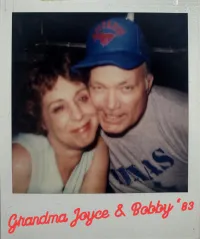
Joyce was a firecracker.


She worked at the county courthouse, where she met my grandfather. But by the time I came along, life had taken its toll. COPD. Asthma. Brain aneurysms. Most of my memories of her involve oxygen tubing and a wheelchair.


But none of that stopped her.

When she gained custody of me, she and her husband Bobby owned a little honky-tonk in East Dallas called The Junkyard Club.


To a kid, it was magic.


The place wasn't fancy. About 2,500 square feet. A full-service bar and kitchen. Cheeseburgers and fries served in hubcaps. Pool tables. Shuffleboard. An Elvira pinball machine. A Galaga cabinet tucked in the corner. Live music every Friday and Saturday night.


Grandma would bring me to the club after school while she worked the books.

I'd spend hours wearing out my wrists on Galaga while the cook fed me an endless supply of grilled cheese sandwiches. Every plate came with maraschino cherries.


The regulars all knew me.


One afternoon, an older gentleman dared me to eat a handful of jalapeños. Since Grandma didn't raise a quitter, I accepted the challenge. A few seconds later, I was sprinting through the bar screaming while tears rolled down my face. The regulars laughed. Grandma never looked up from her paperwork.


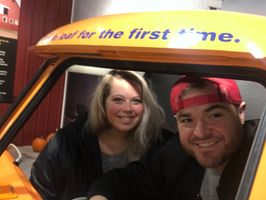
But the coolest thing in the entire place wasn't the arcade games. It was the school bus. After getting past security, you'd walk inside and immediately see it sitting on the right side of the club. A full-sized yellow school bus.


Somehow it had been disassembled, moved inside, and put back together as the centerpiece of the bar. Inside were booths and tables. But at the very front, beside the driver's seat, was The Table.


You could look out over the entire room from there.


It wasn't elevated much, but it felt like it was. To a kid, it looked important. It felt important. Like some kind of white-trash luxury suite. A little reserved sign sat on the table.


But here's what I eventually learned:

It wasn't reserved for the people with the biggest wallets.

It wasn't reserved for the loudest people.

It wasn't reserved for the owners.

It belonged to the regulars.

The people who knew everyone by name.

The ones who threw twenty dollars into the jukebox and played Creedence Clearwater Revival until everyone else was sick of hearing it.

The ones who showed up.


Again.

And again.

And again.


They had earned a seat at the table simply because they were part of the story.

Early in the evenin', just about supper time...

Down on the corner, out in the street...

Willy and the Poor Boys are playin'...


That was our place.


A place to know people and be known by them. As a kid, I didn't have the words for it. I just knew it felt different.


The smell of cigarette smoke hanging in the air.

The beer-soaked bar mats.

The sound of live music echoing through the room.

The laughter.

The conversations.

The feeling of belonging.

I felt connected.


When my grandfather died from cancer, Grandma sold the club. Eventually the building became something else. These days it's called The Lone Star Cafe. It's still there.


Back before I got sober, I'd stop by every December 21st…Joyce's birthday. I'd order her favorite drink. A margarita. No mix. Just tequila, fresh lime juice, a salted rim, and a lime wedge. Then I'd feed a few dollars into the jukebox and play CCR.


The school bus is long gone now. But when I close my eyes, I can still see it.


The band is playing. People are laughing. Someone just beat my high score on Galaga. Another guy is staring at Elvira. Pool sharks are running the tables. Sherry the bartender slides me another cup of maraschino cherries.


For a moment, life is exactly as it should be.


That's what Back Booth is about.


Back Booth is our boldest core cigar. A 5x50 Robusto wrapped in Mexican San Andrés. Medium-plus in strength. Full of character. Rich, dark, and unapologetic. My friend Austin described it as tasting like the best barbecue bark he'd ever had. Granted, he's from New York, so we'll take that review with a grain of salt.


But he wasn't wrong.


Because barbecue and cigars have a lot in common. Neither can be rushed. The best briskets aren't built in minutes. The best friendships aren't either. Both require time, patience, smoke, and a willingness to stay put longer than everyone else.


That's what the Back Booth represents.

Not exclusivity.

Not VIP status.

Not some velvet-rope version of cigar culture.

It's a seat that's available to everyone.

But it takes time to appreciate why it's special.

It's for the people who understand that the best conversations happen after everyone else has gone home.

The ones who know that community isn't built overnight.

The ones who keep showing up.

Again.

And again.

And again.

So pull up a chair.

Look out over the driver's seat.

Watch the crowd.

Catch the glow of the neon signs.

Listen as some up-and-coming band works their tail off trying to move the room.

Then take a look at the person sitting across from you.

Because moments like those don't last forever.

And that's exactly what makes them worth savoring.

So Light Up & Lean In.

Enjoy the moment because the "good 'ole days," well…you don't know you are in them until they are gone.

The Slow Burn: The Chips Are StackedThe Slow Burn: The Chips Are Stacked
The Slow Burn: The Chips Are Stacked

Growing up is learning what opportunities to say "no" to. This week, that meant walking away from a lucrative offer, embracing the uncertainty of building Brolo, and realizing that regret is far scarier than failure.

The Slow Burn: Brolo Is In ProductionThe Slow Burn: Brolo Is In Production
The Slow Burn: Brolo Is In Production

Everyone wants to know the factory, binder, and filler. We get it. But we believe great cigars are remembered for the moments they create, not the spec sheets behind them. Here's why we're choosing experience over credentials.

The Slow Burn: ConfessionalThe Slow Burn: Confessional
The Slow Burn: Confessional

I grew up around church culture, preacher’s kids, fireworks, bad decisions, addiction, and grace. Somewhere along the way, all of it found its way into a cigar called Confessional.

The Slow Burn: Financial Suicide?The Slow Burn: Financial Suicide?
The Slow Burn: Financial Suicide?

We believe great cigars shouldn’t need coattails or credentials to matter. That’s why we don’t share which factory produces our cigars. Which is what everyone told us not to do…but here we are.

The Slow Burn: The Story Behind 'Porchlight'The Slow Burn: The Story Behind 'Porchlight'
The Slow Burn: The Story Behind 'Porchlight'

Porch lights have always meant something. Long before electricity, they were candles and whale-oil lamps…small flames set just outside the home, not for decoration but for direction.


A signal in the dark saying,, you're welcome here.


As lighting evolved through the 19th and 20th centuries, porches became more than entryways…they became gathering places. Evenings stretched longer, conversations lingered, and community formed in the quiet glow of something simple left on.


Because the truth is, the world can be a dark place.


When I first went into recovery, I put cigars down completely. Not casually…intentionally. Like Pavlov's dog, I didn't trust myself. Years of bourbon collecting… ahem…drinking had wired my brain to believe cigars and alcohol were inseparable. So I walked away from both. But I didn't walk away clean. I was bitter. Restless. Angry. An "angry brother of the leaf," resenting what I couldn't have and fearing what might happen if I tried. And I let that fear drive me for a long time.


Years, if I'm being honest.


Then one night, sitting on a recovery buddy's porch, something shifted. My friend Chris handed me a cigar. He didn't know my history or the internal war I had been fighting. To him, it was just a simple act of kindness. But if you've spent any time in recovery, you know how the mind works…there's that quiet voice that creeps in, you've earned it. That's the addict brain talking. Still, I said yes.


I don't remember what cigar it was, but I remember everything else. We talked for hours into the kind of night that doesn't feel heavy, just honest. It turned into this oral slideshow of our lives…who we were, who we had become, and who, if we stayed the course, we might still become. We talked about politics and theology, about Jesus, and about the idea that addiction might not just be a behavior problem, but a worship disorder.

Somewhere in the middle of all that, something deeper formed.


Not just friendship….brotherhood.


Months later, Chris gave me a box of Camacho Corojo cigars. And yeah, I know…this is where I lose the boutique crowd. But I don't care. That box wasn't about status, it was the first box of cigars I'd ever been given. Not bought, not chased, not hunted down. Gifted. From someone who saw me not just for who I had been, but for who I was becoming. I sat on that same porch after a relapse, completely undone…angry, exhausted, weeping in a way only someone in that fight understands. And Chris was steady. Kind. Gentle. Full of wisdom and grace. He didn't try to fix me or lecture me.


He just stayed. A brother in the trenches.


Every time I reached into that box, I thought of him. And funny enough, it reminded me of the wrapper itself, Corojo. There's a sweetness there, not sugary but something deeper. Warm, rounded, rich. That's what our friendship felt like. Over time, that porch filled up…more chairs, more stories, more nights that stretched longer than they should have.


We went to church together, played music together, built things together. And somewhere along the way, I became to others what Chris had been to me. That's how it works. The light gets passed on.


We'd burn through two, sometimes three cigars in a night, back-to-back. And I learned quickly that if you don't pace it right, you lose the experience. Your palate fades, everything blends together. So I started paying attention. Writing things down. Asking myself what makes a cigar you can come back to again and again in the same night…something flavorful but balanced, engaging but not overwhelming, familiar but never boring. Years later, that question became something more.


It became Porchlight.


"Porchlight" is my way of capturing all of it…the place, the people, the conversations that change you. It's an homage to the porch not just as a structure, but as a space of hospitality and warmth. A place where camaraderie and connection…connect. Where friendships are formed, and community is born.


It's also an homage to brotherhood. To my friend Chris…the Camacho Corojo gift-giver…one of the people who quietly changed the trajectory of my life. This one's for you.


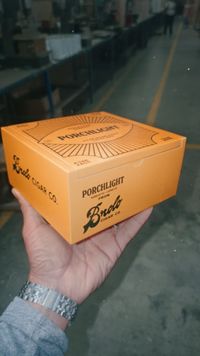
The Brolo Cigar Co. Porchlight will debut in a 5x50 robusto, wrapped in Ecuadorian Corojo. But we don't build cigars around spec sheets. We build them around moments. Every blend is refined to deliver a feeling….a rhythm, a reason to stay a little longer. Porchlight is meant for long nights, for second cigars and third ones, for conversations that matter.


We're getting close now.

Closer than we've ever been.

Porchlight is coming.

So is Confessional.

And Back Booth.


Each one with its story to tell and we can't wait to share them with you.

The Slow Burn: Stay In ItThe Slow Burn: Stay In It
The Slow Burn: Stay In It

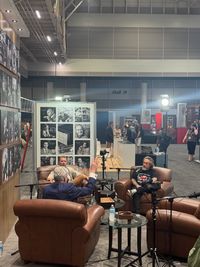
At PCA, surrounded by some of the biggest names in cigars, I expected the moments I’d remember most to be the ones I captured. Turns out, it was the ones I didn’t. This is about building something real, staying present, and learning when to put the camera down and just live in it.

The Slow Burn:  The Algorithm Is Discipling YouThe Slow Burn:  The Algorithm Is Discipling You
The Slow Burn: The Algorithm Is Discipling You

We don’t just consume content anymore… it consumes us. The question is…who are you becoming because of it?

The Slow Burn: The Rooms Matter More than the DealThe Slow Burn: The Rooms Matter More than the Deal
The Slow Burn: The Rooms Matter More than the Deal

Less discounts. More connection. We’re doubling down on lounges, community, and the culture that built this thing.

The Slow Burn: Cool is a Moving Target The Slow Burn: Cool is a Moving Target
The Slow Burn: Cool is a Moving Target

In 1997, I thought baggy jeans, bleached hair, and blasting Korn made me cool. Nobody else agreed. But looking back, I see something different…someone who didn’t wait for permission to be himself.

The Slow Burn: Get Out of the AudienceThe Slow Burn: Get Out of the Audience
The Slow Burn: Get Out of the Audience

You don’t find your rhythm before you start; you find it because you start. The problem is, most people never get out of the audience long enough to try.

The Slow Burn: Carrying the LoadThe Slow Burn: Carrying the Load
The Slow Burn: Carrying the Load

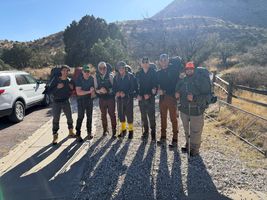
High in the Guadalupe Mountains, with darkness closing in and 40-mph winds pushing against a narrow ridge, one of our brothers could no longer walk. What followed wasn’t heroic in the traditional sense…just men quietly carrying more weight so another could keep climbing. A reflection on hardship, Stoicism, and the kind of brotherhood that only reveals itself on the hard miles.

The Slow Burn: The Ride was the PointThe Slow Burn: The Ride was the Point
The Slow Burn: The Ride was the Point

Five years. One empty desk. A friendship forged in folding chairs and cigar smoke. Here’s what I learned about endings, seasons, and why the ride is always the point.

The Slow Burn: A Little Love from LouisianaThe Slow Burn: A Little Love from Louisiana
The Slow Burn: A Little Love from Louisiana

Recently, I received a care package from an online cigar brother with a note that read:


“Joshua, a little love from Louisiana. I lost my sister to addiction in 2018. I admire your strength and conviction to choose a better path daily. Some local sticks from LACC — Gris Gris + Padre Eligio. From Habano Port — 15th Anniversary (blended by Eladio Diaz) + a Lagniappe. Plus, a Connie for your lovely wife.”


For the new ones around here, I’ve been in recovery for nearly a decade.


After admitting I was powerless over my addiction and that my life had become unmanageable, I checked into a 30-day inpatient treatment facility on June 12th, 2017. The first couple of years in recovery were the hardest years of my life. Finding a new way to live required everything to change: people, places, and things.


Friends from active addiction. Bars. Clubs. Old hangouts. Even specific streets where I used. Music. Movies. Credit cards. Everything had to go.


I learned quickly that the brain is fascinating. Drugs alter neural pathways by hijacking natural reward systems, creating long-lasting neuroplastic changes. Neuroplasticity, the brain’s lifelong ability to reorganize its structure and function, is what drives the transition from voluntary use to compulsive addiction.


At least… that’s one component.

Then there’s Step Two:

“We came to believe that a Power greater than ourselves could restore us to sanity.”

A lot can be said here, but I’ll sum it up through my own experience.


I believe humans have an innate function to worship. Many associate “worship” strictly with religion: Christianity, Islam, Hinduism, Buddhism, etc. But Ed Welch, in Addictions: A Banquet in the Grave, proposes something deeper: addiction is ultimately a disorder of worship, where we elevate our desires above God.


He describes addiction as bondage …when a substance, activity, or state of mind becomes the center of life, defending itself against truth even in the face of consequences. In other words:

Addiction is idolatry.

The worship of created things (substances, validation, pleasure, escape, etc.) instead of the Creator.


Child Protective Services seized me from my home as a kid and placed me into the care of the State of Texas. I spent years in foster care before eventually being placed with my grandmother. She did the best she could, but the damage had already been done.


Abused. Confused. Unwanted. Left out.


Grief and loss shaped my early identity. Fear of abandonment turned into attachment challenges. Even though I longed for deep connection, forming secure relationships felt nearly impossible. Anxiety, depression, and emotional dysregulation weren’t occasional visitors; they were a way of life.


Research shows adopted individuals carry a higher risk of substance abuse disorders due to genetic predisposition, early trauma, and pre-birth exposure:


Amphetamines — 3.14× higher risk

Hallucinogens — 2.85× higher risk

Cocaine — 2.54× higher risk

Opioids — 2.21× higher risk

Alcohol — 1.84× higher risk


So there I am, a statistical poster child for addiction. A lot could be unpacked about the contributing factors and how I responded to my environment…but this isn’t a recovery blog.


It’s a cigar blog.


I say that because although addiction is part of my story, “addict” is not my identity. But it does play a major role in my why. Why did I create Brolo? What’s the real purpose behind it?


Haters will say it’s an opportunistic ploy for money, but that couldn’t be further from the truth. Startup costs are high. Profitability can take years. It’s a nickel-and-dime business model with heavy labor and razor-thin margins.


Brolo came to me in a dream.


Literally.


I saw a landscape of people desiring connection but not knowing how to achieve it. Lonely faces scattered across back patios, garages, and apartment balconies…smoking alone. I thought about the guys who walk into cigar lounges, make a purchase… and leave. Never staying for camaraderie. Never feeling like they belonged.


And I sensed a calling.

I saw outcasts. The marginalized. The broken. The misunderstood. The ones who feel… lost.

And eventually I realized something:

I wasn’t just seeing them.


I was searching for the younger version of myself, the one before I found tribe, before recovery, before purpose. The version that was barely hanging on by a thread. Spiritually bankrupt. Desperate for connection, but terrified to step into it.


Cigars didn’t save my life.


Recovery did. Faith did. Brotherhood did.


But cigars became the bridge.


They gave me a table to sit at. A reason to slow down. A space where conversation wasn’t forced…it unfolded naturally. You can sit in silence with another person for 90 minutes smoking, and somehow say more than words ever could.


No phones. No masks. No pretending.


Just presence.


And I realized something powerful:

Connection heals what addiction tries to counterfeit. Addiction promises belonging but delivers isolation. Brotherhood requires vulnerability but produces freedom.


Brolo was built to close that gap.


Not just to sell cigars… but to create spaces where people feel seen. Where the lonely find seats. Where the outcasts find tribe. Where conversations go deeper than wrapper shades, blends, and burn lines.


So when I opened that box from Louisiana… it wasn’t just cigars.

It was proof.

Proof that connection travels. Proof that brotherhood exists beyond geography. Proof that something born from brokenness can still build community.


Inside that package were incredible sticks, blends with story, craft, and heritage. But what I really received was love. Love from someone who understood loss. Someone who recognized the road I’ve walked because he’s walked his own. Someone who chose generosity over silence.


That’s the part that hit me.


Because years ago, I was the guy smoking alone…spiritually bankrupt, emotionally isolated, searching for something I couldn’t name. I had the ritual… but not the brotherhood.


And now… here I am.


Receiving care packages from brothers I’ve never met in person. Sharing cigars that carry stories deeper than tobacco. Building something rooted not in profit but in purpose.


Brolo was never just about the leaf.


It was — and always will be — about connection.


So to my brother in Louisiana… thank you. Not just for the cigars, but for the reminder that none of us have to smoke alone anymore.


Light Up & Lean In

The Slow Burn: Out WestThe Slow Burn: Out West
The Slow Burn: Out West

Another mile down. Another stretch of blacktop bleeding into the horizon.


Maybe I’ll make Paducah before the sun finally cracks the sky, showing its face while keeping its warmth to itself. A gust of wind shoves my SUV across the double yellow and snaps me back into my body. Hands tighten. Jaw clenches. Back in my lane.


The road is open, and I am…if I’m being honest…freaking the f out.


I’ve felt this before. Not often. But enough to recognize it. Uneasy. Anxious. Intrepid.


The first date.

The first kiss.


Dropping out of college to chase music and bad decisions in a rock-and-roll band.

Quitting the band to work for “the man.”

Asking my in-laws for permission to marry the woman I love.


Getting clean.

Leaving a sure thing for entrepreneurship.

Walking back into recovery rooms after relapse.


Buying our first home.


Every one of those moments turned into something good. But in the moment? The butterflies weren’t poetic. They were suffocating. And right now, they’re doing their best work. A panic attack feels close enough to taste. So I ask myself the question we all ask when things feel off:

Why?


What’s stirred this up? What chapter is trying to close, or open, without my permission?


Here’s the thing about me: I don’t like endings. I drag them out. I don’t finish the last chapter. I don’t watch the final episode unless I have to. Kaitlyn wants to binge. I want to savor. Stretch it. Keep the door cracked just in case. It’s like sitting on a box of cigars you can’t replace. You know, once the last one’s lit, the curtain call begins…and I hate saying goodbye to things I believe should last forever.


That’s the paradox, isn’t it? Fully embracing new stories requires ending old ones. And there it is. We’re stepping into something new.


When I first started smoking cigars, I didn’t know a damn thing. Two decades later, my days are filled with fermentation methods, leaf primings, balance, construction. Label designs. Box finishes. Distribution channels. Margin math. Standing out in a brutally competitive market while staying lean enough to survive it.


Romantic? Sometimes. Serious? Always. And yet…here we are. Designs are in. The vision has weight now. Texture. Every decision pulls the past a little farther behind us. Kaitlyn and I are turning a shared love for connection into something tangible…rolled in leaf, lit with intention.


We’re trying to build the next great American cigar brand.


Aspirational? Absolutely.

Nicaraguan craft. Texas soul.

So yeah…I’m nervous.


Nervous we’ll make the wrong call. Nervous we’ll trust the wrong people. Nervous we’ll ask the wrong questions, or worse, not know what questions to ask at all.


But I’m learning something on this road.


It’s okay to be in new rooms.

It’s okay not to understand everything.

It’s okay to feel exposed.


For an Enneagram Three, an Achiever, that’s unsettling as hell. But you keep moving. That’s the part of entrepreneurship nobody glamorizes. The quiet fear. The setbacks. The long miles with nothing but doubt riding shotgun. As Steve Jobs said, perseverance is the separator.


And if the rearview mirror has taught me anything, it’s this: Kaitlyn and I are resilient motherfuckers.


This piece was supposed to be about pioneers. About brotherhood. About how Brolo isn’t really about cigars…it’s about the people who gather around them. About blending technology and craft in a way that feels honest.


But instead, I wrote the truth.

Because I’m just like you.

I hear the doubt too.


And if you’ve felt it, on the edge of a big decision, staring down a long road…then you already understand what this is really about. None of us has it all figured out. We just choose to show up, share the fire, and take the next mile together.


So I light up.

I lean in.


Out west isn’t a place…it’s a direction.

The Slow Burn: Great Success (Borat Voice)The Slow Burn: Great Success (Borat Voice)
The Slow Burn: Great Success (Borat Voice)

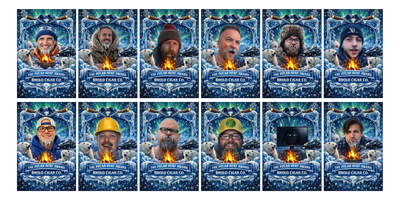
Was it -6 degrees outside for some of us? Yup. Did we burn a couple of stogies anyway? Absolutely. What started as our regularly scheduled HERF on Tuesday and Thursday evenings turned into something special. Whether bundled up, cowering in front of heaters, or tucked into an in-home lounge, people from across the world gathered for the first-ever, one-of-a-kind… Polar HERF.


In less than ideal, and in some cases dangerous, conditions we did it.


GREAT SUCCESS.


A severe, multi-day winter storm and subsequent Arctic blast brought record-breaking cold, significant ice accumulation, and widespread power outages to the Southern United States this past weekend. With many cigar aficionados stuck at home and time to kill, we did what any fellow lover of the leaf does…


PSSIT.

Put.

Some.

Smoke.

In.

The.

Air.


Student.

Former military.

Cop.

Humanitarian.

Engineer.

Security.

Teacher.

Emergency Medical Services.

Men and women.


All using cigars as the common ground to explore life, identity, loss, rebuilding, faith, failure, and purpose. Sprinkle in a heavy amount of jesting and BOOM…magic happens.


Some of us were smoking in a garage with a space heater between our knees. Others were fighting a dying Wi-Fi signal. Someone else was outside in gloves, trying to keep a torch lit in the wind. The audio cuts in and out. The stories don’t. Heck, some even logged in without a lit cigar, just to participate.


Nobody logged in to be impressive. Nobody had a pitch. Nobody had the answer. Just a bunch of people holding the fire in the cold.


Keeping fire is an old human instinct. Long before it was romance or ritual, it was survival. You didn’t just light it for yourself, you guarded it so others could gather close. Fire meant warmth in a merciless cold, light in the dark, and proof that someone had been there before you. A small, fragile thing carrying an unreasonable amount of responsibility.


A cigar is a quiet version of that same idea. A controlled ember cupped in the hands. Something you tend. Something you protect from the wind. Something you pass along… not literally, but in presence. In time. In attention. You sit with it long enough and people start drifting closer. Stories loosen. Shoulders drop. The temperature changes, even if the air doesn’t.


That morning, everyone brought their own flame. Different lives. Different battles. Different scars. But the same small act: keeping something lit when it would’ve been easier to let it go out. And in doing that, we warmed more than our fingers. We warmed the space between strangers. We made the cold world just a little more survivable for an hour or two.


Maybe that’s the real reason we smoke. Not to escape the dark… but to hold a piece of light steady long enough for someone else to find their way to it.


At least that’s what Light Up & Lean In means.


For many, it’s easy to “light up” and sit with others…at least literally.


But as much as “leaning in” sounds simple, it isn’t. It goes against instinct. Most of us are trained to keep things light, keep moving, keep a little distance between what we show and what we carry. We learn how to nod at the right moments, how to joke our way past the heavy parts, how to stay close enough to belong but far enough not to be seen.


Real proximity.

Real attention.

Costs something.


To actually lean in takes time. Repetition. Silence that isn’t rushed to be filled. The patience to sit through awkward pauses and unfinished thoughts. The discipline to listen without planning your reply. You don’t stumble into knowing people. You choose it, slowly. One conversation at a time. One honest moment stacked on another…until trust stops feeling like a risk and starts feeling like the only reasonable thing left to do.


Speaking of HERFs…


Our first Group Smoke event will be held Tuesday, February 3rd at 8pm CDT.


Every first Tuesday, we smoke the same cigar. Each month, we post a poll in Discord, and the one with the most votes becomes that month’s shared smoke.
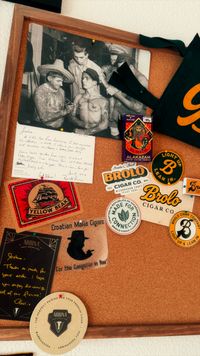

Same time.

Same leaf.

Same table.


February’s Group Smoke winner is by Crowned Heads:

La Imperiosa – Corona Gorda (5.7 x 46)

• Country of Origin: Nicaragua

• Factory: My Father Cigars S.A.

• Wrapper: Ecuadorian Habano Oscuro

• Binder: Nicaragua

• Filler: Nicaragua


Wherever you are, however you show up, you’re welcome. Bring a light. Bring a story. Or just bring the silence.


We’ll take care of the rest.

The Slow Burn: A Place to BelongThe Slow Burn: A Place to Belong
The Slow Burn: A Place to Belong

Belonging: an affinity for a place or situation.


One of the places I found [and still find] solace is in the fellowship of the leaf. But in order to understand why, I need to back it up a bit.


I spent the early years of my life with state-certified caregivers. Eventually, I landed at my grandma’s house. Although I have five sisters and two brothers, I was raised as an only child. Through my grandma’s grit, I made it out of the mud. Not clean. Not easy. Not untouched. I carried hunger in my bones, addiction in my blood. Shame in my pockets. Food, drugs, pornography…they all took turns sitting on the throne. At my worst, I felt like an eccentric misfit. At best, a well-dressed deviant trying to pass for normal.


Addiction is a ruthless ruler. 


Desperate, I turned to the rooms of anonymous programs. Hopeless, the message that any addict can stop using drugs, lose the desire to use, and find a new way to live sounded promising. I heard that “it works if you work it,” so I worked it hard…and I got clean. But after a while, the hopelessness crept back in. Though this time it was different. Quieter. More polite. More spiritual-sounding. Somewhere along the way, I realized I’d traded one ruler for another. Every introduction chipped away at something sacred:


“Hi, I’m Joshua, and I’m an addict.”


Over time, addict stopped being a struggle and started being an identity.


Through immersing myself in works-based gospels (AA, NA, CA), I noticed I exchanged drug addiction for a seemingly less detrimental ruler. In meetings, I felt I surrendered my God-given identity as a son of the Most High with each introduction. Authority abdicated, and power delegated. "Addict" became my identity, and defined by behavior, I gave myself over to programs. Exchanging the grip of addiction for steps, I surrendered to vague pluralistic spirituality. Although I learned wise things in the rooms, and am beyond grateful to programs, vague pluralistic spirituality did not work for me. But that’s a conversation for another day...


So back to cigar culture…I mean, this is a cigar blog after all, not a 12-step meeting. So let’s talk about the leaf.


Back when I started visiting lounges, I was usually the youngest one in the room. Maybe it was due to my lack of a father, but I sought out relationships with the older cats…and I learned quite a bit doing so. Not just about cigars, but about life. How loneliness is heavier than pride. That being alone hurts more, longer, and deeper than the temporary satisfaction of protecting your ego. They taught me certain things don’t deserve the weight we give them. Reputation, for example. Character outlasts it. I learned I’d rather be known than seen.


Chopping it up with veterans over our shared smoke, I learned time does not heal all wounds. That sometimes it just reveals what really matters. That instead of taking opportunities that steal time away from your family, learn how to say “no” if things don’t align with your priorities. I watched how pain turned some men bitter…and others gentle. They carried loss. Regret. Illness. Missed chances. They also carried wedding photos, grandkid stories, retirement plans, passport stamps, and the quiet pride of men who survived themselves.


And the wild thing? They were nothing like me. Entrepreneurs. Janitors. Teachers. CEOs. Warehouse workers. Veterans. Widowers. Nelyweds. All types of people, different worlds at the same table.


Through the tobacco bridge, I met some of my best friends. What started as “What ya smoking,” turned into breaking bread, bible studies, shared vacations, birthday parties, funerals, concerts, and even launching businesses together. When cancer affected their family, we wept together. When marriages fell apart, we prayed for restoration. When an old cat got pneumonia and passed away quickly, we showed up for the family. When a new friend had a stroke, we sent flowers. 


 All of it from dead leaves.


Now, don’t get me wrong. Some prefer to smoke in isolation, away from the distractions of the world. Quiet porch. Good book. No noise. I get it. I love those moments too. But, I still find myself asking:


"Has my life been better because I smoked with others?"


We laugh and bullsh*t with one another. We play pranks and talk trash. A little light-hearted jesting here and there. But past that? If you want it to be…there can be substance. You can be known and know others. There is a strange kind of intimacy hiding in the folds of the leaf - if you're willing to sit long enough for it to show up…. or…you can hang out in online forums trashing whoever smokes whatever. Posting photos of cigars to luxury signal. Maybe even sneak in your timepiece in the background. Spend time just to comment, “AI garbage,” when this was 100% written by a real dude. A gringo with a cigar dream. 


Through it all, cigars keep teaching me that time is the real currency.


They afford me opportunities to connect with people who believe differently from me. And more often than not, I find we’re closer than the world wants us to think. Sure, there are some personalities I enjoy in small doses. That’s for sure. But, at the end of the day…cigar culture helps me practice the mantra of "principles over personalities.” Some say I romanticize dead leaves too much...


But they’ve given me so much life. They gave me a table to sit at. They gave me time that mattered. And somehow, they helped give me life back.

The Second Worst Cigar I Ever Smoked; A Story About Cigars, Ego, and BrotherhoodThe Second Worst Cigar I Ever Smoked; A Story About Cigars, Ego, and Brotherhood
The Second Worst Cigar I Ever Smoked; A Story About Cigars, Ego, and Brotherhood

We did it.

Well… some of us did.


Although it was borderline medieval torture, Shaun finished The Woody by Oscar, a 21x80 Honduran puro that takes somewhere between four and seven business days to smoke, depending on lung capacity and will to live. Patrick from Halfwheel clocked it at seven hours. Shaun looked like he’d aged seven years.


Me?

I made it twenty-five minutes.


Getting the thing lit required lungs forged in a CrossFit volcano. Someone produced a blowtorch like we were welding farm equipment. Even with all the right tools at my disposal, my head started pounding, my eyes watered, and my soul quietly whispered, “You don’t have to prove anything to these people.”


Then came the draw.

Or lack thereof.


After enough wheezing to qualify for a medical study, Shaun handed me his sacred relic: the PerfecDraw.


Now, one thing you should know about Shaun, the man loves cigars. Knows cigars. Owns cigars. Has gadgets for his gadgets. If cigars had a Costco membership program, he’d be platinum.


He calmly explains, “You gotta be careful with this thing, or you’ll punch through the wrapper and ruin the cigar.”


Naturally, I immediately ignored him.

Point. Center. Push.

Ten seconds later, my cigar turned into a flute.

A clean, glorious hole straight through the side.

Was I mad?

Nope.

I was relieved.


I tossed that log of suffering into the abyss, reached into my humidor, and lit something balanced… intentional… humane.


And I sat there smiling while everyone else committed to their bad decisions like war veterans.


I won’t lie…watching grown men suffer through a novelty cigar while I enjoyed myself was carnally refreshing.


And that’s when it hit me:

I didn’t want to smoke The Woody.


I wanted the idea of smoking it.

The story.

The photo.

The bragging rights.

The “remember when we survived this” badge.


Somewhere along the way, the experience became less about enjoyment and more about endurance.

Less about flavor…more about flexing.

Less about connection…more about completion.


It wasn’t a cigar meant to be enjoyed.

It was a cigar meant to be conquered.

And we do this with life all the time.


We romanticize things from a distance:

The job.

The title.

The relationship.

The lifestyle.

The business.

The version of ourselves we think we’re supposed to become.


We picture the highlight reel. The applause. The moment at the top of the mountain.


Nobody daydreams about:

The headaches.

The nausea.

The tools just to make it barely functional.

The quiet realization at hour three that you chose wrong.


Sometimes the dream is real.

Sometimes the dream is just a 21x80 mistake wrapped in good marketing.


Here’s the uncomfortable truth:

Quitting the wrong thing is often braver than finishing it.


Punching that hole felt like failure for three seconds.

Then it felt like freedom.


I reached into my humidor and grabbed something balanced. Something thoughtful. Something made with intention. Something that didn’t require suffering just to prove a point.


And suddenly everything was good again.

The reason I smoke cigars in the first place came back.

It’s about smoking the right thing.

The cigar that invites you to stay.

Not survive.


The kind that doesn’t dare you to endure…

but asks you to slow down.

Because there’s a difference between:

“I finished it.”

and

“I enjoyed it.”


Life’s too short to confuse the two.

Sometimes wisdom looks like grit.

Sometimes it looks like a hole in the side of a cigar, and the humility to choose better.


And here’s the truth:

There’s no medal for suffering through bad cigars.

No parade.

No sash.

No secret society whispering, “Thank you for your service.”


The real win?

Putting it down.

Lighting something better.

And rejoining your people.

Laughing while your buddies stubbornly commit to the bit.

Borrowing tools you don’t know how to use.

Roasting each other for rookie mistakes.


Watching grown men debate draw resistance like it’s constitutional law.

Not perfection.

Not endurance.

Not luxury cosplay.


Just shared smoke.

Shared stories.

Shared moments.


Preferably over something enjoyable.

And if you ever turn your cigar into a woodwind instrument along the way…


Welcome to the brotherhood.

The Slow Burn: Productive UrgencyThe Slow Burn: Productive Urgency
The Slow Burn: Productive Urgency

Acting with a sense of urgency will get you further than failing to act at all.


For me, urgency isn’t about panic or chaos. It’s about movement. When I act with urgency, I learn faster. Trying and failing quickly gives feedback. Feedback creates clarity. Clarity creates momentum. Inaction, on the other hand, just creates noise in my head.


I’m no stranger to analysis paralysis.


Case in point: The Cheesecake Factory.

Some people see that menu as a culinary playground. Italian. Asian. Mexican. American classics. Steaks. Pastas. Salads pretending to be healthy. Cheesecakes stacked like holy relics behind glass. For them, it’s relaxing…options for days.


For me? It’s overwhelming.


How am I supposed to make a good decision when every page feels like a different restaurant? How do you eat healthy when you’re being tempted by dessert debauchery before the waiter even takes your drink order? I’ll sit there for what feels like an eternity, reviewing, comparing, weighing pros and cons…only to order the same thing I always do.


Sweet corn tamale cakes.


They’re technically an appetizer, but I get them as my main course every single time. No regrets. Zero growth.


That’s me in a nutshell.


I’ll research something to death. I’ll read reviews. Watch videos. Ask opinions. Build spreadsheets. All in the name of making the “right” decision. But what I’ve learned, often the hard way, is that taking the first step imperfectly is almost always better than waiting for the perfect plan.


Even when I make the wrong choice, I learn something. I eliminate a path. I gain experience. I adjust. That’s failing forward. And failing forward beats standing still every time.


There’s a trade-off here, though.


Somewhere between reckless action and paralyzing overthinking lies an intersection…a balance point between urgency and patience. Too much urgency, and you create chaos. Too much patience, and you create excuses. Wisdom lives in knowing when to move and when to wait.


That’s what I mean by productive urgency.

It’s not speed for speed’s sake. It’s not hustle culture nonsense. It’s about focusing on the right things, executing with intention, and being willing to learn from your mistakes instead of hiding from them. It’s about lighting the cigar instead of staring at it, wondering how it might smoke.


Brolo was built with that mindset.


There were plenty of moments where I didn’t have all the answers. Moments where the blend wasn’t perfect. The packaging wasn’t final. The timing wasn’t ideal. If I had waited until everything felt “ready,” Brolo would still be an idea scribbled in a notebook.

Instead, I chose productive urgency. Make the call. Take the meeting. Test the blend. Adjust. Repeat.


Cigars themselves teach this lesson if you’re paying attention. You don’t rush them, but you don’t hesitate either. You cut, you light, you commit. You stay present. You let it evolve. If something’s off, you note it for next time…but you don’t throw the whole experience away.

That’s how life works too.


Productive urgency is about respecting time without worshiping speed. It’s about movement with purpose. Action with awareness. Learning by doing.

So whether you’re staring at a menu, a decision, or the next step in your life…don’t wait forever for the perfect choice.

Order the tamale cakes if that’s what you always do.


But every now and then…try something else.


Light up.

Lean in.

Learn as you go.

That’s the slow burn.

The Slow Burn: The Year I Stopped Trying to WinThe Slow Burn: The Year I Stopped Trying to Win
The Slow Burn: The Year I Stopped Trying to Win

I’m a goal setter and an achiever. An Enneagram 3.


If you’re unfamiliar, Enneagram 3s are wired to win. We measure progress. We chase results. We read the room, understand the scoreboard, and figure out how to climb it efficiently. We’re builders, performers, producers. Put a finish line in front of us and we’ll find a way to cross it…often faster than expected, sometimes at our own expense.


At our best, 3s are disciplined, driven, and relentlessly productive. We know how to turn vision into execution. We can carry responsibility, inspire confidence, and create momentum out of thin air. We’re the ones people call when something needs to get done.


But there’s a shadow side.


For an Enneagram 3, worth and winning can quietly become the same thing. Success starts to feel like oxygen. Approval becomes fuel. And without realizing it, you can begin performing your life instead of living it. You don’t ask, “Is this good for my soul?” You ask, “Does this move the needle?”


Loss becomes unacceptable. Rest feels irresponsible. Slowing down feels like falling behind.


And somewhere along the way, you stop knowing where the finish line is…because you keep moving it.


A while back, some buddies and I started a residential appraisal business.


This year, that firm was nominated as one of the top three appraisal firms in the entire country. We might even take the number one spot. I’ll know in a couple of weeks. Either way, it’s a legitimate achievement. The kind you don’t accidentally stumble into.


It took vision. Long nights. Hard conversations. Systems built from scratch. Hiring the right people. Firing the wrong ones. Carrying risk when the market turned sideways. Saying no to comfort so we could say yes to growth. There were seasons where winning required everything I had.


And I don’t regret that.


But here’s the tension no one talks about.


Achievement has a way of pulling you into the future. You’re always reaching for what’s next…the next milestone, the next metric, the next accolade. And if you’re wired like me, you start living one step ahead of yourself. You’re in meetings thinking about outcomes. At dinner thinking about numbers. On vacation answering emails you told yourself you wouldn’t check.


Presence, on the other hand, lives in the now.

Achievement asks, “What does this become?”

Presence asks, “Who is here with me?”


Achievement is necessary to build something meaningful. Presence is necessary to remember why you built it in the first place.


Somewhere along the way, I realized that winning doesn’t always feel like winning when you’re never fully there to experience it. The moment passes, and instead of savoring it, you’re already calculating the next move. The scoreboard updates, and you’re already chasing a new one.


That’s when I started asking a different question.

Not “How do I win more?”

But “What am I missing while I’m winning?”


And that’s why I’m calling this The Year I Stopped Trying to Win.

Not because I stopped achieving.

Not because I stopped caring.

Not because ambition suddenly fell out of my bloodstream.


But because I finally stopped letting winning define whether a moment mattered.


For most of my life, winning was the lens. I measured seasons by outcomes. Progress by recognition. Worth by forward motion. If something didn’t move the needle, it didn’t count. If a moment wasn’t productive, it felt wasteful. Rest was something you earned after the work…never something that belonged inside it.


That mindset built businesses. It also quietly stole moments I’ll never get back.


This year, something shifted.


I still showed up. Still worked hard. Still pursued excellence. But I stopped white-knuckling every outcome. I stopped turning every interaction into a transaction and every season into a proving ground. I stopped asking, “How do I come out on top?” and started asking, “Am I actually here for this?”


Because here’s the truth I’ve been slow to learn:

You can win the year and lose the moment.

You can hit the milestone and miss the meaning.

You can achieve everything you set out to do and still feel strangely absent from your own life.


Presence doesn’t show up on a scoreboard. You don’t get awards for being fully there. No one nominates you for the way you listened, or the way you stayed a little longer, or the way you resisted the urge to rush to the next thing.


But those are the moments that stay.


They’re the ones that settle into your bones. The ones that don’t need validation because they’re complete all on their own.


That’s the slow burn.


It’s choosing to sit with the cigar instead of rushing through it. Letting it evolve. Letting the conversation wander. Letting the silence breathe. It’s understanding that some of the most meaningful parts of life don’t announce themselves as important while they’re happening.


This year, I stopped trying to win every room, every conversation, every season.


And in doing so, I started noticing something better.


I wasn’t losing…I was finally living inside the moment instead of past it.


That’s what The Year I Stopped Trying to Win really means.


Not quitting ambition.

Not abandoning excellence.

But refusing to sacrifice presence on the altar of achievement.


Because the best parts of life , like the best cigars, aren’t conquered.


They’re experienced.

The Slow Burn: In The ArenaThe Slow Burn: In The Arena
The Slow Burn: In The Arena

I’ll probably catch a lot of flak for this, but if there’s one thing I’ve learned about being even mildly visible online, it’s this:


People can be insufferable.


A few weeks back, I shared how my life had been made better, genuinely better, by something as simple as a Camacho Corojo. Not because it’s rare. Not because it’s hyped. But because it showed up for me in a season where brotherhood mattered more than brand pedigree.


You would’ve thought I declared war.


The vitriol.

The snark.

The armchair experts with “Twitter fingers” and nothing to lose.


Here’s the thing, though: online comments don’t bother me. They never have.

They remind me of something Theodore Roosevelt said long before social media gave everyone a megaphone:


“It is not the critic who counts… The credit belongs to the man who is actually in the arena…”


That’s always resonated with me. Because critics don’t bleed. They don’t risk. They don’t build. They don’t lose sleep over logistics, payroll, permits, production timelines, crop failures, shipping delays, or the weight of putting your name on something that could fail publicly.


They comment.


I didn’t start Brolo to win internet points.

I didn’t start it to chase luxury signaling, cocktail pairings, or velvet ropes.


Those things have their place….but they aren’t the point.


I started Brolo because I believe there’s something better than exclusivity masquerading as culture. Something better than pretending cigars are only for tailored suits, private clubs, and curated feeds.


I believe cigars can be excellent without being inaccessible.

Premium without being pretentious.

Intentional without being exclusionary.


Not overpriced.

Not hyped to death.

Just damn good cigars that move themselves…because they’re that good.


But let’s be honest about the cigar world for a moment.


Everyone’s an armchair quarterback.

Almost no one understands what it actually takes to bring cigars from the fields of Nicaragua to the hands of everyday people.


The farming.

The fermentation.

The aging.

The blending.

The rolling.

The QC.

The taxes.

The licensing.

The logistics.

The capital at risk.


Think you can do better?

Be my guest.


But beyond the tobacco itself, there’s something even harder to build:


Belonging.


Brands spend generations cultivating an “inner circle.”

A sense of you’re either in, or you’re out.

Brolo isn’t an inner circle.

Brolo is the table.

An invitation for trolls, the haters, the pessimists…the ones who think everything sucks and everyone’s wrong.


All are welcome.

Because there is something better than burning one alone in your grandma’s basement.

There is something better than cursing the dark because you can’t find your lighter.

There is something better than investing your energy in online vitriol.

Brolo is for the lonely.

Brolo is for the wanting.

Brolo is a warm embrace on a cold night.

We don’t care where you came from.

We don’t care how much you make.

Sure, it’s cool if you crushed stock options.

Drive an exotic? Rad.

But what’s cooler?


Sitting at the same table.

Breaking bread.

Building each other up.

Reaching out when the world already kicked someone down.


Don’t get me wrong…cigars are a luxury.

But those of us with time in the leaf?

We know the truth.


Cigars aren’t about status.

They’re about shared experience.


Janitor to CEO.

Blue collar to boardroom.

Under sun-grown shade, we’re equals.

Same fire.

Same smoke.

Same humanity.

I wrote this because Reddit made me “famous” for five minutes.


And Reddit also dragged me through the mud.

This is my response….not to convince the critics, but to find the people who already feel this in their bones.


I’m creating my own lane because I believe there are others out there who believe in what I do.

Good smokes.

Real community.


And the lifeline that is the fellowship of the leaf.


I’ll stay in the arena.


You’re welcome at the table.

The Slow Burn: The Gift I Didn’t Know I NeededThe Slow Burn: The Gift I Didn’t Know I Needed
The Slow Burn: The Gift I Didn’t Know I Needed

The excitement was killing me.


It was Christmas morning, 1992, and I was awake before anyone else. Wide-eyed. Wired. Ready. Although my grandma and I lived alone, my uncles were in town for the holiday. Two uncles, a cousin, one girlfriend-of-the-moment… and a dog.


His name was Muffin. A miniature poodle. White. Fluffy. Pom-poms. Bows. The least masculine dog you’ve ever seen.


I refused to be seen in public with him, lest I get jumped for having what looked like a walking cotton ball on a leash. And yet, memory unlocked, I can still smell the time he ran through a field of cows, rolled in manure, and I had to hose him off behind my mom’s trailer while trying not to throw up.


Anyway… Christmas.


I wasn’t supposed to get out of bed until an adult came and got me. Christmas Eve rules were strict. No wandering near the living room. No peeking. No catching Santa mid-operation. But time moved slowly. Painfully slow.


So I did what any kid would do. I crept down the hall like a church mouse. Around the corner. Holding my breath.


And there it was.


Glowing in the reflection of Christmas tree lights….a 1989 wine-red Tama Imperialstar drum kit. Full setup. Hardware. Cymbals. Throne. Ready to rock. It was a popular, affordable drum kit known for its poplar shells, offering a full, warm tone, often coming as a complete "ready-to-rock" package with hardware, Meinl cymbals, and a throne, featuring durable hardware, Omni-Sphere tom holders, and modern Accu-Tune hoops for easier tuning.


FREAKING SWEET!


It was the only thing I’d ever wanted.

And somehow… something I didn’t even know I needed.


Drums are arguably the loudest instrument on earth, and yet I was on a stealth mission. They were calling to me, “Please beat me,” but I managed to sneak back to my room unseen.


Sitting on the floor with Ninja Turtles and G.I. Joes, I staged a concert. Splinter on vocals.

Donatello and Leonardo on guitar and bass. And on drums?


Snake Eyes.


Holding two swords like drumsticks.


Both my uncles were musicians. My birth mom could sing. I had an aunt who would go on to play for the San Francisco Symphony. Music ran in the family, even if I didn’t fully understand it yet.


Before the drum kit, all I had was Hot Cross Buns on the recorder. But the drums weren’t a curveball. I’d already been terrorizing pots and pans outside the garage while my uncle’s band practiced. I gave that cookware hell.


Finally, my Uncle John knocked on the door.


“Josh, you awake?!”


I nearly tore the door off its hinges.


“Let’s go see what Santa brought.”


Now, I already knew…but I had to play it cool.


I walked into the living room like I’d never seen anything so glorious. Uncle John told me he’d put in a good word with Santa. And I believed him. Fully. This was the most over-the-top gift imaginable.


I hadn’t even asked for a drum set. Yet there it was.


Everything I wanted.

Everything I didn’t know I needed.


The rest of Christmas is a blur. I don’t remember who got what. I don’t remember dinner. I don’t remember which girlfriend was there.


I do know one thing, though. That drum set changed the trajectory of my life.


A lot of kids pick things up and put them down. I didn’t. Drums stuck. Probably helped that Grandma was half deaf, otherwise there’s no way that kit would’ve survived.


By middle school, I learned you could get girls by being a musician.

By college, I learned you could see the country.

By my twenties, I learned you could even make a living creating art.


Life revolved around music from age nine to twenty-four. Stage lights. Applause. Long nights. Cheap meals. A lot of fun.


Eventually, ambition outweighed ability. Peanut butter sandwiches got old. I came home to chase another version of the American Dream.


But those drums?

They were exactly what I needed at the time.


As a kid, I was scrappy. Detentions stacked up. I wasn’t mean…I just stood up for myself. Being the chubby kid meant catching flak. I couldn’t throw a great punch, but I learned Swiss Army triplets real fast.


Drums gave me confidence.


I beat the skins until they broke. Then did it again. I learned the fundamentals: time, groove, restraint. And later, that lesson paid off.


A drummer who plays in time is a drummer who gets paid.

Looking back, this is a long way of saying something simple:


You never know which gift will shape your life.


As Christmas approaches, many of us celebrate the birth of Jesus Christ…in my humble opinion, the greatest gift ever given.


Some gifts show up wrapped in paper.

Some show up wrapped in purpose.

And some, like that drum kit, don’t reveal their meaning until years later.


And sometimes, the things we didn’t ask for end up becoming the things that carry us through life.


What I didn’t understand at nine years old, standing barefoot in the living room, staring at that cabernet drum kit, was that the gift wasn’t the drums.


The gift was time.

Time spent alone learning how things work.

Time spent failing in private before ever succeeding in public.

Time spent listening before being heard.


At first, drums were chaos. Noise. Energy with nowhere to go. I hit everything as hard as I could, because that’s what made sense. Louder felt better. Faster felt impressive. I thought that if I could just do more, it would mean something.


But drums don’t reward brute force for very long.

They reward restraint.


You learn pretty quickly that if you don’t tune them, they fight back. If you don’t respect timing, everything falls apart. If you rush, the song suffers. And if you don’t listen to your fellow musicians, to the room, to the space between notes, you get replaced.


That lesson followed me into adulthood, long after the stages got bigger and the gear got nicer.


Somewhere between my teenage years and my twenties, I learned something that stuck:

The most important part of a groove isn’t what you hit.

It’s what you don’t.


The space. The restraint. The discipline to sit in the pocket and let the song breathe.


That’s when music stopped being about me and started being about connection. When I realized the job wasn’t to impress, but to serve the moment.


I didn’t have language for it back then, but looking back now, I see it clearly.


That drum kit taught me how to wait.


How to sit with discomfort.

How to let repetition do its work.

How to trust that showing up, day after day, rep after rep, eventually changes you.


And that lesson? It applies to far more than music.


Years later, when cigars entered my life, something felt familiar.


Not the smoke.

Not the ritual.

But the pace.


A good cigar doesn’t rush you. It demands presence. If you puff too fast, it punishes you. If you ignore it, it goes out. If you don’t respect the leaf, the whole experience unravels.


Sound familiar?


Cigars, like music, are a craft that reveals itself slowly. You don’t get the full picture in the first third. You have to earn it. You have to listen. You have to let the thing unfold in its own time.


We live in a world obsessed with shortcuts. Instant gratification. Viral success. Overnight expertise.

But the things that last…the things that shape you….rarely arrive fast.


They arrive like that drum kit did. Quietly. Unexpectedly. With more responsibility than excitement at first.


They ask you to commit before you understand the payoff.


Brolo exists in that same space.


It’s not about chasing trends or cutting corners. It’s about honoring the long road. Respecting the craft. Understanding that real connection, whether through music, cigars, or community, is built slowly.


Like learning to play in time.

Like learning when not to hit.

Like learning to sit in the silence and trust that something meaningful is forming.


I didn't know it then, but that Christmas morning gave me a framework for life.


Be patient.

Respect the process.

Listen more than you speak.

And trust that the things worth keeping take time to reveal themselves.


That’s the slow burn.

The Slow Burn: Shared Suffering & the Camacho CorojoThe Slow Burn: Shared Suffering & the Camacho Corojo
The Slow Burn: Shared Suffering & the Camacho Corojo

Sometime during the afternoon of June 12th, 2017, I called my wife at her brand-new job and pleaded with her to come home. I didn’t have the words to explain it, but I knew if I didn’t interrupt the pattern right then, I wasn’t going to make it.


Within hours, I was in a treatment facility.

Within hours, her reality collapsed into something she never asked for.

Her husband had become a drug addict….and we were about to walk through hell together.


People don’t tell you this part:

Meeting Jesus doesn’t mean everything becomes easy.

Sometimes it gets messier before it gets redeemed.


Two weeks earlier, a colleague invited me to church. No expectation, no spiritual hunger…but for whatever reason, I said yes. So that Sunday, my wife and I grabbed coffee and walked in.

The music started.

I sipped my latte and tried not to look uncomfortable.

Then the pastor opened his mouth… and it was like he had secretly read my diary.


Every word cut deeper than the one before.

Not in shame but in truth.


I felt exposed. Seen.

Convicted in ways I hadn’t felt in years.

Because the truth?


I wasn’t the man I pretended to be.

Not to my wife, not to my friends, not to myself.

Behind the baller job, baller loft, baller dinners…

Behind the European vacations and Executive Platinum status…

I was a slave. Bound to nose candy. Drowning in lies.


I was a whitewashed tomb, polished on the outside, rotting on the inside.


So when the pastor offered an invitation to accept Jesus, I took it.

And immediately, something shifted.

Without telling a soul, I got clean. For a while.

Then I relapsed.


And six months later, I walked into rehab.


No one sets out to become an addict.

But you become the things you do….one small decision at a time.


Thirty days in treatment, then straight into an Oxford House for another 90.

New job.

No friends.

Living away from my wife.

Attending meetings multiple times a day.

Working the steps.

Finding a sponsor.

Eventually becoming one.


And then, the week I was released from treatment…we got kicked out of the church that originally embraced us.

So I became a barista.

A stranger in a strange land, trying to rebuild a life from ashes.

And in the middle of all of it… one moment changed everything.


One of my recovery brothers knew I loved cigars. For Christmas, he handed me a box of Camacho Corojos…bold, peppery, leathery, Honduran puro goodness.


Looking back, the cigars weren’t the gift.

He was.


He met me when I had nothing…no money, no status, no identity, no credibility.

I was a ghost of myself.


And still, he leaned in.

He took me to lunch.

Sat with me on patios.

Let me be broken and rebuilding without judgment.

Our wives became best friends.

Our families became intertwined in ways I never saw coming.


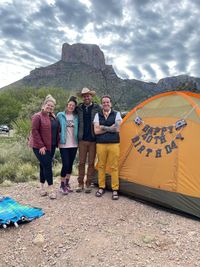
They even showed up, surprising me at my 40th birthday in Big Bend with a handmade piñata stuffed full of tubos.


Brother… I’ve never felt more seen in my life.

To this day, when I see a Camacho Corojo, something stirs inside me.


Not because it’s the greatest cigar ever made.

But because it represents what saved my life:


Brotherhood. Shared suffering.

People choosing each other when everything else was falling apart.


Here’s the truth most people never learn:


Brotherhood isn’t forged on mountaintops.

It’s forged in the valleys.


It’s forged in the nights when you’re detoxing, while the fellowship watches over you.

In the afternoons when you’re embarrassed to look your wife in the eye.

In the circles of folding chairs where you tell strangers your secrets.

In the small, steady moments when someone chooses to sit beside you when you have nothing to offer.


That’s what cigars have always represented to me…not status, not luxury, not pretense.


Connection.

Companionship.

A slow burn in a fast, brutal world.


We share cigars the way soldiers share stories…

between breaths, between wounds, between old ghosts that still rattle their chains.


When we light up together, it’s our way of saying:


“I see you.

You’re not alone.

We’re in this together.”


Because brotherhood isn’t about the easy seasons…it’s about enduring the hard ones side by side. If I’ve learned anything through addiction, recovery, faith, and fire…it’s that shared suffering becomes shared strength. The right people will meet you in the ashes, sit with you, and help you rebuild piece by piece.


Not because you’ve earned it, but because that’s what real brothers do.


And every time I smell that peppery Honduran aroma…every time I see a Camacho Corojo tucked in a humidor…

I remember:


I didn’t make it here alone.

None of us do.

And the journey is sweeter when you’ve got a brother lighting up beside you.

The Slow Burn: the Gift of Right NowThe Slow Burn: the Gift of Right Now
The Slow Burn: the Gift of Right Now

Back in 2004, I was chasing stagelights through backroads, little white lines, and dive bars. Running the west coast, cutting through the south, loading into venues where the floors stuck to your shoes and the speakers hummed like they were barely holding the electricity.


We were musical nomads, broke, hungry, determined, but somehow “arriving.”


Growing up in the Dallas music scene of the 2000s was magic: Blacktie Dynasty, Midlake, Flickerstick, Kessler, The Feds, Mermaid Purse, SouthFM, Forever The Sickest Kids, Ryan Cabrera, 7 Channels / The Vanished, 40Percent, Barefoot, Artist Vs. Poet, The Secret Handshake…


If you know, you know.


Then the labels started calling:

MCA. Universal Motown. Fearless. Idol. Epic. Virgin.


Suddenly, everyone's getting “deals.” Some of us landed on VH1’s Bands on the Run. A few performed on SNL. My old roommates toured with Kid Rock and Lynyrd Skynyrd. Friends were in Rolling Stone. Ashley Simpson appearances. Tour buses. Backstage bracelets. All of it.


So when my favorite local band, the soundtrack of my twenties, announced a reunion show this year, I felt like someone tossed a match onto old film reels in my brain.

Flashbacks.

Sweat.

Youth.

Everything.


These guys were family.

We played stages together.

Stood in each other’s weddings.

Broke bread, bones, and band rules.

We fought other bands together (listen, the early 2000s were wild).


But my buddy wasn’t as enthusiastic.

“It won’t be the same. He can’t sing that high anymore. The lineup’s different. Bet they use tracks.”


And honestly… I sorta felt it, too.

But we did what good friends do: we showed up.


We met at our old stomping grounds, Angry Dog, ordered the same junk food we used to inhale at 2 am, and reminisced. My buddy kept bringing up all the things that could ruin the magic, so I finally looked him dead in the eye and said:


“Why are we here?

Why’d we drive an hour?

Why pay $40 for parking and $20 to get in?

We’re chasing a feeling, man."

That’s all.


But we’re not the same guys anymore, and that’s the point.


We aren’t the same people we were. We've grown into respectable men with an entirely different value system. The way in which we view the world is much wiser, less ideal, and quite a bit more honest. Although our memories feel as close as our wallets, we will never be able to experience what "was." And that’s the beauty of it. We can watch it for what it is now, not for what it used to be.”


We weren’t there to recreate what was.

We were there to honor what is.

Different men. Different priorities.

But the same heartbeat.


And being there reminded me of the quiet, overlooked gift of presence.


After scarfing down our old Angry Dog orders and talking trash like we were still in our twenties, we stepped outside before the band went on. The night air hit just right, that mix of downtown concrete and nostalgia, and my buddy pulled an H99 Papas Fritas out of his pocket like he was revealing state secrets (btw, his old band The Secret State was legit).


We lit up and instantly time-traveled.


There we were, two washed-up former “cool guys,” standing in an alley behind a venue, smoking a damn good cigar and remembering when we could get into any club in Dallas without waiting in line.


We talked about how we used to get stopped on the street.

How promoters once begged us to play.

How bartenders knew our names.

How we thought we’d live forever under stage lights.


Then we looked at each other and laughed, hard.


We weren’t those guys anymore.

But that little stick of leaf and fire gave us permission to revisit them… just for a moment.


And man… that cigar?

It’s a banger.


Complex, spicy, sweet, full of depth….like the perfect soundtrack for revisiting old versions of yourself without letting those ghosts rent space in your head.


It was a moment only the brotherhood of the leaf can create: halfway between memory and reality, halfway between the men we were and the men we’ve grown into.

And it anchored the truth I was about to learn inside that venue…


Like many of us, I’ve spent a lot of years re-tracing old conversations, replaying old jokes, and trying to resurrect my grandmother’s recipes with no success.


I wonder sometimes what 13-year-old me would think of 42-year-old me:

Would he be proud?

Embarrassed?

Would he think I peaked too early?

Would he still want to be my friend?

Would I be pinned at the top of his text thread?


The holidays bring nostalgia straight to your doorstep.

The crazy uncle with the cheesedip.

The cousin who suddenly becomes a political analyst after two White Claws.

Moms hovering over turkey like it's a newborn baby.


We revisit the same rituals every year, replay the same stories, but rarely sit still long enough to appreciate the sacred weirdness of the moment we’re actually in.


We’re somewhere between who we were and who we’ll become.


My mind?

Prone to wander.

It takes a good deal of focus to be present. It takes discipline to accept life on life's terms, to not get too caught up in "future-tripping" (the mental habit of getting lost in anxious thoughts and worst-case scenarios about the future, often due to fear and a desire to control the uncontrollable) or spending too much time on memory lane….to let life be what it is instead of what it was or what it could be.


But at that show?

We were present.

Beautifully, imperfectly present.


We screamed lyrics with strangers who once filled our MySpace Top 8.

We celebrated the fact that, somehow, the music still hit.

Maybe not the same way…

But in a way we needed right now.


That’s the beauty of music, it collapses time.

It stitches the past to the present, and if you’re lucky, it hands you hope for the future.


Presence is a currency.

And most of us spend it like we’re broke.


We waste today trying to resurrect yesterday or outrun tomorrow, forgetting that the only place life actually happens is right where your feet are.


But here’s the wild thing:

The more you practice being present, the richer your life becomes, and the returns multiply with compound interest.


Every moment you truly inhale

every conversation you fully show up to…

every memory you allow to become what it is instead of what you wish it were…

those moments stack.

They build.

They grow.


Presence doesn’t stay small.

It compounds into connection, clarity, gratitude, and stories you’ll tell long after the lights come up.


At the reunion show, I realized something simple but profound:


Nostalgia is sweet.

But presence?

Presence is sacred.


And cigars, like concerts, teach us this every time.


You light up.

You slow down.

You breathe deep.

You absorb the moment….not for what it used to be, but for what it is right now.


You savor it before it slips away.


Because one day, even the ordinary moments will become the stories we chase.


Light Up & Lean In

The Slowburn: The Best Worst Cigar I Ever HadThe Slowburn: The Best Worst Cigar I Ever Had
The Slowburn: The Best Worst Cigar I Ever Had

Many years ago, I spent a week under the Mexican sun at Haven Riviera Cancun with friends and family…the kind of trip where everyone’s vibing, everyone’s sipping, and everyone’s on island time…except the lone cigar guy in the group.


Ya boy.


Relegated to the smokers’ area like a feral cat wandering the resort grounds looking for a patch of shade and a moment of peace.


Mexico used to be a cigar paradise, back when cigar lounges were tucked inside every resort like little sanctuaries for the leaf. Dark wood, leather chairs, humidors humming like a choir. But over the last few years, the country tightened its smoking laws with the type of precision only government bureaucrats and angry HOA board members possess.


As a sober smoker, the crackdown hits different.


While everyone else is throwing back Scooby snacks and pounding mini-beers like they’re being timed, I’m over here trying to find a quiet spot to light up and lean in.

Not easy when the government decides smoking is basically sorcery.


In 2023, Mexico rolled out what might be the strictest tobacco laws on earth, no smoking in public. No beaches. No hotel patios. No nothing. Add a total ban on advertising, promotion, or sponsorship, and suddenly those once-romantic cigar lounges get repurposed into juice bars or yoga studios where Chad and Brittany can realign their chakras.


But the trip I’m talking about happened before the purge, back when you could still catch a faint waft of something glorious drifting across a pool deck.


So… back to the beach.


Traveling with a group always turns into a weird sociological experiment.

Everyone’s got their own ideas of paradise:


someone wants adventure


someone wants to shop


someone wants to sit in a chair for seven hours


someone inevitably tries to schedule a group activity at 7:00am


Eventually, we agreed on one shared quest:


Take a catamaran to Isla Mujeres.


We rented golf carts, zipping around the island like a broke version of Mario Kart, and eventually headed toward Tortugranja, a sea turtle sanctuary we’d read about. Educational. Wholesome. Instagrammable. A great story for later.


Except…


It was not what I thought it was.


What we walked into wasn’t a sanctuary.

It was turtle jail.

Different Yards. Different levels of security.

A full-on reptilian penitentiary dressed up as an “animal experience.”


"Clink."


That was the sound, the unmistakable prison-door clank, that echoed behind us as we stepped into Tortugranja. Not the soothing, ocean-sanctuary vibes I had pictured in my head. Nah. This wasn’t “Finding Nemo.” This was Shawshank Redemption.


Instead of a peaceful conservation refuge, it felt like we walked into Turtle County Jail, complete with different Yards.


1 Yard?


That was minimum security. The turtles there looked like white-collar criminals…accountants who fudged a few too many tax documents. They were pacing slowly, staring out into the distance like:

"If I ever get outta here, I’m goin’ straight."


2 Yard?

That was mid-security; the turtles who might have gotten into a bar fight or sold some questionable seaweed. They gave us that slow, squinty side-eye…like they were sizing us up:

"Yeah, you ain’t from around here, are ya, turista?"


And then…


3 Yard.

Maximum security.

Where the hard cases were. The repeat offenders. The turtles who’d seen some things. Their shells were cracked like they’d been through a few prison riots. These dudes were posted up in the corners like:

"What you lookin’ at, bro? You want the smoke? Didn’t think so."


There was one big-boy turtle, had to be like eighty years old, just staring at a patch of algae on the wall like Red from Shawshank. I swear if he could talk, he would've said,

"Been here since ’74… ain’t leavin’ till they fix the filtration system."


Meanwhile, the juvenile turtles were in another little holding cell, a daycare/solitary confinement combo, splashing around like they were plotting the next great escape.

One tiny turtle kept ramming the side of the tank with the kind of energy that said,

"I may be 4 inches long, but I WILL taste freedom."


I looked around and thought:

This is what happens when Pixar lies to us.


These turtles aren’t out here riding East Australian Currents hanging loose with Crush.


They're serving time.


Hard time.


If there had been a commissary window where you could buy shrimp with turtle stamps, I would not have been surprised.


Our time at Turtle Jail eventually came to an end, and we headed back downtown to do some shopping. You know how it goes…split up, wander, let the sights and sounds tell you what you “need” even though you don’t actually need a thing.


But me?


I did what any brother of the leaf does in a foreign land:

I went hunting for fellowship.


Near the docks, I found a little shop selling all kinds of alleged “Cubans.”

You could practically smell the counterfeits from the doorway.


But I still walked in, like a hopeful romantic.

I gave the boxes a once-over, the way only seasoned smokers do:


Factory codes?


Date codes?


Does the Garantia seal have the QR hologram or does it look like someone printed it off an old Dell inkjet?


Are the bands embossed or flat like kindergarten craft paper?


Are the colors slightly off, like a bootleg DVD cover from 2009?


After bartering over a box of “Siglo IVs,” I walked away.

Seal broken.

Vibes off.

Desperate sales pitch.

Everything inside me screamed, “These ain’t it, brother.”


As we made our way back toward the boat, my wife offered sweet condolences over the missed Cuban opportunity. Before I could respond, my friend, who I didn’t realize had been shadowing me like a cheerful golden retriever, chimed in: “Bro, don’t even trip. I got you!”


He reaches into his bag and proudly whips out a humidified 5-pack of Cohibas.

“I got these for $30, bro! Absolute steal!”


Someone definitely got robbed…


Still, he was so proud. So genuinely excited to bless me with what he thought was a treasure that I didn’t have the heart to tell him he’d purchased the cigar equivalent of a knockoff Gucci belt in Times Square.


“Let’s smoke these when we get back to the beach,” he said.


Brother…that sounds like a plan.


A few hours later, the sun is dropping behind the shoreline, the breeze is perfect, and he hands me a cigar with the kind of grin that tells you his heart is 100% in the right place.


Within moments, moments, my cigar explodes Yosemite Sam style, unraveling like a cheap party streamer. But I’m committed. I’m trying to cherish his excitement even as this thing tries to fall apart in my lap.


Then I glance over… and he’s staring at his, examining the large canoe forming like he’s witnessing a crime scene. He looks up at me with the most deadpan expression I’ve ever seen him pull off.


“These aren’t real Cubans, are they?”


We both LOST IT.


I’m talking full-on belly laughter…the kind where your lungs tap out and your eyes leak and strangers start checking on you. Two grown men, dying laughing on a beach in Mexico, smoking absolute dog-turds and loving every second of it.


And honestly?


It was the best worst cigar I ever had.


I used to spend so much time with him.


Before sobriety reshaped my life.

Before fatherhood reshaped his.

Before the heaviness crept in and made joy feel suspicious to him.


We’re different now.

Older. Busier.

Weathered by life.


He carries battles he’s not ready to say out loud. Depression and addiction lie; they tell you everyone is against you when, in truth, the people who love you are cheering the loudest.


But when I think of him, I rarely think of the hard stuff.


I think of us on that beach.


Two dudes, sunburned, sand-covered, laughing like kids….smoking terrible fake cigars and not caring one bit.


Just living.

Just being.

Just together.


It didn’t matter that the cigars sucked.

It mattered that the moment didn’t.


And here’s the thing we don’t talk about enough:


You never know when you’re living a “last” moment with someone.


The last time they’re light and free.

The last time they laugh that hard.

The last time life hasn’t yet buried them under a weight they don’t know how to carry.


Sometimes the worst cigars make the best memories.


Sometimes the cheap counterfeits mark the richest moments.


And sometimes the last thing you want to savor becomes the thing you wish you could go back to…one more time.


So when the moment comes…linger.

Laugh.

Lean in.

Savor the slow burn.


Because you might not realize the ember is fading until the ash hits the sand.


——————————————————————

P.S.

If you’re reading this and something in here hits a little too close to home…if you feel hopeless, isolated, overwhelmed, or like the darkness is closing in, please don’t try to carry that alone.


There is no shame in reaching out.


There is no weakness in asking for help.


And there is always someone who wants you here tomorrow.

If you are in crisis or having thoughts of harming yourself, please reach out immediately:


988 — National Suicide & Crisis Lifeline

(Available 24/7)


If you’re outside the U.S., contact your local suicide prevention hotline or emergency services.


Lean in.

Get help.

You matter more than you think, and the world is better with you in it.

The Slowburn: What Your Favorite Smokes Say About YouThe Slowburn: What Your Favorite Smokes Say About You
The Slowburn: What Your Favorite Smokes Say About You

Here’s a hot take: when someone asks, “What are some of your favorite smokes?” the answer reveals much more about the person than it does their preferences.


You can tell a lot about a smoker by the names that roll off their tongue. It’s not about showing off knowledge or flexing your humidor. It’s a snapshot of where they are on their cigar journey…their tastes, their values, and maybe even what they’re chasing when they light up.


The Heritage Peeps

If a smoker lists classics like Montecristo, Arturo Fuente, or Padron, they’re paying homage to the roots…to legacy, consistency, and lineage. These are the “heritage guys,” the ones who romanticize tradition. They probably remember their first cigar at a wedding or on a golf course, something given to them by an older uncle who always wore cufflinks. There’s nothing wrong with that; these brands built the foundation of cigar culture. They’re the entryway to respect, and often, nostalgia.


The New World Crowd

Then there’s the smoker who rattles off names like AJ Fernandez, My Father, or Oliva. These are the “New World” devotees….blending innovation with respect for old-school craftsmanship. They’re curious, hungry for complexity, and appreciate the fusion of Nicaraguan power with modern flavor. They’re the ones who probably started smoking post-2010, when cigars became a hobby as much as a ritual.


The Boutique Brotherhood

Drop names like Foundation, Black Label Trading Co., Crowned Heads, Tatuaje, or Warped, and you’re signaling something deeper. Boutique smokers tend to see cigars as art. They’re not just consuming; they’re participating in a movement. These smokers know their reps, the blenders, their farms. They care about storytelling, limited runs, and creative expression. They see cigars as a medium for connection, something more spiritual than habitual.


Other boutique brands worth checking out are Room101, Dissident, Illusione, Stolen Thrones, Patina, Jake Wyatt, Viva La Vida, West Tampa, Rojas, Casdagli, and the list goes on….


The Ultra-Premium Seekers


Finally, some chase Opus X, Davidoff, Atabey, Byron, Padron, Cohiba, Bolivar, and more. These are the brands that treat every stick like a ritual object, meticulous aging, rare tobaccos, opulent presentation, and a price point that often starts where others top out.. These smokers are about refinement…about curating moments that feel elevated. They may not smoke daily, but when they do, it’s an occasion. They appreciate rarity, presentation, and precision. Their answers reveal not snobbery, but intention, the pursuit of the perfect experience. Yes, some gravitate towards these smokes as a status symbol. However, don’t let a few bad seeds ruin the perception of these exceptional cigars.


Our “favorite smokes” evolve as we do. Each cigar phase…heritage, new world, boutique, ultra-premium…mirrors a chapter in our story. Some of us bounce between them depending on the day, the crowd, or the mood. At Brolo, we don’t judge the list. We celebrate it. Because what matters isn’t the label on the band…it’s the light in your story. So next time someone asks you, “What are your favorite smokes?” take a second before you answer. You might just learn something about yourself.


There’s something beautiful about cigar culture….how it dissolves titles, bank accounts, and egos the moment the flame touches the leaf. Around the table, a CEO and a janitor become equals. The leaf doesn’t care about résumés or last names; it just asks for your attention and respect.


Every puff slows the pace of the world just long enough for honesty to surface. You talk, you listen, you laugh…not because you have to, but because the space between draws and invites it. Cigars remind us that connection doesn’t require polish, just presence.


Whether you’re smoking a fifty-year-old brand or a garage-rolled boutique blend, you’re part of something ancient and communal. A conversation that’s been burning for centuries, one story at a time, one ember at a time. That’s the beauty of it all: cigars are the great equalizer.


They strip life down to its essentials…smoke, story, and soul.

The Slow Burn: The Gospel According to Tony StarkThe Slow Burn: The Gospel According to Tony Stark
The Slow Burn: The Gospel According to Tony Stark

Now, I’ve never really been into Marvel movies or comics. Sure, I had friends who collected them. We’d hit the arcade next door, burn through quarters, and then wander over to the comic shop to kill time before the next round of Street Fighter. It wasn’t the stories that hooked me…it was the camaraderie.


That said, there was one game I couldn’t stay away from at the arcade: Marvel Super Heroes. You’d drop in a quarter, grab the joystick, and pick your champion. There were plenty of options…Hulk, Spider-Man, Captain America, but every time, I chose Tony Stark. Iron Man.


At first, it was superficial. I liked the suit. I liked the sound of those plasma bursts. I liked how clean the animations looked as his repulsers fired from his hands. But over time, I realized something deeper. Tony Stark wasn’t just a superhero. He was human. And his humanity, his pride, his arrogance, and his flaws were what made him relatable.


He wasn’t born special. He wasn’t injected with super serum. He didn’t fall into a vat of radioactive waste or get bitten by a spider. He was a man…smart, broken, and self-assured enough to think he could fix the world by his own power.


Sound familiar?


If you strip away the suit, Tony Stark is a mirror. He’s every man who’s ever believed that if he just works hard enough, grinds long enough, innovates big enough, he can save himself, maybe even save others along the way.


That’s the American dream, right? Be your own man. Build your empire. Pull yourself up by your bootstraps.


But here’s the catch: the same self-reliance that makes us strong can also make us brittle.

In Iron Man 1, Tony builds the first suit out of desperation. He’s trapped in a cave, wounded, forced to reckon with the sins of his own creation, weapons made by his hands that have caused untold suffering. So he builds something to protect himself.


It’s noble, in a way. Resourceful. Ingenious.

But it’s also the beginning of his prison.


Because after the cave, Tony never stops building. He doesn’t build out of inspiration; he builds out of fear. Fear of losing control.


Fear of failure. Fear of needing anyone else.

And brother, that’s the same lie the enemy sells us every day:

“You’ve got this. You don’t need anyone else.”


For years, I believed that lie.


I thought if I worked hard enough, that if I grinded enough, it would somehow fill the void. But success doesn’t heal the soul. It just gives you fancier distractions.


Tony’s story is the same. He tries to control the chaos around him. He builds armies of suits. He creates Ultron to “protect humanity.” He even signs his name on the Sokovia Accords, thinking he can legislate morality. But behind all that invention is insecurity.


That’s what sin does. Our flesh feels powerful, but our spirit feels painfully alone.


In Proverbs 27:17, it says, “As iron sharpens iron, so one man sharpens another.”


The truth is, Tony Stark doesn’t have iron sharpening him. He is iron…blunt, unrefined, constantly grinding against himself. No accountability. No surrender. No brotherhood.


And when a man isolates himself in the name of “strength,” he becomes his own god.


One of the most haunting lines from Avengers: Age of Ultron is when Tony says, “I don’t want to hear the ‘man who died for nothing’ speech.”


He’s talking about sacrifice. He’s talking about avoiding failure. But what he’s really doing is confessing his fear, the fear of death, the fear of insignificance, the fear that all his striving is for nothing.


We’ve all been there.


There’s a Tony Stark in every man…the version of us that wants to control everything because surrender feels like death.


But here’s the paradox:

In Christ, surrender is life.


When Jesus said, “Whoever wants to be my disciple must deny themselves and take up their cross daily and follow me” (Luke 9:23), He wasn’t talking about martyrdom; He was talking about dying to the illusion of control.


Tony builds armor to save himself.

Jesus removes it to save the world.


I think about this a lot when I sit down to smoke.


The brotherhood of the leaf has a rhythm to it, one that’s slow, intentional, reflective. It’s not just about cigars; it’s about connection. You learn pretty quickly that no smoke is the same when you share it with brothers who sharpen you.


Tony Stark never had that.

And when he finally found it, in the Avengers, it was messy. Loud. Full of ego clashes and trust issues.


Sound familiar?


That’s the church, man.


Community isn’t clean. Accountability isn’t comfortable. But it’s where growth happens. It’s where the rough edges are refined, where the iron starts to shine.


The Apostle Paul writes in Galatians 6:2, “Carry each other’s burdens, and in this way, you will fulfill the law of Christ.”


If Tony Stark had understood that verse, Ultron would’ve never been born.


When we carry our burdens alone, they crush us. When we share them, we find strength, not in self-sufficiency, but in surrender.


Here’s the thing about iron…it’s strong, but it’s not invincible. When exposed to enough heat, it melts.


That’s what happens to Tony. Over time, the fire of his own ambition softens him. You see it in Endgame. The armor’s still there, but the man inside is different. Humbled. Tired. A little wiser.


That’s sanctification, brother.


It’s the process of being refined by fire. Of realizing that strength isn’t found in resistance, but in obedience.


When Tony lays down his life at the end, snapping his fingers to save everyone else, it’s poetic. It’s the first time he does something completely selfless. It’s his version of “Not my will, but Yours be done.”


That’s the beauty of redemption: even the most stubborn hearts can be reshaped in the fire.


In the same way Tony built armor to protect himself, we all do it…emotional armor, spiritual armor, relational armor. We use humor, success, pride, or intellect as shields.


But Ephesians 6 tells us there’s a better kind of armor: “Put on the full armor of God, so that you can take your stand against the devil’s schemes.”


That armor doesn’t come from self-manufactured metal. It comes from truth, righteousness, faith, salvation, and the Spirit.


The key difference?

Tony’s armor isolates him.

God’s armor equips us to connect, to fight together.


When I look at the Brolo community, the fellowship of the leaf, the brothers and sisters leaning in over smoke and story, I see the opposite of Tony’s cave. I see people stepping into light. Accountability isn’t glamorous. It’s not Instagram-worthy. It’s usually uncomfortable, awkward, and raw. But that’s where the transformation happens.


When I was at my lowest, I had brothers who didn’t let me stay there. They called me out. They prayed with me. They checked on me. They loved me enough to hold me accountable.


It’s easy to admire Iron Man’s genius, but I’m more interested in his redemption, in the slow burn that turned ego into empathy.


That’s the same fire I feel when I light a cigar with a brother who knows my story, the kind of connection that doesn’t require armor.


Because in the end, iron doesn’t stay iron forever. It gets shaped. It gets sharpened. It gets stronger in the fire.


And so do we.


We all have our suits.

We all have our caves.

We all have moments where we try to play god with our lives.


But thank God for grace.


Grace doesn’t demand perfection; it invites honesty. It asks us to take off the helmet, to be seen, to admit that we can’t save ourselves.


Tony Stark died saving others.

Jesus Christ rose so we could live.


That’s the difference between redemption through self and salvation through surrender.


At Brolo, we Light Up & Lean In because it’s not about the armor. It’s about the fire that refines us, the fellowship that keeps us grounded, accountable, and human.


So, here’s to the brothers who keep you honest.

The ones who tell you when your pride is showing.

The ones who sit in the ashes with you until the smoke clears.


Because iron sharpens iron, and together, we burn brighter.

The Slowburn: The Color of ConnectionThe Slowburn: The Color of Connection
The Slowburn: The Color of Connection

Without knowing her intent, my wife once asked me, “What’s your favorite color?”

Like many men, my response was dull: “Black. Beige. Earth tones.”


She didn’t buy it.

“Oh yeah?” she clapped back. “Go look in your closet and let me know your findings.”


Challenge accepted.


I know me.


I’m masculine. I track my protein. I work out. I stay ready. I smoke cigars. I like vintage. I like muscle cars. I keep the coffee black. My inner circle? Business owners. Ex-cons. Pastors. I can tell you which wild plants give you hell in the woods and which ones keep you alive on a survival hike.


So when I opened the closet door and stared at the rows of jackets, tees, boots, then caught sight of yellow, I paused.

There it was, bright, legitimate yellow, among all the natural, earthy tones.


Yellow?


Now, I’ve never been the Golden Arches type. I didn’t want people asking, “Wanna know how I know you’re gay?” when I rolled up in a Big Bird colored puffer jacket. Let’s be honest, most of my friends give me plenty of heat about my fashion choices. But here’s the thing: if yellow shows up in the closet, maybe I’m happier in yellow than I thought.


Turns out, yellow has a bad rap. Ever heard that McDonald’s uses yellow in its branding to keep people moving? According to color-psychology experts, yellow is “the most visible color in daylight,” and when paired with red, it triggers hunger, action, and quick turns. The fast-food world says: see the yellow, feel the urge, move on. Linger not.


But what if hang-time is exactly what you need?


People drawn to yellow are often energetic, positive, and forward-looking. They tend to see possibility everywhere, the type who chase new experiences and ideas. Yellow reflects curiosity, creativity, and enthusiasm for life. It’s the color of sunlight, and those who love it often have a warmth that naturally draws others in.


Yellow is tied to the left (analytical) side of the brain. It’s associated with clear thinking, learning, and sharing ideas. People who favor it often crave mental stimulation, they enjoy conversation, wit, and insight. They’re lifelong learners and quick thinkers, but can also overanalyze or become restless when confined.


Lovers of yellow often stand out without meaning to. It’s the color of visibility and confidence. They may not seek attention, but they tend to have a strong sense of individuality. They’re expressive, often the “light” in a group, the one who can shift a room’s mood just by being there.


Getting vulnerable here….every color carries a shadow. With yellow, it’s anxiety, impatience, and self-criticism. Because yellow-minded people are often idealists and visionaries, they can be easily frustrated when reality doesn’t match their vision. They’re often harder on themselves than anyone else could be.


I realized I wasn’t just wearing yellow for flair. I was wearing it because I’m done hiding in the shadows. I’m done blending in. The closet mirrored the leaf: earth tones, predictable, safe. But the yellow, bold, visible, said: I’m here. I choose to be.


In the cigar world, looks matter, but identity matters more. The wrapper, the band, the box, they all speak. But what they say depends on who you are. If you’re always hiding in beige, the story feels half-told. If you step into the yellow, maybe the full story demands to be told.


If yellow is your color, you’re the guy (or gal) who lights the cigar for everyone else. You bring the spark. You’re not content just sitting in the corner, you want to create connection. You’re not afraid to show joy, even in a world that rewards cynicism. You’re the sunlight through the smoke, the reminder that life, at its best, is meant to be shared.


So yeah, my closet shouted yellow. And I’m listening. Because clothes aren’t vanity, they’re context. They speak before you talk. They tell what your story holds.


For the brothers and sisters of the leaf: don’t just pick what blends in. Pick what rings true. Pick what matches your story.


Pick the cigar that makes you linger.

Light it. Let the flavor show. Let the color flash. Let your voice be seen.


And maybe, just maybe, the yellow wasn’t what you thought it was.

It was what you needed it to be.


Light up & Lean in. Brolo forever.

The Slowburn: Signing off, MTVThe Slowburn: Signing off, MTV
The Slowburn: Signing off, MTV

Seemingly, like every other summer night in 1996, I was at my friend Bobby’s house. Bobby was the kind of kid who could ace an AP exam, quote Kurt Cobain, and land a kick-flip before lunch. His parents had just upgraded from a modest three-bedroom house to what we all jokingly called a “McMansion,” complete with a pool and a pantry full of Gushers. With them working late most days, his house became our headquarters for mischief and music.


The rhythm of those days was predictable but perfect. Swim until the Texas sun made the water feel like bathwater. Ransack the pantry on a snack safari, piecing together a meal from off-brand cereal and leftover pizza. Lace up the Airwalks, grab our boards, and hit the pavement. The air shimmered with heat and freedom, and even though the new neighborhood was “fancier,” it didn’t matter. We were still the same kids, chasing the same feeling. Sometimes we'd catch a lift on someone’s handle bars, maybe tag behind on the bunny pegs or ride sketch. Between power slides and bunny hops, we’d skate until dusk, then rally the crew back to Bobby’s pool.


Someone always had a boombox nearby, MTV playing in the background through open windows. That was the soundtrack of our lives: The Smashing Pumpkins bleeding into Rage Against the Machine, followed by a flash of Mariah or Manson. We mocked the Spice Girls but knew every word.


Eventually, the grownups came home and sent half of us packing. But on the lucky nights, the sleepover nights, the real magic began. The glow of the TV, the hum of PlayStation loading screens, the laughter as Sweet Tooth torched us all in Twisted Metal. When the controller wars ended, we’d collapse into the glow of late-night MTV, Beavis and Butt-Head, Daria, maybe Loveline if we could stay awake.


And somewhere around 3AM, as “The Macarena” came on for the thousandth time, we’d lose it, tossing pillows, groaning, laughing, and eventually drifting off. Chlorine in our hair, static on the TV, and that faint hum of adolescence buzzing in the air.


Those were the nights that built us.


MTV wasn’t just a channel, it was a compass. It pointed us toward whatever was next. The bands, the clothes, the slang, the attitude. Sure, you could find an issue of Rolling Stone or Creem, but MTV showed you cool. It didn’t explain it. It didn’t hand it over in a feed. You had to tune in. Wait for it. Earn it. It birthed the “Golden Age of Cool.”


You couldn’t just pull up your favorite video, you had to catch it when it aired. You had to stay up late for the good stuff. You had to listen for what your friends said they saw. And that work, that anticipation, made it mean something. The first time you saw a video by Rage or Nirvana, it wasn’t background noise. It was an event. You felt like you discovered it before the world did.


Today, cool is infinite, and disposable. Algorithms spoon-feed us what we’re already supposed to like. We scroll through more culture in ten minutes than we could consume in a summer. Everything’s accessible, but nothing’s earned. There’s no more mystery in the hunt. No waiting for 120 Minutes. No staying up to catch that one song that defined your summer. No chlorine-scented sleepovers with the TV glow flickering across your friends’ faces.


The exploratory feeling, that anticipation, from digging through crates or catching an upcoming artist video at 2AM has been usurped by doom-scrolling. With zero intent and mindlessly, I consume media as if I were bored snacking. Don’t get me wrong, there are massive plusses to having never-ending accessibility. But the sheer quantity forces us to consume quicker.


When I had a Walkman, I was limited to one tape or one CD at a time. Often, the same one stayed in rotation for weeks. Like the back of my hand, I became well acquainted with an artist’s direction across an entire album…the lyrics, liner notes, artwork, the transitions between tracks, the rise and fall of each song.


It forced me to nurse my musings. Because there were so few of them, I had prolonged exposure to things I loved. We didn’t have streaming services in middle school. A CD in 1996 cost around $17, more than three times my $5 weekly allowance.


Now, with a tablet in hand and the help of AI, you can listen to your favorite artist instantly. If you’re good at prompts, you can even hear what your favorite artist would sound like through the lens of another decade. Fast-food entertainment.


Nearly forty years ago, MTV paved the way for how we discovered the music we craved. On December 31, 2025, MTV will conclude the broadcasts of its music-focused channels; MTV Music, MTV 80s, MTV 90s, Club MTV, and MTV Live. The decision, announced by Paramount Global, signifies the end of an era that began in 1981 when MTV revolutionized television by airing music videos 24/7.


This feels like the death of my youth. No longer an adolescent, MTV’s rebellion lives on in my heart. Before art was commoditized by streams, influencer crossovers, and brand deals, MTV showcased artistry and storytelling. There’s no way in hell you’d have seen Korn promoting a new SKIMS drop or Liam Gallagher touting “Wonderwall” flavored pasties from Greggs.


Yet, here we are.


McDonald’s in Canada released a “Bestie Bundle” in Taylor Swift’s honor, complete with friendship bracelets inspired by her concerts.


“Cool” isn’t about the algorithm. It’s about the feeling. It’s about gathering around the glow, whether it’s a TV screen, a fire pit, or the cherry of a good cigar, and knowing that something special is happening in real time. And maybe that’s the lesson MTV leaves behind: cool was never about access. It was about experience. About being there. About the mix of sound, smoke, and friendship that made you feel alive.


So here’s to the static, the soundtracks, and the summers that made us.


Signing off,

MTV.

And signing on,

Brolo.

The Slow Burn: If Brolo Was An AnimalThe Slow Burn: If Brolo Was An Animal
The Slow Burn: If Brolo Was An Animal

Someone once asked me, “If Brolo Cigars was an animal, what animal would it be?”

Not an easy question to answer, by any means.


First, I thought about my beloved dachshunds.

Nope, definitely not weenie dog approved.


Then, I thought about my love for elephants, which have always been my favorite animal. Probably because they grieve their dead and have a social hierarchy similar to ours. They build lifelong bonds with one another and have remarkable memories, they can remember other elephants, watering holes, and migration routes even after decades. They’ve even been known to stand vigil over fallen members of their herd, returning years later to touch the bones with their trunks. They mourn, they remember, and they stay connected, even when the herd moves on.


That’s powerful stuff.


And although I love them, majestic, intelligent, emotional, they don’t quite fit the Brolo mold.


Enter the Wolf


After a bit, a wolf came to mind.


Now, as someone with a faith background, we don’t typically align ourselves with wolves. “Beware of wolves in sheep’s clothing,” the Scripture warns, people who present themselves one way but harbor darker motives.


But I had to think long and hard about this.

Why does the wolf get all the bad publicity?


Some incredibly redeeming traits about this mammal deserve attention.

“Like wolves, Brolo values the pack, strong individuals moving as one, bound by shared experience instead of hierarchy.”


Instead of a pride like lions, wolves run in a pack.


Brolo thrives on brotherhood. Every cigar, every story, every burn is about connection, that sense of belonging to something wild, loyal, and unspoken.


Ritual & Reverence


This may be a stretch, but wolves have rhythm and ritual. They live by the cycles of the hunt, the moon, and the firelight. Wolves communicate through howls that aren’t random noise; each tone and pitch carries meaning: a call home, a warning, a roll call for the pack.


Brolo is the same way.


There’s ritual in cutting, lighting, and passing a cigar. It’s primal and deliberate, slow and soulful. That mirrors the wolf’s quiet reverence for its environment; it doesn’t take more than it needs, and it respects the balance of nature.


A wolf howls not to boast, but to connect.


That’s Brolo, not shouting to be seen, but sending a signal to those who understand the meaning behind the smoke.


The Brolo spirit feels like late-night laughter, records spinning, smoke curling through amber light. The wolf embodies that mood, a creature of dusk and mystery, thriving in the glow of a half-lit world. They’re intelligent, cunning, and deeply intuitive, just like how Brolo blends craftsmanship with emotion, memory, and story.


A wolf knows when to lead, when to follow, and when to rest. It knows its place within the pack and honors it.


When I think of wolves, my mind still wanders back to Scripture, the warning about wolves in sheep’s clothing. But what if we’ve misjudged them? What if the wolf isn’t the enemy, but the misunderstood symbol of strength, loyalty, and balance?


Wolves aren’t loners by nature; that’s a myth. They’re fiercely communal. They mate for life. They share responsibility for raising the young, hunting, and protecting their own. And when a member of the pack dies, wolves have been observed howling in mourning, a sound as haunting as it is holy.


Maybe the wolf isn’t the villain after all.

Maybe it’s the reminder that loyalty, purpose, and community are worth fighting for.

And maybe, just maybe, that’s what Brolo is too.


If Brolo were an animal, it wouldn’t be the loudest, the biggest, or the flashiest. It would be the wolf at the campfire, steady, loyal, reflective, and alive in the ritual of connection.


Light up & Lean In. Linger awhile….

The Slow Burn: The People BusinessThe Slow Burn: The People Business
The Slow Burn: The People Business

Recently, I got interviewed for a potential role on a television show about entrepreneurship.

They asked me what the most impactful story from my entrepreneurial journey was, and honestly, it’s not about the balance sheets, logos, or the number of staff under my leadership.


It’s about transformation.


There was a time I weighed over 350 pounds, flying 40+ weeks a year, hiding my shame behind tray tables and tight seatbelts. I was exhausted. My health was shot. My spirit was fading. But that season forged something in me that no MBA could teach: grit.


And that same grit, the kind you earn through pain and perseverance, is what I’ve poured into every venture since. I’ve helped scale multiple startups into thriving multimillion-dollar companies. I’ve helped grow a residential appraisal firm into one of the largest in the country, launched an affiliated AMC, and built a boutique cigar brand from the ground up.


But here’s the truth …I never set out to be an entrepreneur.


I just really love people.


I’m crazy about them. I lay awake some nights replaying conversations, wondering what drives each person I meet. I trace the red thread between our interactions, and more often than not, it leads to something beautiful…hearts that care deeply.


There’s my buddy raising his grandson full-time, giving that kid the kind of life many never get. Another friend who spends his weekends teaching kids to fish and hunt, passing on lessons of patience and respect. One brother shepherds broken men through recovery, while another has turned his pain into purpose, building businesses that bless other families.


One friend smokes cigars like a theologian studies scripture, quoting C.S. Lewis between tasting notes and bourbon pours. Another, an ex-con, turned lemons into legacy…rebuilding his life with faith, fight, and family. There’s the pastor I used to play music with in our rebellion years, now preaching about the same grace that saved us both. And then there’s “Glitter Pickle,” my go-to when I need laughter more than advice. But man oh man, his advice is good too.


One of my dawg’s just celebrated an anniversary in recovery. He completely rebuilt his life in the five years we’ve been kicking it.


These are my people. My tribe. My church outside the church.


Cigars brought us together, not as status symbols, but as a shared language of connection. The leaf is just the medium. The real art is in the conversation, the laughter, the quiet nods of understanding between puffs of smoke.


Life is fragile. We don’t know when our story ends…maybe you leave the house for creamer and never come home. So why not open yourself up to others now? Why not lean in while you can?


When we allow people in, we find purpose. We find connection. We find the kind of brotherhood that can only be forged in the fire.


That’s what Brolo is about, real stories, real people, and the slow burn that happens when you choose connection over isolation.


So, light up something new this week.

Pull your chair a little closer.

Lean in.

And if you haven’t already, grab one of the Brolo Founders Club Trucker Caps while you can. Only 50 were made, and they’re selling fast. Like everything at Brolo, they were made for connection: one story, one conversation, one believer at a time.

Light up. Lean in. The Founders Club rides first.

The Slow Burn: Do Your Tastes Change or Do They Change You?The Slow Burn: Do Your Tastes Change or Do They Change You?
The Slow Burn: Do Your Tastes Change or Do They Change You?

At my heaviest, I weighed 357 pounds. Maybe more. I remember stepping on the scale one morning, watching the number flash up, and deciding right then and there the scale was no longer a friend of mine. So I stopped stepping on it. No accountability, no reminder, just more spiraling.


Traveling constantly for work, I was on planes more than 40 weeks a year…San Francisco, Seattle, Portland, LA, New York, Chicago, Madrid, Frankfurt, you name it. Each time I boarded, I saw the fear in fellow passengers’ eyes, praying I wasn’t the one to sit next to them. Sometimes the seatbelt wouldn’t click, but in my shame, I’d tuck it under my stomach and pretend. I would rather die than ask for an extender.


My mental health unraveled.


Desperate, I paid $10,000 out of pocket for gastric sleeve surgery in 2014. They cut out a piece of me, and in a few months, I dropped 60 pounds. But here’s the thing about quick fixes: they don’t change the root. My addiction shifted, from food to booger sugar. Sure, I lost more weight, but I also lost a 401k and nearly lost my life.


I thought I was outsmarting my demons, but really, my best thinking had gotten me into rehab. And it was there that a street-wise theologian cut through my delusions with a single line:

“Look where you’re at, moth#rfu#cker, you don’t know sh*t.”


He was right.


Sobriety wasn’t linear for me. I relapsed. I got sober. I relapsed again. Over time, I got some runway under me. But with the runway came the weight back. I ballooned. My spirit was alive, but my body was failing me again. One day in prayer, I realized God gave me a temple, and I had spray-painted it in graffiti. My joints hurt, my confidence waned, and I wasn’t performing at work.


So I started again…this time slower. Tracking calories. Cycling. Hiking. Even pickleball for a minute (don’t worry, that cult didn’t keep me long). Step by step, choice by choice, I began to build. Last week, I weighed 192 pounds. Although I am not a proponent of a numer on a scale equaling “health,” I was proud. It took 9 years. Countless failures, small wins stacked up over time. I’ve learned: there are no shortcuts.


Where you put your focus reveals what you worship.


What you feed yourself…physically, mentally, spiritually….is what you become.


And cigars? They taught me that lesson too.


For years, I had an everyday stick. Smoked over a thousand of them. My daily driver. Then the price jumped by $85 a box, so I stopped. Out of necessity, I explored. I smoked boutique brands, factory specials, heritage names I’d overlooked, blends I’d never touched. It was like being a new smoker again.


And when I came back to my old faithful, it wasn’t the same. My palate had changed. The depth I’d discovered made my old go-to taste flat. What once comforted me now reminded me of scarfing down two McDonald’s combo meals in secret shame. It didn’t sit right anymore….because I had changed.


That’s the beauty of cigars. They evolve with you. They challenge your palate. They reward you when you step outside of routine.


For my brothers and sisters of the leaf: don’t just smoke what you know. Chase new horizons. Go hunt down that boutique blend you’ve never heard of. Trade with a friend. Buy something out of your comfort zone.


Because sometimes the best thing you can do for your palate, and for yourself, is to step into the unknown. That’s where the adventure lives. That’s where connection lives.


And maybe, just maybe, it’s where you’ll find the cigar that makes you linger just a little bit longer.

The Slow Burn: Closing the GapThe Slow Burn: Closing the Gap
The Slow Burn: Closing the Gap

Ira Glas says that, “It is only by going through a volume of work that you will close that gap [between taste and skill], and your work will be as good as your ambitions.”


If being a musician for 32 years has taught me anything, it’s this: to learn, you must do.

Like playing drums night after night in a half-empty bar, rehearsing licks until your fingers bleed, or figuring out how to play in time but stay on the back of the “one” deep in the pocket. There are no shortcuts in developing skill. No textbooks for instinct.


You have to put in the reps. Trial and error. Pain as a motivator. Experience as the teacher.


Cigars are no different.


Blending cigars is about the grind. You don’t get it right the first time. You don’t always get it right the tenth time. But you keep at it, because your taste, your vision, demands that you close the gap.


That’s the fight. The tension between what you imagine and what you can execute. And while I do not come from a lineage of master blenders, buncheros, or torcederos, I understand what it’s like to put yourself in the arena, knowing your work won’t live up to your own taste...yet. However, I understand that the only way forward is to keep doing the work.


Brolo is my fight through the gap. It’s the art of honoring tradition without being enslaved to it. It’s heritage rewritten for people who love the craft but aren’t interested in shortcuts, gimmicks, or hollow status.


The beauty of creative work, whether it’s music or cigars, is that it creates connection. Songs move people. Cigars bring them together. Both are slow burns, meant to be savored, meant to reveal layers.


And just like Ira Glass said...most people quit before their work has a chance to catch up with their taste. But those who stay? Those who fight through? They build something that matters.


That’s what Brolo is about. Not instant gratification. Not fast fashion for the humidor. Brolo is the slow burn. The long road. The gap between vision and execution, fought one cigar at a time.


Brolo are conversational cigars.


The kind that keep you engaged and grow more complex with each passing moment. The type of cigars you nurse because you just don’t want the experience to end. The ones that make you linger a little longer...maybe even light up another one.


Imagine this, you’re in a dimly lit lounge, tucked into the back booth with two old friends you haven’t seen in years. What started as a quick catch-up turns into a two-hour dive into life…kids, careers, regrets, dreams. The ashtray’s full, the server’s ready to close your tab, but nobody moves. The cigar keeps the conversation alive. You light another not because you need it, but because you don’t want the connection to end.


It’s late on a Friday night. The week’s been heavy, and you step out on the porch with a stick. One puff in, the stress loosens its grip. Then your neighbor wanders over, libations in hand. Before you know it, you’re swapping stories under the glow of the porchlight, laughing, listening, learning. The cigar stretches the night, and neither of you is in a rush to head back inside.


Or better yet, you get talked into attending a Saturday night service at the local place of worship. You walk in with zero expectations, just showing up to check the box. But then, something the preacher says stirs your heart. The words cut through the noise of your week and you can’t shake them. As you lean in, it’s as if he’s reading straight from your diary. Every sentence lands heavier, more personal, until you realize he’s speaking right to you.. Then comes the invitation. To receive the Good Lord as Savior. To repent. To make Him King of your life. Overwhelmed by unmerited grace, tears stream down your face. For the first time in a long time, you don’t want to leave His presence. The longer you stay, the more He reveals.


That’s the same heartbeat as a Brolo moment…it lingers, it grows deeper the longer you lean in, and it calls you into something greater than yourself.


The gap between taste and skill is a brutal place to live. You know what you want, you can see it in your mind’s eye, but your hands aren’t there yet. The riffs fall flat, the blends don’t hit, the stories feel unfinished. Most people quit here. They let the frustration win.


But if you press on, if you keep putting in the reps, something shifts. Slowly, your work begins to line up with your vision. Slowly, you start closing the gap.


And in between? That’s where the magic happens.


The lingering conversations in the back booth.


The porchlight reflections with a neighbor.


The sacred moment when grace hits and you don’t want to leave His presence.


Those are the markers along the way, the proof that the struggle is worth it. Because cigars, like music and faith, aren’t just about the product…they’re about the process, the community, the way they make us stay a little longer and go a little deeper.


That’s Brolo. Conversational cigars. Slow burns that honor tradition, celebrate craftsmanship, and invite you to linger in the moments that matter most.


The gap will always be there….but so will the people, the stories, and the slow burns that make the journey worth it.


Light Up & Lean In…linger a little while longer.

The Slow Burn: Heritage, Hurt, and the Brotherhood of the LeafThe Slow Burn: Heritage, Hurt, and the Brotherhood of the Leaf
The Slow Burn: Heritage, Hurt, and the Brotherhood of the Leaf

Cigar culture makes you think a lot about heritage. Whether it’s genealogy, family traditions, historical knowledge, or even the connection to identity, heritage is how we get cigars.


The modern cigar’s roots trace back to indigenous peoples of the Caribbean and Mesoamerica, like the Maya and Aztecs, who used rolled tobacco in rituals, medicine, and social customs. Tobacco’s spiritual and social importance in these ancient cultures laid the foundation for the premium cigar culture that later flourished.


Eventually, Cubans would refine cigars and pass down their traditions for generations. After the Cuban embargo, many Cuban manufacturers and farmers left the island, establishing brands and continuing their traditions in other countries such as the Dominican Republic and Nicaragua in the 1960s.


Fast forward quite a few years, and I was born.


Zero Latin heritage.


Born to a teenage mother and without a father, I struggled with connection to family. Shortly after I arrived, the state seized me, and I bounced through the foster care system.


A lot of shit happened. The type of shit that breaks people…the type that turns you cold and callous and makes you turn inward.


When you grow up without a clear heritage to cling to, you start looking for it anywhere you can. I tried to find it in sports, in bands, in church pews, in the bottom of bottles, even in things that nearly destroyed me. I wanted to belong. I wanted to know who I was. But identity doesn’t come easy when your foundation feels broken.


And yet, through all the chaos, there were flickers of light. My grandma did her best, even while tethered to oxygen machines. My uncles gave me laughter in the wild. They didn’t give me “heritage” in the Cuban sense…but they gave me humanity.


They gave me grit.


Later, I realized heritage doesn’t always come from bloodlines. Sometimes it comes from the brotherhood you choose.


The first time I lit up a cigar, I wasn’t thinking about heritage. I wasn’t thinking about Mayans, Spaniards, or Cuban exiles. I was just looking for a moment. But the more I smoked, the more I noticed something bigger happening.


Cigars weren’t just indulgences, they were bridges. In lounges, on patios, and around fire pits, cigars connected people who otherwise had nothing in common. Blue collar and white collar. Young bucks and old heads. Saints and sinners. Doctors, mechanics, pastors, musicians, all sharing space, bound by rolled-up leaves of tobacco.


That became my heritage. The brotherhood of the leaf.


Heritage, I realized, doesn’t always mean family lineage. Sometimes it means stepping into a tradition, adopting it, honoring it, and carrying it forward in your own way. For me, cigars became that inheritance.


So where does Brolo fit into all this?

Brolo isn’t just about cigars. It’s about connection. It’s about creating a new kind of heritage….one rooted in brotherly love, storytelling, and intentional craft. I may not come from a Cuban family of tobacco farmers, but I know what it means to grind, to build, and to dream. I know what it means to take ashes and make something new.


Brolo is for people who appreciate fine craftsmanship, not just in the leaf, but in life. It’s for the guy who’s worked with his hands all week and wants to savor a slow burn on Friday night. It’s for the woman who just closed a big deal and lights up to celebrate. It’s for the groups of friends who gather, week after week, to laugh, cry, debate, and pray together.


Our cigars are luxury, yes, but not the velvet rope kind. They’re not about exclusivity or status. They’re about craftsmanship with soul. Small batches, aged leaves, intentional blends, and designs that tell stories. Cigars that feel like home, even if your home doesn’t look like everyone else’s.


The irony isn’t lost on me. I grew up without much of a heritage, but I found it in the very thing that connects people across generations and geographies. And now, I get to create something that I hope will outlast me.


I’ve said before that Brolo is “luxury without pretense.” That’s still true. But maybe it’s more than that. Maybe it’s my way of leaving behind a heritage where there wasn’t one before. A heritage of connection. A heritage of brotherhood. A heritage of slowing down, lighting up, and leaning in.


Because if cigars taught me anything, it’s this: sometimes heritage isn’t given to you…it’s built, one slow burn at a time.

The Slow Burn: The Art in the AshesThe Slow Burn: The Art in the Ashes
The Slow Burn: The Art in the Ashes

So… you want to turn your hobby into “art?” Somehow bottle all the lightning that drew you to it in the first place and create a passion project? Take decades of experience on the sidelines and finally… get in the game?


Unlike Uncle Rico, I haven’t spent time wondering if “Coach woulda put me in fourth quarter, we would’ve been state champions. No doubt.”


No, I mused. I enjoyed. I beheld. I stood in awe of what cigars do for connection.


How do cigars connect people of all backgrounds, socioeconomic statuses, genders, or occupations? How does aged and fermented, rolled-up, dead tobacco leaves make people come alive?

Is it the camaraderie?

A shared focus?

Time spent with one another?

A deep, introspective, philosophical discussion?

The luxury of time and intention?


Surely it’s all of that…but also something more.


Because cigars became a bridge for me.


My childhood wasn’t picture-perfect. I had a kickass grandma and some crazy uncles who tried their best. They took me camping, gave me glimpses of joy, and I’m forever grateful. But the house was lonely, my grandma’s health kept her from walking like everyone else, and I was left with too much rebellion and too much energy to sit still.


I searched for connection in sports, in music, in church, even in the rooms of anonymous programs. After getting kicked out of a church and told not to ever return, I thought maybe that was it for me. But by God’s grace, and through the community of the leaf, I found belonging again.


Cigars became more than smoke; they were communion.


And yet, it can’t stop there.


“Okay Joshua, we get it. Cigars provided an outlet. But that’s pretty ethereal too. How do you put legs on how cigars become a place of connection?”


Let’s talk about the craft.


A great cigar affords conversation, which leads to community. And a really great cigar is designed to accomplish this on purpose. Premium brands consider everything: color palettes, surface treatments, typography, finishing effects, hinges, hardware, and interior design. Layer on top Grade A tobacco in the hands of a master blender who believes in your vision, and you’ve got something worth sharing.


But getting there? It’s no small thing. You need a factory. You need time for blends to come alive. Lawyers for trademarks. Designers for labels and boxes. Permits for distribution. And then, if you’re lucky enough to make it that far, you still have to sell.


That’s where Brolo comes in.


BroLo (Brotherly Love) is rooted in story, but not just mine. The real stories are the ones shared when smoking a Brolo…over coffee, at a car show, out on a patio, or tucked away in the back booth of a dimly lit lounge.


It’s a brand for people who appreciate fine craftsmanship…not just in the leaf, but in every detail. From the branding to the blending to the burn, Brolo is intentional. Luxury without pretense. Complex and sophisticated, but made for the real ones….the brothers and sisters of the leaf who light up to connect, reflect, and belong.


That’s not just art. That’s Brolo.

The Slow Burn: What I Learned the First Time I Visited NicaraguaThe Slow Burn: What I Learned the First Time I Visited Nicaragua
The Slow Burn: What I Learned the First Time I Visited Nicaragua

The road in Nicaragua is a holy place. Not polished, not pristine, holy because it’s alive. It’s where barbecue smoke mixes with the diesel of buses, where families pull out lawn chairs at dusk and post up roadside (yes, on the highway) to eat, drink, and be merry. The road is a drying rack for peppers and cacao, a cattle path, a marketplace, a gathering place. It’s life happening in the open.


Driving there is like playing a game I call “Is this a road?” Potholes aren’t just potholes, they’re axle-snapping craters that could swallow a sedan. Luckily, Waze has been baptized by the locals, complete with alerts for “potholes” (Grand Canyon size), police, and “sketchy bridges.” Dirt paths masquerade as highways, but the road is the spine of the country, with communities branching out like veins, each one with its own vibe.


It's worth noting, the national speed limit is 50 km/h (31 mph) for cars, trucks, and SUVs, and 40 km/h (25 mph) for motorcycles. Looking at a map, you’d have zero clue how far things are from one another that appear so close. God forbid, you get stuck behind an 18-wheeler. With “No Adelantar” posted every few miles, passing them is risking getting stopped by the policia…which also seem to be posted up every few miles.


Heading south to San Juan Del Sur, the landscape reminded me of backwoods Arkansas….beautiful, but scarred with trash and rusting cars. SJDS is a laid back, pure surf town. North toward Estelí, it’s another story: rolling green hills, volcanoes, and a sense of adventure that makes you want to disappear into it.. Granada carries scars of the revolution; colonial buildings pockmarked with bullet holes and a kind of desperation in the air, especially in low season. Estelí, though? Alive. Streets jammed with vendors, kids calling me “puta” (I fired back with my best Spanish roast and had them rolling in laughter). It was gritty, real, unforgettable.


And then there were the factories.


This is where I learned how little most consumers really know, or care, about how cigars are made. Behind the romance, there are shortcuts. Some factories “cook” leaves in pizza ovens to rush the process, others dye wrappers for better shelf appeal, or front-load the first third of a cigar with the best leaf so casual smokers think it’s “quality.” Many spray mineral oil on the tobacco to produce a “blue” tinted smoke. The color of the smoke we’ve come to love, may be anything but natural. Meanwhile, some of the brands you and I love? They’re paying their employees pennies while charging premiums for their brands.

It hit me hardest when I posted a pic on Reddit of puros I was smoking…real puros, meaning made from a single part of the plant in a specific region. Ligero from Estelí. Seco from Jalapa. True single-origin tobacco. Most people thought I was wasting money or didn’t know what I was talking about. Armchair quarterbacks, missing the point. Consumers don’t always want nuance, they want confirmation of what they already believe.


So what does that mean for Brolo?


It means I don’t play for the armchairs. I play for the brothers and sisters around the table. For the people who light up not just to taste, but to connect. For the ones who understand that cigars are more than smoke, they’re story, craft, communion.


My first time in Nicaragua taught me that the road is alive, the people are resilient, and the industry is messy. And maybe that’s the beauty of it. Like a good cigar, it’s not meant to be perfect….it’s meant to be honest.


No shortcuts.


No clout chasing.


No coattails.


Just good, old fashioned, well aged, premium hand rolled, Grade A tobacco.


Brolo is for authentic conversations. Brolo is for the early mornings and late nights. Brolo is an honest reprieve in a world focused on the “fastlane.”


So Light Up & Lean In. Smoke one by yourself or with a friend. Either way, savor the moment and the journey that brought you to it.

The Slow Burn: Living to Light UpThe Slow Burn: Living to Light Up
The Slow Burn: Living to Light Up

I was chopping it up over cigars with my friend, Micah Edwards (aka Mr. Texas Soul), when he dropped something simple but profound: “Ya just gotta live your life, man.”


As a former professional drummer, that hit me square in the chest. Too often, creatives sit around waiting for lightning to strike. Inspiration doesn’t always come like that. Sometimes it takes hundreds of bad songs to stumble into a good one. Sometimes it’s scraps and riffs pieced together into something raw and honest. Sometimes it’s a melody you can’t shake until it consumes you.


But at the root, what Micah said rings true. You can’t pull depth out of thin air. You have to live. You have to celebrate wins, mourn losses, wrestle with injustice, embrace joy, face grief. You have to stack chapters…good, bad, messy, glorious, to tell a story worth reading.


And isn’t that what cigars are? The stories they hold and the stories they spark.


By the time you’re reading this, I’ll be in Nicaragua. Most likely drinking strong coffee, cigar in hand, staring at the Pacific in San Juan Del Sur, prepping notes for Estelí. Soon, I’ll be sitting across from master blenders, smoking the first cigars that might one day carry the Brolo name. Running numbers in my head about foil and embossing, cut dies and packaging costs. Asking myself the same question over and over: will consumers care about this story?


I’m 41 years old, and I’ve done some L-I-V-I-N. This chapter feels exciting, but I know it won’t always stay this way. There are countless hurdles between here and the day someone lights up a Porchlight, Church, or Back Booth. It’ll be a while before Halfwheel reviews a Brolo blend, or Tim at Cigars Daily raves about the brand.


But when that day comes….these are the cigars I want you to reach for when your kid graduates, when you land that job you’ve been chasing, when you reconnect with an old friend. The stick you light after a long week or the one you share after a steak dinner that makes you feel like a king.


Because to be worthy of a good story, you have to have great chapters. And Brolo? Brolo was made for the moments that write them.

The Slow Burn: In the Ashes of DoubtThe Slow Burn: In the Ashes of Doubt
The Slow Burn: In the Ashes of Doubt

I had a dream.


I was swimming somewhere deep in the Amazon, jungle air thick, water brown, canopy overhead swallowing all but a ribbon of light. A small wooden dinghy drifted at the bank, but I leapt into the river. The current wasn’t fierce; it carried me just enough to feel alive, like adventure itself was flowing through my veins.


Then I saw it.


A snake…long, dark, and deliberate, tracked me along the shoreline. Its tongue flicked, its eyes locked mine, daring me to look away. When it finally launched into the water, it wasn’t just a creature, it was a challenge. A mirror of fear, an embodiment of the things we’d rather avoid. I searched for a stick, anything to defend myself. Nothing. The serpent surged closer, fangs bared. One foot from my face…


I woke up.


Startled. Heart racing. Safe in bed. But the dream lingered.


Like a Culebra twisted tight, life knots itself around us: fear, temptation, brokenness, hidden things. Sometimes the current feels calm, and sometimes it carries serpents our way. The choice is never whether danger exists; it’s how we face it.


For me, the dream wasn’t about the jungle or the snake. It was about being willing to stare straight into the eyes of what hunts me and admit…I can’t do this on my own. That’s when you realize faith isn’t a dinghy on the bank, it’s the lifeline pulling you out of the water.


Now, I’m not usually one to lean into dream interpretation, but I did what most of us do…I Googled it. Turns out, staring down a snake means I’m staring down my fears. Facing challenges head-on. So I had to ask myself: What am I afraid of?


Brolo isn’t just an idea. It’s love poured into every groove, every ember, every connection. It’s immersive and analog, a throwback to when life slowed down and people lingered. But here I am, in uncharted waters, swimming toward purpose, and suddenly, there’s a challenger. Something that doesn’t want me to succeed. Not a clean, quick strike either, but a venom that seeps slow: draining belief, bleeding hope, suffocating vision.


Failure wouldn’t just be fangs in my cheek…it’d be the slow death of watching people see me fall short. But I’m not wired to quit. Fear is only perception. And perception, like smoke, can vanish in the wind.


Some call it a premonition. I call it opposition.


Because I’ve felt the enemy’s embrace. Fear disguised as comfort. Lies disguised as limits. The kind that pigeonholes men who forget they were created to be conquerors. But through Christ, I have a birthright. My place isn’t earned by hustle or grit…it’s anchored in the unearned grace of God.


Enemies don’t attack what they don’t see as a threat.


So here I stand. Living on a prayer, yes, but also living on conviction. Brolo isn’t just cigars. It’s guerrilla warfare. Spiritual combat in a velvet glove. A spark in the dark. A fire on the porch. A brotherhood that refuses to bow to fear.


Send the snakes. I will not back down. The anointing is upon me. Through cigars, I preach the good news: that connection heals, conversation restores, and community ignites.


Next week, I’ll be in Nicaragua, sitting at the tables, smoking blends for Brolo. And the questions keep circling in my head. What if they suck? What if they connect? What if I fail?


But the truth is…the journey matters more than the destination. Every leaf, every draw, every handshake is part of something bigger than a single cigar. Who knows who I’ll meet along the way? Each one carrying their own story, their own struggles. And deep down, whether they’d ever admit it or not, every one of us is in need of a Savior.


My role isn’t to control the outcome; it’s to carry the mantle. To pursue excellence in the craft, to steward this brand and this brotherhood with integrity, and to trust that what’s meant to be will fall into place.


Because maybe Brolo isn’t about finding the “perfect blend.” Maybe it’s about finding connection in the imperfections, the conversations that light up around the table, the people drawn together by smoke and story.

The Slow Burn:Twists, Turns, and the Culebra ConnectionThe Slow Burn:Twists, Turns, and the Culebra Connection
The Slow Burn:Twists, Turns, and the Culebra Connection

There’s something about catching up with an old friend that feels a little like lighting a cigar you haven’t smoked in years…you remember why you loved it, but you also notice the new notes that only time could bring.


This friend’s world had recently been flipped upside down with some heavy medical news about his wife. The situation was still fresh, with more questions than answers. He and his family are like family to us. We met at church, bonded over life’s ups and downs, vacationed together, worked together, prayed for one another. Our lives are intertwined like a Culebra cigar.


If you’ve never seen one, the Culebra is a beautiful piece of cigar history. Back in the day, rollers were only allowed to take one cigar home per day. But one clever soul twisted three cigars together like a rope and called it one. “Culebra” means “serpent” in Spanish, and it’s as eye-catching as it is unique. To smoke one, you unwrap the ribbon, separate the three sticks, and enjoy each one individually….just as you should take life’s tangled moments apart and address them one at a time.


That was my plan, to help “lay the spaghetti out straight” for my buddy. We were going to work through the emotional, spiritual, and mental knots, see where the loose ends were, and find some strength in the middle of the mess. There’s a rhythm to these moments…finding the right stick, cutting, lighting, letting the smoke curl upward as you settle in. It’s not just about the cigar; it’s about preparing the space for whatever the conversation needs to be.


I arrived early at a cigar lounge I’d never really settled into before. The humidor had a solid mix: heritage staples, a few boutique surprises, some house blends for the budget-conscious. I circled it a few times before my eyes landed on something I’d only ever read about….a La Flor Dominicana Andalusian Bull. In the wild. Finally.


Ecuadoran Corojo wrapper. Known for its mix of spices, leather, and a touch of sweetness. Cigar Aficionado’s #1 Cigar of the Year. It’s the kind of stick that, for many, is a bucket-list burn. I grabbed it for $23 and paired it with a $6 Charter Oak Habano for later.


I settled into a corner with a perfect view of the room. Ten or so gentlemen sat in the middle, and before my first puff, I caught an earful of their conversation.


"Look, I don't talk sh!t about people, BUT…"


And there it was, the “BUT” that always means someone’s about to let it fly. What followed was a pile-on of negativity about a brand and its local rep. Not constructive criticism. Not even an honest recounting of experience. Just trash talk. And leading the charge? The owner of the lounge.


The first third of the Bull? Meh. Overhyped. But the second third finally opened up, more depth, more complexity. Still, it wasn’t enough to salvage the experience. The combination of a mid-tier smoke, a conversation dripping in gossip, and the weight of what I was about to walk into with my friend left me knowing I’d never come back to that lounge. Or smoke another Bull.


Because a cigar lounge should be a retreat. A refuge for camaraderie and brotherhood. This one? It was a den of deceit. If you can speak that openly, that venomously, about someone behind their back without shame…count me out. That’s the antithesis of Brolo.


When my friend arrived, the cigar became background noise. We talked about his wife, his kids, his faith, and his fears. We unwound the tight coils of uncertainty, the knotted anxieties, the what-ifs and how-longs. We took the Culebra of his life and straightened it…one conversation, one prayer, one moment at a time.


And that’s the thing. Cigars, like life, are better when shared with people who care about you, who lift you up instead of tearing others down. The leaf itself is just a plant….it’s the people who make it meaningful. And in that corner of a bad lounge, with an overrated cigar in hand (IMO), I was reminded why I started Brolo in the first place:


Not for hype.

Not for status.

Not for exclusivity.


For connection.

P.S. I told my buddy about my recent bull experience, not the sh!t, the Andalusian. He encouraged me to let it age…that it’s the perfect stick after it’s been well kept. Maybe I’ll give it some time and revisit the cigar and that lounge. After all, first impressions don’t always reveal an accurate depiction.

The Slow Burn: Testimony, Tension, and Tapping OutThe Slow Burn: Testimony, Tension, and Tapping Out
The Slow Burn: Testimony, Tension, and Tapping Out

It was June of 2017 when I decided to get “clean.”


In Narcotics Anonymous, there’s a key distinction, one that hit home for me: “Alcohol is a drug.” That statement wasn’t just semantics; it was structure. Guardrails. A line in the sand that helped keep me grounded. Everyone’s recovery looks different, and for me, removing alcohol was part of the formula. When I drank, the brakes came off, and the chance of me “scoring” skyrocketed.


So I surrendered. Humbled myself. Sat in the back of a recovery room, heart pounding, and admitted I was powerless.


Now, I already had a God of my understanding…but let’s be honest: my life didn’t exactly reflect the bumper sticker. I was playing the role, telling half-truths (which, let’s be real, are just lies in costume), and trying to polish my image while hiding the rot underneath. People-pleasing was my cardio. I cared more about what people thought of me than what God said about me, and most of the time, folks weren’t thinking about me at all.


But on July 5, 2015, I met Jesus. Not in the performative, fire-tunnel, revival-tent sort of way I grew up with…but for real. If we rewind the tape, you’ll see a kid caught between a charismatic church and a chaotic childhood. There were a lot of feelings in those pews, but not a lot of theology. And feelings? Feelings can be a liar if they aren’t tethered to truth.


My best friend’s dad was a preacher, so I logged more hours in youth camps and conferences than I can count. I think the leaders were well-intentioned, but we lacked spiritual discipline. And if your theology’s off, your whole worldview bends with it.


When my foundation cracked, I drifted.


I was a musician, an altar boy with a set of drumsticks, and I believe now that’s how God kept me close during those early storms. I’d been in the system: CPS, foster homes, bouncing around until my grandma got custody. She was my anchor, even if her body was failing her. Hooked up to oxygen machines, fighting COPD, and barely present, she still did her best to love me.


But I was performative. I learned to shine for approval. Play the part. Entertain the crowd. And somewhere along the way, I lost who I really was.


Fast-forward twenty years and I became the one thing I swore I’d never be: a drug addict.


“Cocaine is a hell of a drug,” sure sounds catchy until you’re sweating in a parking lot waiting on a plug that may never show. That lifestyle is slow death disguised as fast living.


Then, out of nowhere, a friend invited me to church.


I didn’t know it then, but God was lighting a flame. I went. Did some bumps in the bathroom mid-service. But something stirred. When my wife asked if I wanted to come back, I said yes without hesitation.


The second time I showed up, God did what I couldn’t do.


It wasn’t the stained glass or the steeple. It wasn’t an emotional high. It was communion. Not bread and wine, but the deep, sacred kind that connects a broken sinner to a holy Savior. I heard the call to follow Jesus. And for the first time in my life, I saw Him not just as a historical figure or a cosmic genie…but as King. As Brother. As Savior.


And still, it got worse before it got better.


Once my eyes opened, I saw my sin. I felt the weight. But I still tried to fix it myself….through works, volunteering, performance, leadership. None of it bridged the gap. I was still trying to earn what had already been given freely.


It took nearly two years before I finally tapped out of my way of living.


Relapse is part of my story. But redemption is too.


And by God’s grace, I haven’t touched that “booger sugar” in almost a decade.


P.S. At Brolo, we’re not here to impress the suits. We’re here for the real ones. The broken. The rebuilding. The searching. Whether on a porch with a $5 stick or in the back of a smoky lounge with a $20+ blend, if you’re lighting up to lean in, you’re one of us.


Because healing happens slowly…one puff, one prayer, one honest conversation at a time.


This is The Slow Burn.

The Slow Burn: When the Music ChangedThe Slow Burn: When the Music Changed
The Slow Burn: When the Music Changed

June 1, 1999. Napster hits the internet like a lightning strike, and the whole world starts humming a different tune.


CDs that once cost nearly twenty bucks, the sacred albums we used to dig for under fluorescent lights at Tower Records, could now be downloaded with a few keystrokes… for free. No more browsing aisles. No more liner notes. No more cracking open a fresh jewel case on the ride home. Just instant gratification in 128kbps.


We didn’t know it at the time, but something precious got left behind in the rubble.

Napster didn’t just disrupt an industry, it lit a fuse that would slowly burn through the soul of music itself. Suddenly, albums, once crafted like novels, with intention, story arcs, and side B surprises, were chopped up and sold one song at a time. The tracklist became a menu. The deep cuts became afterthoughts.


The artistry got fast-tracked.


The experience got trimmed down.


The magic got lost in the margins.


See, for most of history, musicians weren’t marketers. They weren’t CEOs. They were rebels, poets, wandering prophets with six strings and a dream. They didn’t chase “hits,” they chased truth. And when truth sounded like a guttural scream or a whispered confession, they put it to tape anyway.


That authenticity? That refusal to sell out? It meant something.


Even if it didn’t pay.


What Napster ushered in, and what streaming cemented, wasn’t just convenience. It was commodification. Artists were no longer seen as sacred voices; they were shuffled into playlists by AI. Vibes replaced verses. Clicks replaced commitment. And we, the listeners, stopped sitting with the full body of work.


We lost the ritual. We lost the patience.


But not all of us.


Some of us still value the album, the whole ride, not just the chorus. Some of us still listen front to back. Some of us still light up a cigar, drop the needle, and let the record spin.


Some of us still believe in the slow burn.


Craftsmanship has taken a beating in this on-demand world.


What once took a lifetime to master, years of patience, repetition, heartbreak, obsession, can now be digitally spit out, dressed up, and shipped in 48 hours. Autotuned. Pitch corrected. Time stretched. And worst of all… sanitized.


Back in the day, you had to bleed for it.


When artists recorded to tape, there was no Command-Z. You couldn’t fix it in post. Tape was expensive, and editing it required a razor blade, steady hands, and serious skill. That meant you had to nail the take. No smoke. No mirrors. Just grit and groove.


Today, any SoundCloud hero with a cracked DAW and a decent TikTok strategy can chart overnight.


Now, don’t get me wrong, I love a good hook. Give me something catchy, well-written, and I’m in. But there’s a difference between pop done well and pop pushed. One is art. The other is algorithm.


Take Fleetwood Mac, one of my all-time favorites. They didn’t just show up and start topping charts. That band weathered storms. Real ones. They toured like mad, worked out their sound in front of live audiences, and cut their teeth night after night. Their music wasn’t composed by committee or generated by trend data. It came from feeling. From failure. From betrayal, bankruptcy, and beautiful chaos.


You can’t copy and paste that kind of soul.


You can’t AI your way into Rumours.


I know a guy, more of an acquaintance really, who’s got a cigar brand. The whole thing feels like a side hustle for his passport. It’s got a goofy name, no sense of direction, and zero staying power. Sure, the cigars aren’t bad, but they’re empty. They’re unearned. Like a synth track made with loops and no lyrics…it might play, but it doesn’t stay.


Then there’s another cat. Slick branding, cool vibe, some early hype. But when you light one up? Meh. No depth. No distinction. No damn story. It’s a mixtape made of the same three chords you’ve heard a hundred times…different cover, same tune.


It’s not personal. But it is the truth.


Those brands, like so many SoundCloud sensations, haven’t done the work. They haven’t put in the reps. They haven’t bombed in front of half-empty lounges. They haven’t rebuilt after rejection. They haven’t lived in the valleys long enough to appreciate the peaks.


See, that’s what separates craftsmanship from clout-chasing.


Craft is earned.


Not bought. Not boosted.


It’s forged in fire. Just like a great blend…pressure, patience, and time.


And Brolo? Brolo is for the ones who feel that. Who know the beauty of a perfectly imperfect take. Who crave story, not just smoke.


We’re not trying to be the flavor of the week.


We’re trying to be the soundtrack to your slow burn.

The Slow Burn: Luxury Ain’t What You ThinkThe Slow Burn: Luxury Ain’t What You Think
The Slow Burn: Luxury Ain’t What You Think

A luxury brand is typically defined by the presence of premium materials, impeccable craftsmanship, a clear brand identity, and often, exclusivity. It’s not just about the price tag. It’s about intention.


Now, in my last post, I took a flamethrower to the tired idea that cigars have to be exclusive to be respected. That velvet-rope mentality? Not my vibe. But let me be clear…Brolo Cigars is a premium, small-batch luxury brand. Not because it’s hard to get. But because it’s hard to make right.


See, Brolo wasn’t built to exclude. It was built to endure.


One of my buddies recently hit me with, “But aren’t all cigars considered luxury?” I stared back with the kind of face you’d make after getting slapped in the mouth with the smell of boiled cabbage. “Absolutely not,” I replied.


And he’s not alone, many folks outside the leaf don’t know the difference.


So let’s clear the air.


Non-premium cigars often use chopped, short filler tobacco (aka the leftovers), can be machine-made, and tend to burn fast and flat…think dry, harsh, often chemically treated. They’re mass-produced for convenience, not craft.


Premium cigars, on the other hand, are made entirely by hand, using long-leaf filler tobacco that's been aged, fermented, and blended with care. They burn slow, draw smooth, and offer complexity; flavor that evolves. They require more time, more patience, more people. It’s said that over 300 pairs of hands touch a cigar before it reaches your humidor. That’s not a marketing line. That’s legacy.


Now, take that premium baseline, and tighten the batch size, dial in the branding, infuse it with meaning, brotherhood, and nostalgia…and you’ve got Brolo.


Made for everyone. Acquired by few.


We’re not trying to sell you something bougie. We’re offering something rare because it’s built that way. Built slow. Built real. Built with the type of quality you can taste.


And unlike many so-called “luxury” brands in the space, we didn’t throw our name on some bulk bundle and mark it up to slap it on a shelf in a VIP lounge. We did the work. We're doing the work.


“Why do you want to do this?” He asked next.


He meant it sincerely, not combative, just curious. So I gave him the noble answer first. I said I wanted to give back to the culture that’s given so much to me. That cigars have been more than a hobby…they’ve been a sacred rhythm in my life. A grounding ritual. A bridge between strangers. A balm in the middle of battle.


Blank stare.


But that’s the thing….some truths can’t be explained. They can only be experienced.


I could describe, in painstaking detail, what it feels like to watch fireworks cascade across a July sky, embers bursting over the lake, lighting the surface like stained glass, but to someone who’s never seen color, it’s just words.


The same goes for cigars.


To those who’ve never lingered long enough to truly taste a cigar …to feel its slow unraveling, it’s just smoke. But for those of us who know? It’s something deeper. A cigar isn’t just tobacco. It’s storytelling. It’s silence with weight. It’s the long exhale after a long day. It’s your buddy cracking a joke across the flame. It’s time, slowed down. It’s connection without the small talk.


Like campfires in the wild, cigars draw people in, not just for the heat, but for the space they create. A space where status fades, and people show up as they are. Puff by puff, wall by wall, the armor comes off. What’s left is the good stuff. The real stuff. Brotherhood.


And that’s why I built Brolo.


Sure, cigars are a luxury. They require time. Discretionary income. A slower pace of life. I get that. And while I’ll never water down what makes a cigar great, the craftsmanship, the quality, the intentionality…I also believe that luxury doesn’t have to mean elitist.


Brolo is refined luxury, made accessible.


It’s the kind of brand that wears denim, not tuxedos. Think more vintage Chevy than Ferrari. More back porch than rooftop bar. We’re not cutting corners, we’re just cutting through the noise.


This is classic American luxury, in the way Levi’s are luxury. In the way a cast-iron skillet or a leather-worn baseball glove becomes priceless with time. You don’t need a VIP pass to appreciate Brolo. You just need good taste.


We're small-batch, because we care. We're premium, because we believe you can taste the difference. But we're not here to impress. We're here to invite.


To light up, lean in, and lose track of time…together.

The Slow Burn: Suits, Status, and Smoke RingsThe Slow Burn: Suits, Status, and Smoke Rings
The Slow Burn: Suits, Status, and Smoke Rings

The deeper I go into cigar culture, the more I find myself quietly resenting the traditional format.


You know the one, suited-up men swirling whiskey, leather chairs, mood lighting, talking mergers and acquisitions while the smoke curls upward in quiet reverence.

It’s classy, sure. Polished. Iconic, even.

But let’s be real, it’s not the full picture.


Cigars are often marketed as a luxury…an indulgence tied to status, sophistication, and slow living.

And hey, I get it. There’s truth in that.


Premium cigars are handmade. Painstakingly so.

They say it takes 300 people, 600 hands, to create a single cigar before it ever hits your humidor.

Break that down and it checks out:

Growing. Harvesting. Curing. Fermenting. Aging. Sorting. De-veining. Blending. Rolling. Sorting again. Banding. Boxing. Shipping.


The craftsmanship? I’m all in.

The ritual? 100 percent.


But the status signaling? The over-glossed imagery of cigars as some exclusive indulgence for guys who collect watches and “network”?

That part grinds my gears.


Yes, cigars cost money.

Yes, smoking them takes time.

But how we enjoy them?

That’s where I think the cigar industry’s marketing has missed the mark.


You’d think every smoker was out there in a tailored suit with a rocks glass in one hand and a $50 stick in the other.

Sure, I’ve burned a cigar or two in a baller lounge. And yes, sometimes a setting calls for a jacket and a little extra polish. Weddings. Business events. The occasional fancy evening.


But that’s the exception. Not the rule.


Most of the time?

I'm on the patio.

In the lounge down the street.

Outside at a campground or city park.


Anywhere with fresh air and a little peace where nobody’s giving me the side-eye for lighting up.


I don’t need a three-piece suit and a tumbler of $200 Scotch to feel connected to the moment.

I need a good cigar, a little space, and no rush.


However, that’s exactly what most cigar brand marketing tells me I need to aspire to; a high-society lifestyle just to enjoy a premium stick.


Not to brag, but... I wore a suit damn near every day for years.

And let me tell you, suits and cigars don’t make the man.

A man (or woman) makes the suit.


I’ve presented in Chanel’s boardroom.

I’ve been inside the Nike hangar (shoutout to their jet tail number: N1KE—the ultimate flex).

I’ve sat across from hedge fund moguls and even held a meeting in Lorne Michaels’ office at SNL.


Outside of kicking it with the Clintons, flying PJs to Epstein Island (nah), or smoking with Saudi royalty, I’ve spent time with the exact people most cigar brands plaster all over their ads.


And yeah, sure, it’s cool. But they poop too.


A $50 cigar is out of reach for most people. And for the real ones…the everyday smokers lighting up three or four times a day, it’s just not sustainable. Sure, maybe some 1%er is puffing on a million-dollar Gurkha in a G5 while floating in an infinity pool. But let’s be honest: what do they really know about cigars? Do they love the craft or the exclusivity? Are they part of the brotherhood of the leaf, or are they just checking off luxury boxes?


It’s easy to poke fun at the absurd. But the truth is…they’re people too. And honestly, I’m glad anyone is enjoying a cigar, whether it’s because they’re hype-beasting for the ’Gram or they’ve genuinely fallen in love with the leaf.


Either way... they’re smoking. And that?

That’s a good thing.


Now let me hop off my high horse for a second.


What I’m really trying to say is this:

Great cigars provide connection.


Sometimes it’s introspection that leads to self-awareness.

Sometimes it’s the camaraderie of shared space that heals like a good therapist.

But it’s not about the suits or the ultra-lounges.

It’s not about velvet ropes or private vaults.

It’s not even about the price tag on the tobacco.


It’s the people.

The people make the leaf what it is.

Left on its own, it’s just a weed. But with the right hands?

It becomes something sacred.


I’m not here to pander to the old guard.

And to be clear, I’m not talking about disrespecting the legends who came before us.

I’m talking about this gatekeeping mentality…this idea that you have to be somebody to enjoy the finer things.

Or worse, that you’re not anyone until you’ve been granted access to their exclusive experience.


Brolo is different.


Brolo is a labor of love, for the everyday guy.

For the weekend warriors, the midnight thinkers, the blue collars, and the brown loafers.

It’s for the ones who know that meaning lives in the quiet, smoky spaces between moments…not behind a velvet rope.


I’ve never fit the mold. I didn’t grow up in cigar lounges wearing tailored suits and sipping bourbon with hedge fund execs. I grew up in honky tonks under neon lights, with the smell of stale beer, jukebox heartbreak, and stories that ran deeper than the pockets that told them.


Traveling in bands, I saw real America. Backwoods grit. 6th Street hipsters. Rail yard workers in Edmond, Oklahoma. Sunset strangers outside the Viper Room. The painted desert and the Guadalupe's slow bend. I’ve played Gruene Hall—the Texas Grand Ole Opry—and walked the steps of Red Rocks with calloused feet and big dreams.


And you know what I found in all those places?


Real people.

Some broke. Some loaded. Some saints. All sinners.

But if they had a cigar in hand, they had a story to tell…and a seat at the table.


I’ve lived a hard life and a privileged one.

Both sides of the coin.

And no matter where I was, or who I was with - outside of my faith - the Brotherhood of the Leaf was always there.


That’s what Brolo Cigars is all about.

Not status. Not exclusivity.

Connection.


It’s about lighting up and leaning in.

Laughing. Crying. Praying. Suffering.

Together.


This isn’t some next wave, cool-kid brand chasing trends.

Brolo is about the old truth in a new voice. It’s about honoring the ones who came before while giving the everyday smoker a place to belong, without needing an invite.


So when you light up a Brolo, you're not just smoking a cigar.

You're joining a fellowship…one slow burn at a time.


The initial blends will be ready to smoke in just a few weeks.

Years of burning, dreaming, journaling, and jamming flavors together…it’s all led to this moment. I’ll keep you posted, just like I always do. But if you want to ride shotgun for the real-time updates, follow along on Instagram: @joshua.am.stephens.


Nicaragua’s calling.

Stay tuned, fam. This slow burn’s just heating up.

The Slow Burn: Blending Ink and TobaccoThe Slow Burn: Blending Ink and Tobacco
The Slow Burn: Blending Ink and Tobacco

So… how do you come up with a blend?


Welp, I imagined it would be a lot like getting a tattoo…

At least getting one the right way.


See, what most people don’t realize about tattoos is that there’s a whole world of styles out there:

Black & grey. Traditional. Neo-traditional. Fineline. Trash-polka.


And here’s the thing: not every artist does every style well.

Sure, they can, but most of the really great ones?

They stick to what they feel.

What resonates with them.

What they love so much, they obsess over it…and it shows in the work.


I didn’t know any of this when I got my first tattoo at 18. All I knew was Tommy Lee had “Mayhem” across his stomach, and I thought:

“F’ yeah. Badass.”

(Shoutout to my inner drummer.)


A few bad tattoos and a little wisdom later, I learned:

You’ve got to do your homework.

Figure out the style you like.

Find the right artist who lives and breathes that style.


And when you do land that appointment, if you’re lucky enough, they don’t want your Pinterest sketch.

They want your idea.

They want guardrails, not blueprints.


If you walk in and ask them to trace something you found online, that’s not art.


That’s a copy machine.

It’s like asking Michelangelo to fill in a paint-by-numbers workbook.


Blending cigars is the same.


Over the years, I’ve smoked across the spectrum:

Factory Smokes. Wedding rolls. 25-year-old Cameroon wrappers full of cedar and cocoa and sourdough earth.

Infused cigars (not usually my thing, but I respect ‘em).

Dog walkers and Churchills.


Each has its place. Each has its fingerprint.


Cigars and tattoos are both crafts.


And just like you start to recognize tattoo styles, who does what, who nails portraits, who lives for traditional lines, you start to pick up on cigar styles, too.


Some brands try to be all things to all people.

But the best ones?

They lean in.

They know what they’re about.

And they double down on it.


When I started digging into my own blends, I didn’t come empty-handed.


I’ve kept a cigar journal for years.

Every stick.

Every note.

Flavor. Draw. Construction. Feel.

You could call it cigar smut at this point.


But it helped.


Because when I started comparing notes, themes started to emerge.

Turns out, I have a type.


Ecuadorian Habano wrappers.

Rich. Spicy. Oily.

Earthy with hits of leather and coffee.

Bold and intense.

A little like me. 😉


I love tobacco that’s sweet, smooth, and finishes fast.

That’s aged tobacco, well-handled, well-loved.


My draw preference?

Not Perdomo-tight, not milkshake-thick.

I want that smooth, open draw that hits like a cloud and burns like it’s got something to say.

That’s the pièce de résistance.


From there, I started Frankensteining ideas together.


But not in a lab-rat way.

More like storytelling in reverse.


I didn’t start with tobacco.

I started with story.

What do I want this cigar to say?


What feeling am I chasing?

What groove?

What does it taste like to sit on your front porch and feel the world slow down?

What does brotherhood and deep connection taste like?

What does it smell like when you light up nostalgia?


Some musicians are trained. Some just feel it.

Some sound like machines. Others groove with soul.


It’s not just talent.

It’s instinct.

Feel.

The difference between knowing the beat and living on the back of it.


I think cigars are the same way.

There’s nuance in the leaves.

And not everyone can feel it.


Thinking and knowing are not the same.


But I’m going to find out.


If all goes to plan, I’ll be smoking some initial blends in the next few weeks.

I chose to work with an artist whose work I admire…

Someone bold. Unique. Complex.


Unorthodox.

Just like Brolo.

Just like me. And hey, if it all goes to shit and this ends up being a pipe dream?

So be it.


I’ll keep grinding. Keep tasting.

Keep writing in my little cigar smut journal until the right door opens.


Because I believe:

The target attracts the arrow.

The teacher appears when the student is ready.


Am I ready?

We’re about to find out.

The Slow Burn: One Moment at a Time (Pt. II)The Slow Burn: One Moment at a Time (Pt. II)
The Slow Burn: One Moment at a Time (Pt. II)

“$21,000 and a Cigar Brand Dream”


Events can make or break a cigar brand.

Especially when the person holding the mic fails to connect.


I've pitched thousands of people over the years.

Hosted hundreds of events….some unforgettable, others... well, I probably left a few brain cells behind.


But one night still stands out.

Not because of who was there.

Not even because of what I said.

It stands out because of the tab:

$21,000.


Yup.

Twenty-one large.


Thank God it wasn’t my card, it was the company’s.

Corporate AMEX, God rest your credit limit.


The setting?

The Billionaire Boys Club, Midtown Manhattan.


No, not the Pharrell brand.


This was an ultra-lounge sitting quietly above a Ferrari dealership, because, of course, it was. One of those velvet-rope, "invite-only," high-gloss rooms that smells like generational wealth and overpriced cologne.


The mission?

Get in with the gatekeepers.

High-net-worth individuals. Board members. C-suites and their admins.

Not just shake hands, gain influence. Make them trust you. Make them use our solution.

The truth is, our company wasn’t exactly built for this kind of entertainment.

But I was.


Young, fired up, and chasing a challenge, I got handed the keys to a new vertical:

Celebrities.


No roadmap. No playbook. Just a target and a Rolodex that didn’t exist yet.

So I built one.

Within a year, I had cracked the circle. I was working with the ACPA (Association of Celebrity Personal Assistants) and the NYCA (New York Celebrity Assistants).

I connected with Steve Harvey’s assistant. Nate Berkus’s team.

Before I knew it, we had two headline events:


One at the newly opened SLS Hotel in Los Angeles, and another in New York, the night of the infamous $21K tab.


It wasn’t just about flash. It was about making people feel seen.

Even in a room full of status, people crave sincerity.


Some folks say L.A. is fake. I get it. With 243 plastic surgeons in Orange County alone, the stats kinda back it up.


But underneath the filler and flash, there are real people in that city, grinding, dreaming, and trying to make something of themselves in a place where social currency is fame, and the price of admission is exclusivity.


One of those people was Kim, a client of mine who ran operations for the ACPA, the Association of Celebrity Personal Assistants. She was also the handler for a nationally syndicated talk show host, which meant her life was a tightrope walk of managing egos, keeping up appearances, and maintaining absolute discretion.


Over time, we became friends.


I learned she loved to travel and craved new experiences.

But I also learned how lonely it could get.

How people only invited her places to get closer to her boss.

How dating was damn near impossible because she could never be sure if someone wanted her… or access.

By her own admission, she’d grown a little calloused.

Then there was Kelly

.

Kelly was—and still is—a total badass.

You know in the movies when someone says,

“Have your people call my people?”

Kelly is those people.

She’s the high-functioning bosslady behind a nationally recognized interior designer and TV personality.

Her days were packed with international travel itineraries, renovation projects, personal appearances, brand deals… and zero room for screwups.


She didn’t just keep things on track.

She made it look effortless.


I spent months flying between L.A. and New York, meeting with Kim and Kelly, building trust, and eventually co-hosting bi-coastal events that brought the A-listers and their teams together.

And somewhere along the way, I met Patrick.


Patrick worked for a star, the kind with a résumé longer than most people’s lives.

She was a legend of the stage and screen.

A Steel Magnolia.

A Moonstruck matriarch.

The voice in Look Who’s Talking.

And a force in Mr. Holland’s Opus.

She passed in 2021, but left behind a legacy of over 130 stage productions, 60 films, and 50 television series.

Working with her team was like stepping into cinematic history.

Now, a lot of folks get starstruck.

Me? Not really.


Well...

Except for that one time I choked at the urinal next to Steven Tyler.

(We’ve covered that.)


The celebrity assistants thought their bosses were high-touch.

But I was living in a different reality.

A billionaire reality.


They didn’t know that while we were setting up gift bags and lighting votive candles, I was fielding calls from the likes of Sadie Ferguson, Laurene Powell Jobs’s right hand.


Or that at any moment, the RNC (Reince Priebus) or DNC (Debbie Wasserman Schultz) might call with a last-minute ask.

Or that Philip Falcone might demand a car at the East 34th Street Heliport right now to get to the Hamptons by sunset.

Hell, one time Air Force One entered NYC airspace unannounced and rerouted every flight.

Suddenly we had heads of state and hedge fund execs scrambling for ground transportation.

Another time, a volcano erupted, and I spent two days rerouting a Bronfman (yes, that Bronfman) back to U.S. soil.


And yes...

Trump was impossible.

But I still landed the 2014 GOP Convention transportation contract.


Looking back, it’s easy to laugh.

It was wild.

It was chaotic.

And somehow…

It worked.

Not because I was “selling” something flashy.

Not because I knew all the right names to drop.


But because I understood what people really wanted.


Genuine connection.

And a baller service or product to back it up.


That’s it.

That’s the whole play.


And it’s the same thing I’m building with Brolo.

Because no matter who you’re dealing with…celebrity, billionaire, boardroom boss…

People remember how you made them feel.

They remember the experience.

They remember the connection.

They remember the moment.


And the people who remember those moments?

They come back.


It’s not about being the loudest.


It’s about being real.

Present.

Human.


The best brands aren’t built in boardrooms.

They’re built at the bar.

In lounges.

Over stories and smokes.

One moment at a time.

The Slow Burn: One Moment at a Time (Pt. I)The Slow Burn: One Moment at a Time (Pt. I)
The Slow Burn: One Moment at a Time (Pt. I)

Take my card. No seriously—take my card. I want to work with you.


That’s what Ricky Rodriguez said to me.


If you’ve spent any time in lounges across the country, or across the world, you’ve probably crossed paths with some characters. I’ve met the quiet types, the know-it-alls, the collectors, the “this one time in Cuba” guys, the purists, the punch-cut diehards.


But Ricky?

Ricky stands out.


He’s got a pedigree that fills a room.

Sure, he has a legacy; his grandparents laid the groundwork. But his reputation? That was earned.


Ricky spent 25 years at General Cigars, the largest premium cigar manufacturer on the planet. (Yes, the same General under Scandinavian Tobacco Group.)


If you’ve ever lit up a CAO OSA, Flathead, or Amazon Basin, you’ve tasted his work. He’s a Master Blender; a craftsman, a showman, and a genuine soul.


So when he rolled through my local lounge to present The Dark Time, I wasn’t gonna miss it.

I listened. I watched.

And when the dust settled, I caught him for a quick chat.


We started talking shop,…not just about cigars, but about something deeper.

The disconnect between the quality of the product and the way it’s sold.


We talked about how modern business development seems to have skipped the cigar industry entirely.

No data capture.

No pull-through strategies.

No real structure to how most brands track, follow up, or build anything scalable.


Just gut and grit.


We talked about consumers. About story. About connection. About how fickle this business can be.


And then, something I said must’ve landed.


Because Ricky handed me his card and said he wanted to stay in touch.


Honestly?

I played it cool.

I told him I had a day job that more than paid the bills (true).

Tried to act like I didn’t need the attention (also true, kinda).


But the full truth is:

I need all the help I can get.

Especially as an outsider.


A few messages later, we were texting.

Then… Facebook friends.


“Is this really happening?”

I kept asking myself.


I didn’t want to get too excited, so I did what any seasoned sales guy would do:

Put Ricky in a sales cadence and hoped for the best.


Reflecting on it now, I keep circling back to that famous phrase:

Carpe DiemSeize the Day.


But here’s the thing most people don’t talk about: “The Day” isn’t some epic, one-time event. It’s not a singular, cinematic, slow-mo moment. It’s a thousand small ones.


Waking up.

Making the ask.

Taking the call.

Sending the follow-up.

Responding when you’d rather scroll.

Pushing through the doubt.

Choosing to show up, even if you don’t feel ready.


The real wins?

They’re found in the minutiae.


The seconds.

The tiny choices.

The next best thing, done over and over again.


Seize the Moment

Now that’s the truth.

(And yeah… Eminem did warn us.)


Change doesn’t come in a thunderclap.


It comes in the flick of a lighter,

the flicker of a flame,

and the slow burn that follows.

The Slow Burn: Buc-ee’s, Bourdain, and a Shot in the Dark (Part II)The Slow Burn: Buc-ee’s, Bourdain, and a Shot in the Dark (Part II)
The Slow Burn: Buc-ee’s, Bourdain, and a Shot in the Dark (Part II)

Call it ancestral, call it instinctual, maybe it’s something buried deep in our DNA, but the camaraderie of the leaf draws us in like those who’ve gathered around fire for millennia.


The light flickers.

Smoke dances in the wind.

Time slows.

And for a little while… all feels right.


Whether I’m alone or sitting among a tribe, the ritual is the same. My breathing slows. My thoughts shift from “what’s next” to “what’s now.” Cigars have this rare power; they pull you inward while gently nudging you outward, inviting reflection and connection in the same breath.


In the deep, we connect.


Of course, that wasn’t how it felt when we first walked in.


Despite the warm welcome from the family, kids, wives, the whole crew, I found myself standing there, glassy-eyed and awkward, watching the owners work quietly in their dimly lit HQ like monks at morning prayer.


Did I misread the invite?

Was this one of those “come by” invites that doesn’t actually mean “come by”?

Was I the guy who brought a plus-one to a secret handshake?


Before I could overthink it any further, we were gently pulled into the orbit of hospitality.


Espresso?”


Now, we’re not talking about whatever comes out of the pod machine in your Airbnb. This wasn’t a countertop appliance you order with one click. No, they had somehow acquired a European, commercial-grade, Italian espresso machine; the kind usually bolted down behind marble counters in a Roman café where the baristas wear ties and judge your order silently.


Apparently, these machines aren’t available to us common folk unless you know someone who knows someone... or unless you're them.


It was beautiful. And terrifying.


Operating one of these machines isn’t just pushing a button; it’s an art. You’re dealing with water pressure, grind consistency, tamp weight, milk frothing angles, boiler temps. There’s no room for error. It’s part engineering, part witchcraft. And, according to the stories they told, they had broken it, multiple times, just learning how to master it.


Eventually, a perfectly pulled doppio was handed to Kaitlyn. Smooth crema. Golden brown. Just the right bitterness.


Like everything else in this place, it wasn’t for show. It was about care. Precision. Craft.


After a bit of small talk, we were offered a tour of the facility.


The owners still hadn’t said much but the silence didn’t feel rude. It felt intentional. Like they were measuring the moment. Listening more than speaking. Letting their work speak for itself.


We walked through shipping and receiving, where the bones of the business are stacked and sorted. Boxes, labels, tape guns…everything you need to keep the hustle moving.


Then came fulfillment, a space filled with finished product and curated details. Efficiency with soul.


Then... the humidor.


Except calling it a “humidor” is like calling a vault a closet.


It was sacred. Quiet. Like a museum of the modern cigar movement.


Every release. Every size. Ever.

Shelves stacked with boxes, accessories, swag, and branded ephemera that made me want to drop my wallet and whisper “take what you need.”


This wasn’t just storage. It was storytelling. History. A timeline of how far they’d come.


It reminded me that great brands aren’t built overnight. They’re built onehandshake, onestick, one box, at a time.


As we walked through the final room, I felt the nerves fade and something else take their place.

Respect.

Gratitude.

Drive.


I wasn’t just touring a facility. I was being given a glimpse into what’s possible when you stay true to your craft, your culture, and your calling.


This wasn’t a pitch. It wasn’t an interview.


It was a beginning.


And as always…


The slow burn continues.

The Slow Burn: Buc-ee’s, Bourdain, and a Shot in the Dark (Part III)The Slow Burn: Buc-ee’s, Bourdain, and a Shot in the Dark (Part III)
The Slow Burn: Buc-ee’s, Bourdain, and a Shot in the Dark (Part III)

The conversation starts to stall. Not awkwardly, just that quiet moment where everyone runs out of small talk and starts wondering if it’s time to wrap things up.


And then, Kaitlyn saves the day.


She casually nods toward one of the owner's watches and says something like, "Beautiful piece, you don’t see that in the wild very often."


Now, I should mention, my wife works in luxury goods. Big-time. She’s a leader at a global luxury conglomerate that owns, let’s just say… some of the most coveted names in horology. If it’s bougie, rare, or built by hand in a Swiss mountain village, Kaitlyn knows about it.


And she doesn’t just know it, she lives it.


Meanwhile, I’m over here happy if my watch tells time and doesn’t smell like campfire.

The owner perks up instantly. Like, watch-nerd awakened. He jumps up, walks over, and suddenly they’re off to the races.


Within minutes, the other owner joins in. Now it’s a full-on luxury goods summit in the back of a boutique cigar HQ. I’m just in the corner, smoking an unrelased version of one of their blends (it was fantastic), nodding like a guy who knows something about balance springs. I do not.


They’re dropping names like Panerai, Vacheron Constantin, IWC, brands where the complications (those little features beyond basic timekeeping) are borderline magic.


Minute repeaters. Tourbillons. Moon phases.

We’re talking precision engineering on par with Formula 1.


Turns out, these guys aren’t just into fine cigars; they appreciate craft in all its forms. And Kaitlyn? She’s fluent in the language of craftsmanship.


She’s got them absolutely eating out of the palm of her hand… or her wrist, I should say.

It’s not just that she knows her stuff, it’s how she carries it.


Graceful, sharp, totally unpretentious.

She’s not trying to impress anyone.

She’s just being herself, and they respect the hell out of that.


Meanwhile, I’m sitting there watching this all unfold and thinking,


“If this ever works out, it’s because she closed the deal.”


Sometimes the magic doesn’t come from pitching or posturing.

Sometimes, it comes from authentic connection.


From shared passion. From mutual respect. From knowing when to shut up and let the person next to you shine.


So yeah, I may have lit the spark, but Kaitlyn fanned the flame.


And in that moment, sitting in a cigar sanctuary deep in Central Texas, surrounded by espresso, horological flexing, and a room full of good people…


I felt the slow burn catch.


In between inquiries about limited productions, a command cut clean through the hum of espresso machines and watch talk:


“Take a seat.”


No hesitation. No smile. Just an unspoken vibe: We’re shifting gears now.

So I sat down. Quietly. Ready.

The conversation settled into cigars. Finally.


“So… you’re the Brolo guy?”

“Yes, sir. That’s me. In the flesh.”

“Where are your cigars made?”


“Well… quite honestly, I’m living on a prayer right now. I don’t have any sticks yet, but I’m in talks with a few notable factories.”


I could feel the pitch slipping, so I tried to pivot.“Do you guys do any private label projects for others?”

“No.”


Short. Definitive.


Later I’d find out they do private label work, but only for a select few. People they trust. People who’ve earned it.

Not… outsiders.


“Who are you in talks with?”


I rattled off a couple of names.

They looked at each other.

That silent look that says more than words.


Surprise. Curiosity. Respect.


But then came the gut punch, with a twist of grace:

“I’mma shoot you straight. I don’t give two shits about what you got going on... but because your wife is so awesome, I’mma drop some knowledge on you.” (Legendary opener, by the way.)“


We get a lot of people through here ‘starting’ cigar brands. We smile and wish them luck. But the reality? There’s way more to this than having a loaded wallet.


Anyone with $10K can fly to Nicaragua, slap a band on a cigar, and try to flip it. Almost all of them fail.”


That hit.

Not in a discouraging way.

In a truth cuts deep kind of way.

Not aggressive. Not rude.

Just real.


This was the moment where dreams meet the industry wall. The part where most people pack it up and say, “You know what? Maybe this isn’t for me.”


But I didn’t flinch.


Because I’ve heard this before.

In other rooms. In other industries.

From people who couldn’t see the vision, until they could.


They weren’t trying to break me.

They were trying to see if I’d break myself.


And I didn’t.


I smiled. Nodded. And kept my seat.

And then something unexpected happened:


We kept talking.


For the next two hours, we dug deep into blending philosophy, distribution strategies, consumer behavior, brand DNA, production pitfalls, running lean, value props for factories...

We nerded out hard.


And slowly, the energy shifted.


I wasn’t just “that Brolo guy.”

I became the little brother, still on the outside, but invited closer to the fire.


I could feel it.

They saw the passion.

They heard it in the way I spoke about storytelling, strategy, connection.


I wasn’t some schmuck with a few bucks and a Canva logo.

They saw the flicker.

Maybe they even saw the flame.


We bonded over our shared reverence for the leaf.

For the process.

For the people.


I’m forever grateful to Skip Martin and Michael Rosales of RoMa Craft for the generosity of their time, wisdom, and straight talk.


Their insights on cigar consumers hit deep:

“Consumers today want more than just a good cigar. They want a reason to care. They want connection. They want to know who’s behind it, and why it matters.”

That stuck with me.


Side note, RoMa comes from Rosales and Martin.

Brolo? Same roots. Brotherly Love.

It’s funny how some things just align.

And by the end of the conversation, they dropped one more gem, an opinion on the two factories I was considering.


They didn’t know my preference…

But they picked the same one.

Perfect alignment.


In that moment, I didn’t walk away with a deal.

But I walked away with something far more valuable:


Direction. Clarity. Confidence.


Everything they told me not to do?

I had already decided not to.

Maybe, just maybe…


I actually know a little something about this game.


The flicker’s getting stronger.


The slow burn continues…

The Slow Burn: Buc-ee’s, Bourdain, and a Shot in the Dark (Part I)The Slow Burn: Buc-ee’s, Bourdain, and a Shot in the Dark (Part I)
The Slow Burn: Buc-ee’s, Bourdain, and a Shot in the Dark (Part I)

Reaching out to cigar factories and brand owners for the first time felt like being a Yelp Elite Reviewer requesting a seat at Anthony Bourdain’s dinner table.


Not because I deserved one…but because I wanted in.


I suppose Bourdain’s famous disdain for self-proclaimed experts proved that even the real ones sometimes listened to the critics. But I wasn’t pretending to be a critic. I was just a fan trying to turn this wild little idea into something real.


My wife and I had planned a trip with my uncle to float the Comal River, a Texas summer tradition, complete with sunburns, smoked meats, and slow drifts. But at the last minute, he backed out due to medical issues. So what was supposed to be a family float turned into a romantic getaway.


We packed up the weenie dogs and hit the road Thursday morning. A change of plans, sure, but no complaints.


Then, the night before we left, somewhere between doomscrolling and insomnia, I stumbled across something in the digital abyss that stopped me cold


One of my cigar heroes was in town.


Not just in town, in the exact area we were headed. This guy lives in Nicaragua. What are the odds?


So I did what you do when a window cracks open:

I slid into the DMs.

From the Brolo Gram.

My first ever message.

A swing. A pattern interrupter. A shot.


“What’s up Chief?!

I’m Joshua, founder of Brolo Cigars—a boutique brand rooted in brotherhood, nostalgia, and small-batch craftsmanship. I’ll be in [your area] Thursday night through Sunday and would love to connect if you're around.

I admire what you've built, especially the way you’ve elevated small-batch production while staying authentic to the culture. I'd be honored to meet, even briefly, to hear more about your approach and share a bit about what I’m building with Brolo.

Hope we can light one up and talk shop. I'll work around your schedule if you're open to connecting.”


I figured it’d end up buried in that weird “Message Requests” graveyard, never to be seen again.


But then:


"For sure, brother. You should come by our HQ on Thursday or Friday afternoon."


Hold up… is this really happening?


Greenlight (as McConaughey would say).


I looked over at Kaitlyn, ready to pitch the world’s quickest change of plans. Before I could get the words out, she was already nodding.


“Let’s go.”

Ride or die.


So Thursday morning, we loaded up the pups, pointed the truck south, and headed toward destiny... or at least New Braunfels.


Buc-ee’s, of course, was a required religious experience. Kolaches, jerky, beaver merch. Texas communion. We hit our Airbnb, unpacked, and I spent the rest of the afternoon nervously burning through cigars on the patio; mentally rehearsing every possible thing I could say… and maybe more importantly, what not to say.


Even though I knew this brand inside and out, even though I’d heard this guy on podcasts and respected the hell out of him, I couldn’t shake the nerves.


It reminded me of that time I ran into Steven Tyler at the urinal at Fogo de Chão in Addison.

(Yes, that Steven Tyler.)


The day after Aerosmith and Lenny Kravitz played Dallas, rumors were flying he was still in town. I’d scanned the dining room between meat sweats and trips to the salad bar, but no sign of him. Then, just when I needed to “wipe the dew off my lily,” there he was.


Now, if you’re a guy, you know the rules. Three urinals open? You go 1 or 3. Never the middle. It’s just a code.


I picked 1.

He walked in… and took 2.


I froze.


Looking back, part of me wishes I had turned to him mid-stream and said something unforgettable. Like, literally unforgettable. Because you can’t forget the guy who peed on you.


But no, I froze. No pee, no words, no memory made.


And that’s exactly what I was afraid would happen again.


That I’d choke. That I’d clam up. That I’d be just another schmuck poking around their headquarters, wasting a rare opportunity.


But then came the secret weapon: Kaitlyn.


Cooler than a cucumber. She carried the entire encounter like she belonged there. (Spoiler: she did.)


We pull into a nondescript business park. No signage. Just one of those places where big things happen quietly.


We step inside, expecting awkwardness…

Instead?

We’re greeted by the whole crew: wives, kids, family.


Suddenly, we’re not strangers, we’re guests.


Arms wide open.


(Under the sunlight... just kidding.)


To be continued…

The Slow Burn: The DanceThe Slow Burn: The Dance
The Slow Burn: The Dance

Like anyone standing behind a closed door, before you decide to open it, you ask:


“Who is it?”


Except this time, it wasn’t about my name. Let’s be honest, my name has zero credibility in the cigar industry. I’m not a third-generation anything…well maybe, degenerate but thats for another blog entry I suppose. I’m not an heir to a tobacco dynasty. I’m just the gringo who keeps showing up.


On the other side of that door was an experienced, savvy factory owner. A person who has probably seen more cigar dreams die on the vine than most of us have had hot dinners.


Ahh, but this was familiar territory. In sales, we do this dance every day. Sometimes it’s a waltz…graceful, rhythmic, effortless. Other times, your dance partner is stepping on your toes and you’re misreading every cue while pretending you aren’t.


But me? I’m a seasoned dancer.


(Man, the bros are never going to let me live that statement down.)


The questions came in rapid-fire succession:


“Please tell me what cigars from our brand(s) you like.”

“Have you been to Nicaragua before?”

“Are you looking for a single factory to produce all of your cigars?”

“What’s your desired timeframe for product launch?”


And then…the dreaded casket killer:

Do you have a background in the cigar industry?


If you’ve ever pitched anything, anything at all, you know this is where you either try to spin a fairy tale or tell the truth. I knew bull shit wouldn’t get me far.


This was not a moment to polish the turd.

However, if you wanna see me dance, you're getting a show.


So I took a deep breath, and I gave it to ‘em straight (with just enough heart to show I’m serious):


“Do I have cigar industry experience? The short answer, 0%.


But my background is in sales, branding, and startup growth. I’ve helped scale multiple companies from early-stage to maturity, and I’ve spent the last few years preparing to bring Brolo to life.


While I may be new to the cigar industry professionally, I’ve been smoking for nearly 20 years. Cigars have been a huge part of my life and my relationships.


I’ve spent a great deal of time in lounges around the world and am deeply involved in my local cigar community. Over the years, I’ve had countless conversations with brand reps. What I’ve noticed is that many operate with a lot of passion but not much strategy.


My background in sales and branding gives me a different lens. I see a chance to help shift that narrative: to elevate boutique cigar brands through better systems, deeper brand alignment, and more meaningful engagement with the people who light up every day.


Brolo Cigars is rooted in nostalgia, brotherhood, and storytelling. Think late ’70s aesthetics, old-school connection, and slow-burning moments that matter.


I’m not just looking to sell cigars. I’m looking to build something with soul.


From everything I’ve seen, [your] factory shares that kind of creative DNA.”


I hit send, fully expecting the polite “thanks, but no thanks.”


Instead, this landed in my inbox:


I would like to say that all this seems very impressive, and we picked up on the 70’s vibe right away. We think it’s very unique.”


We’re dancing now, baby.


I felt a little pep in my step. But in true cigar-industry fashion, the next volley came quickly:


“Are you the sole owner? I’d like to understand more about your distribution and sales plan, as I mentioned—this is crucial to the success of any brand. Also, what experience do you have blending cigars, or what attributes do you think will help you in this process?


This is how it goes.


One step forward, one question deeper.


You keep moving, you keep showing up, you keep dancing, even when you feel like an outsider in the room.


Even outsiders have a place.


Keep showing up, trust your story, and savor the slow burn…one moment at a time.


The Slow Burn: A Gringo with a DreamThe Slow Burn: A Gringo with a Dream
The Slow Burn: A Gringo with a Dream

So, how do you start a cigar brand?


Well, first things first:


I’ve never farmed a day in my life.


Over the years, I’ve read more about tobacco cultivation than any reasonable person probably should. I’ve dug into the variables that shape a quality priming: climate, sun, rain, humidity, soil, elevation, shade, curing, fermentation, aging…the list goes on. And on. And on. I’ve learned about how even the angle of shade cloth can make or break a harvest, the delicate balance between tradition and innovation, and the endless debate about how long tobacco should rest before it’s rolled.


The truth is, generations of families have devoted their entire lineage to getting it right. Every crop is another chance to fine-tune the process…one season, one leaf, one priming at a time.


Me?


I’m just some gringo with a dream.


I’ve heard more cautionary tales than I can count; stories of people burning through mountains of cash chasing the smoke. Some started with the best of intentions. Others saw dollar signs. Most never made it past the first few production runs.


Why? Because the cigar business is, in a word, unforgiving.


Consumer preferences shift. A blend that’s hot today is forgotten tomorrow. Crops get lost to hurricanes, fires, disease, or mold. Even the most seasoned industry veterans aren’t immune to the random hand of fate or the slow creep of bad luck. Production strategies shift. Distribution deals fall apart. Costs skyrocket.


You don’t have to look far to see how quickly it can all go sideways.


Yet, here I am.


Not because I think I’m smarter or luckier than those who came before me. But because I believe there’s still room in this industry for something honest, something built on respect for the craft and the people who keep it alive.

Like many cigar aficionados, I spent years as an armchair quarterback. I was quick to pass judgment on a blend or a brand without any idea what actually went into it. That’s how it goes in this world: everybody’s got an opinion, and opinions shape perception.


If I tried something new and it burned sideways, even if the flavor was fantastic, strike.


If the burn was razor thin and stacked dimes but the draw felt like sucking a milkshake through a coffee straw, strike.


If the wrapper color looked “off” to my eye, pass. Strike.


But unlike baseball, cigar smokers don’t usually give you three pitches to hit a home run. They give you one proverbial swing. Maybe you connect, maybe you don’t.


And here’s the kicker; it might not even be the brand’s fault if the experience disappoints. Cigars are subjective by nature. Maybe the retailer’s humidor was out of balance. Maybe the consumer didn’t store the stick right after they bought it. Either way, brands can’t control those variables but those variables still break consumer confidence.


Side note: If your local tobacconist ever hosts a Humidor Discovery Night, do yourself a favor and go. It’s the purest way to experience a cigar. They’ll take two cigars that look similar, remove the bands, and have you smoke them back to back. No preconceived notions. No brand legacy to lean on. Just you and the tobacco. You might be surprised how often you’ll love something you never would’ve picked for yourself. If your in DFW, check out Viso Cigars on Tuesday nights from 6pm-9pm. Great staff. Great people. Unique experiences.


Anyway, back to the gringo with a dream.


Considering everything I’ve just laid out, you’d think I’d have tucked this idea away in the “nice thought, never gonna happen” category. But at some point, you’ve got to put legs on your dream. Carpe Diem.


After months of research, I narrowed my search down to a handful of factories that seemed like the right fit. How did I choose? I wanted something different but familiar. Cutting edge but rooted in tradition. A little unorthodox. A little Brolo.


And yeah, there’s always the question: What if consumers don’t have a good association with that factory? Maybe they don’t like a certain brand that comes out of the same production floor.


This is the part where I channel my inner Steve Saka and say:


STFU and try the cigars.


Then… it happened. I shot my shot.


I sent the email.


And I got this back:

“Hi Joshua, Thanks for reaching out. Your approach seems intriguing and interesting (in a good way)….”


Could an outsider like me actually get a foot in the door?


The door creaked open.


So no, I’ve never farmed a day in my life. But I’m here. Listening. Learning. And taking the slow burn one leaf at a time.

The Slow Burn: Finding Myself in a Cloud of SmokeThe Slow Burn: Finding Myself in a Cloud of Smoke
The Slow Burn: Finding Myself in a Cloud of Smoke

I spent most of my twenties being everything to everyone. Chameleon. Sales machine. Perpetual traveler. I had a killer job that paid me to crisscross North America and Europe nearly 45 weeks out of the year. On paper, it looked like success. The kind you’re supposed to chase. The kind that convinces you to ignore that little voice in your head that whispers:


“Who the hell am I, really?”


When you live on the road that long, you start to lose track of yourself. Airports, conference rooms, hotel bars…it all blurs together. You learn how to smile on cue, close deals over steak dinners, and pretend you’re exactly the person your client expects you to be. It’s exhausting. It’s easy to forget the parts that make you, you.


My introduction to smoking was less than glamorous. My grandma was the original chain smoker. She’d burn through a pack and a half with an oxygen mask strapped to her face. The woman was tougher than a coffin nail, but the sound of her wheezing still echoes in my memory. Then there was my uncle, whose mantra was basically “wake and bake.” He had a pretty functional relationship with the green stuff, but he smoked everything like it was going out of style. Between them, smoking was something I swore I’d never touch.


Well, until I did.


There was a brief, regrettable stint with clove cigarettes. Djarm Blacks. They were a staple of whatever scene I thought I belonged to at the time. I guess we all have our “trying to look cool” phase. If I’ve learned anything, it’s this: If everyone thinks it’s cool, it probably isn’t.


Then, somewhere between time zones and client dinners, someone handed me a Cohiba Siglo. It was smooth and elegant. Nothing like the stale haze I’d grown up around. Like most things I get into, I went all in. Within a few months, I’d become insufferable, a self-declared Cuban purist. If it wasn’t rolled on an island, I didn’t want it. I oozed pretension. I’d talk about terroir and vintage with a straight face, like I actually knew what I was saying.


Eventually, I grew out of that phase and started exploring heritage brands. The ones with real stories and real craftsmen behind them. But it wasn’t until I walked into a local lounge that didn’t carry a single brand I recognized that everything shifted.


I was ten years into smoking cigars and thought I’d seen it all. But standing in that humidor, I realized I hadn’t scratched the surface. It felt like stepping onto a magic carpet, corny, but true. A whole new world opened up. It was magical. Like Aladin chasing Jasmine, I was in the clouds.


That moment stuck with me because it was the first time in a long time I was curious instead of performative. I wasn’t trying to impress anyone. I wasn’t trying to be anyone. I was just a guy, holding an unfamiliar cigar, excited to discover something new.


Somewhere in that cloud of smoke, I started to find myself again.


Brolo Cigars was born out of that feeling, the desire to strip away the labels, the posturing, and the ego. To slow down, be present, and just enjoy the ritual for what it is.


If you’ve ever lost yourself along the way, maybe you’ll understand why that matters to me.


Here’s to the slow burn, and to finally being comfortable in your own skin.

The Slow Burn: Why I Started Brolo CigarsThe Slow Burn: Why I Started Brolo Cigars
The Slow Burn: Why I Started Brolo Cigars

When I first started dreaming up Brolo Cigars, I knew it wasn't going to be easy. Most good things aren't...especially the kind that involve fire, patience, and a little bit of rebellion.


I'm not a third-generation cigar maker.

I didn't grow up sweeping the floors of a rolling room in Estelí or packing boxes in Danlí. I'm an outsider. Just a guy who has spent decades lighting up with friends, chasing that perfect draw, and falling in love with the way a cigar can slow life down. That was the spark: a desire to create something that honored the ritual, the conversation, and the quiet camaraderie of a good smoke.

But I'll tell you straight, romantic notions only get you so far when you're trying to build a brand in an industry that doesn't exactly roll out the welcome mat for newcomers.


I quickly learned that sourcing cigars is not a matter of picking up the phone and placing an order. Factories in Nicaragua, Ecuador, and Honduras are busy crafting blends for established brands that have been around since before I was born. Convincing them to take a chance on someone with no track record felt a bit like knocking on the back door of a speakeasy and hoping the doorman believes your story.


Each conversation started with skepticism, and fair enough. What did I know about primings, fermentation, or filler-to-binder ratios beyond what I'd read and smoked? But I also knew what I felt. Cigars have a soul. They deserve respect. And if I were going to put my name on one, I'd better be prepared to learn everything I could from the people who've spent their lives perfecting this craft.


Even after finding factories willing to talk, there were more hurdles. Tobacco is heavily regulated. Importing it is a maze of paperwork and compliance. On top of that, just finding a bank in the U.S. that doesn't slam the door in your face when you mention "tobacco" is its own special kind of frustration. I'd sit in meetings with local financial institutions, explaining that no, I wasn't selling vapes or anything illegal, just old-fashioned, hand-rolled cigars, and watch the polite nods that meant, "We'll pass."
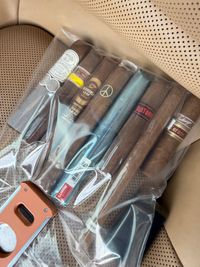

Those moments can shake your resolve.

They make you question why you're doing this at all. But for me, the answer has always been simple: Because cigars matter. They matter to the people who gather around them, who share stories, who mark life's milestones one slow burn at a time.


Brolo was never about chasing a quick dollar. It's about capturing the feeling of brotherhood; the way a good cigar can connect strangers, bridge generations, and transform an ordinary evening into something memorable. I believe that if an outsider like me can respect the craft, I can create something worth sharing.


So, this is the first post in what I hope becomes an ongoing story of building Brolo Cigars from the ground up. I'm still learning every day. I'm still knocking on doors and sometimes hearing "no." But I'm also finding partners who believe in this vision, and smokers who are ready for something honest, small-batch, and personal.


Starting Brolo is taking the bull by the horns.


Literally, in my case, somewhere in a shoebox, there's this photo of me as a kid riding a bull with more guts than sense. Back then, I didn't know much about fear. Or maybe I just didn't care. Years later, I'd realize that starting a cigar company as an outsider feels a lot the same way: You hang on tight, you trust your instincts, and you accept that you might get thrown off a few times before you find your stride.


Thanks for lighting up with me. Here's to the slow burn.