Brolo Cigars are only available through retailers. Support your local brick & mortar.

Joshua Stephens | Jan 1

The Slow Burn: The Year I Stopped Trying to Win

I’m a goal setter and an achiever. An Enneagram 3.


If you’re unfamiliar, Enneagram 3s are wired to win. We measure progress. We chase results. We read the room, understand the scoreboard, and figure out how to climb it efficiently. We’re builders, performers, producers. Put a finish line in front of us and we’ll find a way to cross it…often faster than expected, sometimes at our own expense.


At our best, 3s are disciplined, driven, and relentlessly productive. We know how to turn vision into execution. We can carry responsibility, inspire confidence, and create momentum out of thin air. We’re the ones people call when something needs to get done.


But there’s a shadow side.


For an Enneagram 3, worth and winning can quietly become the same thing. Success starts to feel like oxygen. Approval becomes fuel. And without realizing it, you can begin performing your life instead of living it. You don’t ask, “Is this good for my soul?” You ask, “Does this move the needle?”


Loss becomes unacceptable. Rest feels irresponsible. Slowing down feels like falling behind.


And somewhere along the way, you stop knowing where the finish line is…because you keep moving it.


A while back, some buddies and I started a residential appraisal business.


This year, that firm was nominated as one of the top three appraisal firms in the entire country. We might even take the number one spot. I’ll know in a couple of weeks. Either way, it’s a legitimate achievement. The kind you don’t accidentally stumble into.


It took vision. Long nights. Hard conversations. Systems built from scratch. Hiring the right people. Firing the wrong ones. Carrying risk when the market turned sideways. Saying no to comfort so we could say yes to growth. There were seasons where winning required everything I had.


And I don’t regret that.


But here’s the tension no one talks about.


Achievement has a way of pulling you into the future. You’re always reaching for what’s next…the next milestone, the next metric, the next accolade. And if you’re wired like me, you start living one step ahead of yourself. You’re in meetings thinking about outcomes. At dinner thinking about numbers. On vacation answering emails you told yourself you wouldn’t check.


Presence, on the other hand, lives in the now.

Achievement asks, “What does this become?”

Presence asks, “Who is here with me?”


Achievement is necessary to build something meaningful. Presence is necessary to remember why you built it in the first place.


Somewhere along the way, I realized that winning doesn’t always feel like winning when you’re never fully there to experience it. The moment passes, and instead of savoring it, you’re already calculating the next move. The scoreboard updates, and you’re already chasing a new one.


That’s when I started asking a different question.

Not “How do I win more?”

But “What am I missing while I’m winning?”


And that’s why I’m calling this The Year I Stopped Trying to Win.

Not because I stopped achieving.

Not because I stopped caring.

Not because ambition suddenly fell out of my bloodstream.


But because I finally stopped letting winning define whether a moment mattered.


For most of my life, winning was the lens. I measured seasons by outcomes. Progress by recognition. Worth by forward motion. If something didn’t move the needle, it didn’t count. If a moment wasn’t productive, it felt wasteful. Rest was something you earned after the work…never something that belonged inside it.


That mindset built businesses. It also quietly stole moments I’ll never get back.


This year, something shifted.


I still showed up. Still worked hard. Still pursued excellence. But I stopped white-knuckling every outcome. I stopped turning every interaction into a transaction and every season into a proving ground. I stopped asking, “How do I come out on top?” and started asking, “Am I actually here for this?”


Because here’s the truth I’ve been slow to learn:

You can win the year and lose the moment.

You can hit the milestone and miss the meaning.

You can achieve everything you set out to do and still feel strangely absent from your own life.


Presence doesn’t show up on a scoreboard. You don’t get awards for being fully there. No one nominates you for the way you listened, or the way you stayed a little longer, or the way you resisted the urge to rush to the next thing.


But those are the moments that stay.


They’re the ones that settle into your bones. The ones that don’t need validation because they’re complete all on their own.


That’s the slow burn.


It’s choosing to sit with the cigar instead of rushing through it. Letting it evolve. Letting the conversation wander. Letting the silence breathe. It’s understanding that some of the most meaningful parts of life don’t announce themselves as important while they’re happening.


This year, I stopped trying to win every room, every conversation, every season.


And in doing so, I started noticing something better.


I wasn’t losing…I was finally living inside the moment instead of past it.


That’s what The Year I Stopped Trying to Win really means.


Not quitting ambition.

Not abandoning excellence.

But refusing to sacrifice presence on the altar of achievement.


Because the best parts of life , like the best cigars, aren’t conquered.


They’re experienced.

Light Up & Lean In,

Joshua Stephens

More Posts

The Slow Burn:  BlacktopsThe Slow Burn:  Blacktops
The Slow Burn: Blacktops

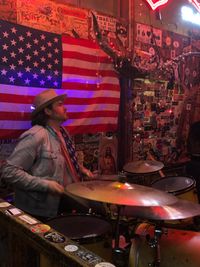
When I heard “dress for the job you want,” I grabbed the flare cuts and snip toes, layered a tank under a leather jacket, and let the locks fly beneath a high-crown trucker hat. Aspiring to more than a normal nine-to-five, I was going to be a rockstar, come hell or high water.


And boy…there was quite a bit of hell and high water.


Touring the country is a lot more romantic on paper and film. You tend to capture the highlights: audiences singing along to your songs, road shenanigans, funny skits, packed rooms. High-energy dopamine hits delivered moment after moment.


But that’s not the full picture.


Dreams require sacrifice.


Like driving a tour bus through Iowa at 3:30 in the morning. Or getting a social media notification of wedding photos from one of your best friends...another wedding you weren’t able to attend, laid at the altar of dreams pursued.


You drift a little farther from your closest circle with each passing zip code.


You watch friends behind screens build lives. They get married, have children, buy houses, get promotions, while you’re washing jeans in a Love’s sink. But you tell yourself living as a musical gypsy is freer than surrendering to some construct built by “the man.”


Then the microwave beeps, waking you from the autopilot life has become. You grab your $2.99 burrito and head back outside.


A slave to truck stops and blacktops.


The show must go on at all costs.


The American Dream doesn’t feel so dreamy.


So you embrace the struggle, pursuing what could be.


But if you pay attention, there are beautiful moments between those yellow lines. A sunrise on the horizon kissing the tips of corn stalks. Stumbling onto a melody somewhere between miles of asphalt while the rest of the band sleeps. Windows cracked, wind rolling through a van full of exhausted souls singing Waylon Jennings at the top of their lungs.


Crowds responding to your art in unison.


The venues get bigger. Eventually, you’re not loading in anymore. Road crews take over. Things start looking a little more like the dream you imagined.


Yet somehow, in the middle of all that magic, you can still miss the forest for the trees.

The Slow Burn: Kansas City Cigar FestivalThe Slow Burn: Kansas City Cigar Festival
The Slow Burn: Kansas City Cigar Festival

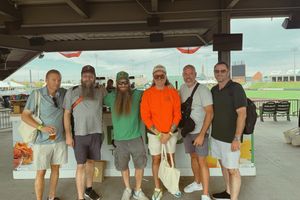
Last week, several of the Brolos and I attended the Kansas City Cigar Festival. The festival was Saturday, but we decided to make a weekend out of it. Because apparently a bunch of grown men with an unhealthy amount of cigars can't simply arrive at an event, attend it, and go home like normal people.


We left Dallas around 6-ish Friday morning and pulled into Kansas City around 4:45 that afternoon. In between were gas stations, snacks, questionable decisions, lunch at Bite Me BBQ in Wichita, and a quick stop at Old Town Cigars. Shoutout to Old Town, by the way. They had an awesome selection of boutique cigars, including some of the old-school Metapas from before Foundation rebranded them as Aksum. Those aren't exactly sitting on every shelf anymore.


But I'm getting ahead of myself.


Shawn arrived at my place a few minutes late and blamed traffic. In his defense, he wasn't lying. 380 in the morning is a complete nightmare. North Texas has grown at a ridiculous pace, and it seems like no amount of construction can keep up. Every road is simultaneously being expanded and somehow getting worse.


We loaded Shawn up and headed to a bougie neighborhood in Prosper to grab Justin. We made it through the gate, pulled up to the house, and there he was...sitting in a camp chair, bags packed, already smoking a cigar.


It was a sight for sore eyes.


Naturally, we immediately started roasting him for not even making it to 6:00 a.m. before lighting one up. His defense was that he was "afraid he would be left out." Justin is the newest cigar smoker in the group, but the man put the first number on the board that weekend. Kudos.


Next up was Mr. Babyface himself, Mark. Picture this: it's roughly 5:30 in the morning and Mark is standing outside next to his truck, bags packed, looking like his parents just told him they were taking him to Disney World. Everybody was ready. And for the next eight hours, we absolutely destroyed my car.


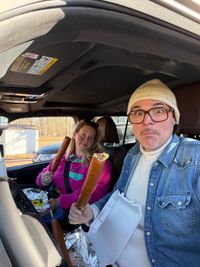
Four men. A few boxes of cigars. Windows cracked. Ash everywhere. I don't think it will ever smell the same again. But that's the price you pay for making memories around something you love.


We put Justin in charge of picking lunch.


This was our first mistake.

The Slow Burn: MaineThe Slow Burn: Maine
The Slow Burn: Maine

A reflection on Maine and the fear, pressure, and freedom that come with finally letting go of something you created.

Heritage: Recently, I’ve been thinking quite a bit about heritage and what that word actually means to me.Heritage: Recently, I’ve been thinking quite a bit about heritage and what that word actually means to me.
Heritage: Recently, I’ve been thinking quite a bit about heritage and what that word actually means to me.

It’s an all-encompassing term.


There are the tangible things and the intangible ones. The personal and the cultural. Traditions, values, stories, recipes, land, names, beliefs, habits, and physical objects passed from one generation to the next.


Some things are handed to us intentionally.

Others just arrive.


Building Brolo has me thinking about heritage quite a bit.


The cigar industry, maybe more than most, loves heritage. Many brands benchmark their quality against generational pedigrees, old-world traditions, luxury positioning, or some combination of the three. Families who have worked with tobacco for generations. Names that stretch back a hundred years or more. Stories with roots deep enough to make whatever they're selling today feel connected to something much older.

And there's something beautiful about that.


But where does that leave a kid like me?


I didn't grow up with a mother and father.


There isn't some great family enterprise being handed down to me. I didn't serve in the Armed Forces, and the only time I was involved with law enforcement was usually in the back of a squad car.


What the heck is my heritage?


And if heritage matters so much, how am I supposed to compete with that?


So I started digging.


Not through ancestry records or old family photographs, but through the things that got me here. The memories. The scars. The people. The failures. The things I learned accidentally and the things life taught me, whether I wanted the lesson or not.


I started asking myself:


What makes Brolo, Brolo?


The first image that came to mind wasn't tobacco.


It was a hay bale.


I was probably six or seven years old.


During the summer, my Grandma would drop me off for a week at my birth mother's trailer in East Texas, back behind the Pine Curtain.


Every summer, I dreaded it.


My second stepdad was quite a doozy...a real piece of work. Abusive. Violent. Looking back now, I can see he was probably just an angry boy trapped inside a man's body.


But when you're six, you don't have that kind of perspective.


You just know you're scared.


They lived in the country....or, as East Texans pronounce it, the cunnnn-trrrryyyyyyyy.


The acreage seemed to stretch forever, with a little creek running along the back of the property. My mother worked all day as a nurse, and my stepdad worked as a carpenter, taking odd jobs here and there.

I don't remember him being particularly great at woodworking.


But the man sure knew how to rip a doobie.


Wherever they were, I wasn't.


Most days, I was on my own, traversing the countryside. Climbing hay bales. Jumping hay bales. Falling off hay bales.


And, eventually, crying next to hay bales.

I remember getting hurt out there once.

And I remember being angry with myself for getting hurt.


Scared because I didn't know if I'd be able to survive a sprained ankle, let alone another week unsupervised.


Broken because I was alone and hurting.

And nobody showed up that day to help me.


Although that was the first time I remember feeling it, it certainly wasn't the last.


Those experiences taught me independence.


Eventually, they also taught me control.

If nobody is coming, you learn to handle things yourself. You learn to anticipate problems. You learn not to need much. You learn how to survive.


Useful skills.

Until they're not.


Because somewhere along the way, independence can become isolation. Self-reliance can become control. And learning not to need anyone can leave you desperately wanting someone.


Maybe that's heritage, too.


Not everything passed down comes in a box.


A few weeks ago, I went to the doctor for a regularly scheduled checkup. Somewhere between the blood pressure cuff and the usual questions, she started asking about my family.


Heart disease?

Cancer?

Diabetes?

High blood pressure?


She was trying to understand my family history...to identify the things buried somewhere in my DNA that might eventually become part of my story.


In other words, she wanted to know:

What runs in your family?


It's a clinical question.

But I've thought about it differently ever since. Because a lot more than disease runs in families.


Work ethic runs in families.

Faith runs in families.

Temper runs in families.

Generosity runs in families.

Addiction runs in families.

The way we handle money. The way we argue. The way we love. The way we apologize....or don't. The things we celebrate and the things we refuse to talk about.


Somewhere along the way, all of it becomes inheritance.


We tend to romanticize heritage.


Grandpa's watch. Dad's old truck. Mom's recipe written in her handwriting. The family Bible with names and dates scribbled across pages yellowed by time.

And those things matter.


But heritage has a shadow side, too.


Some things are worth preserving.

Some things are worth restoring.


And some things need to end with us.


My childhood was a lonely one through no fault of my own.


As I got older, I started pursuing people.

At first, probably because I was afraid to be alone.


I was tired of being alone.

I was starving for belonging.

But somewhere in that pursuit, I discovered something much better than simply not being alone.


I found connection.


If this were one of my gospel-centered recovery pieces, this is probably where I'd spend the next thousand words talking about how human beings were created for connection.


And I believe that.


I believe true connection begins vertically...with God...and that healthy relationships with one another are a by-product of that relationship.


But that's another rabbit hole for another day.


Back to connection.


Because that's what Brolo is about.


Not heritage manufactured through some bullshit origin story.


Not luxury for luxury's sake.


Not pretending we've been making cigars since 1873.


Connection.


It's the early-morning text from a friend encouraging you to succeed while simultaneously making light of your many proclivities.


It's the random Tuesday-night HERF where, for whatever reason, the whole crew shows up, and you belly laugh until your face hurts.


It's an early-morning coffee where somebody finally stops saying they're "good" and tells you what's actually going on.


It's spending so much time smoking cigars together that you know your buddy's palate almost as well as your own. You know what he's going to love. You know what he's going to hate. And occasionally, you make a recommendation that he actually likes.


It's getting bombed by one of the Brolo's.


It's seeing the UPS truck turn onto your street....or maybe even chasing it down, and feeling that little dopamine hit because you know there's a box headed your way.


It's knowing that whatever ails you, somebody is rooting for you.


It's complete strangers finding each other in some random corner of Discord or Reddit, sharing a cigar through a screen, and eventually becoming friends in real life.


Those things probably don't sound like heritage.


At least not the way the word is usually sold to us.


There aren't any centuries-old family photographs.


No tobacco fields passed from father to son.


No crest.

No pedigree.


But maybe I've been thinking about heritage all wrong.


Maybe heritage isn't just about where you came from. Maybe it's about what you carry forward.


And maybe the things we weren't given are sometimes the very things we become most determined to give away.


I didn't inherit a great legacy of connection.


So I built my life around finding it.


And now we're building Brolo around giving it away.


Maybe that's my heritage.


Not the kind printed on the inside of a cigar box. Not a family crest, a famous last name, or some romantic story about generations of men who came before me.


It's messier than that.


There's some good in it. There's some bad. There are things I'm proud to carry forward and others I've spent most of my adult life trying to put down.


But all of it got me here.


And I suspect the same is true for you.


What's your heritage?


Not just where your family came from or the traditions you grew up with.


What did you inherit?

What runs in your family?

What did someone teach you without ever sitting you down to teach it?


What wounds shaped you?

What values stuck?

What traditions still matter?


What parts of the people who came before you can you see when you look in the mirror?


And maybe more importantly:

What are you doing with it?


Because at some point, we stop being merely the recipients of heritage.


We become responsible for it.

We decide what gets carried forward.

What gets restored.

What gets rewritten.

And what ends with us.


Heritage isn't just the story of the people who came before you.


It's happening right now.


In the way you raise your kids. The way you love your spouse. The way you treat your friends. The work you put your hands to. The things you make time for. The things you refuse to compromise. The table you build and the people you invite to sit around it.


Whether you realize it or not, you're leaving something behind.


When I think back to that little boy sitting alone in East Texas, hurt and scared and wondering if anybody was going to show up, I can't change his story.


Nobody came that day.


But I can decide what I do with what he gave me.


Maybe that's why showing up matters so much to me now.


Maybe that's why the table matters.

Maybe that's why connection matters.

Maybe that's why Brolo exists in the first place.


So maybe the better question isn't simply:

What's your heritage?


Maybe it's:

What will someone else inherit because you were here?


What impact have you made, or lack thereof?


And maybe that's convicting...if so...that was my intention.


Kaitlyn and I don't make cigars to avoid life. We make cigars to fully embrace it. The good, the bad...the hurt and the wins.


All around a shared smoke.
About This BlogAbout This Blog
About This Blog

I wrote this back in 2017 and never published it. I found it again. And reading the words of the man I was has been an uncomfortable experience. This post is a multipart post about shame and where we can find hope. Stay tuned for the next post in the series...

The Slow Burn: CallusesThe Slow Burn: Calluses
The Slow Burn: Calluses

Some things can only be learned the hard way.

As a writer, I wage a lot of wars against a blinking cursor.


I get caught somewhere between what I want to say and what I think people want to hear. And I’m beginning to believe that’s a dangerous intersection.


The Slow Burn: CurrentsThe Slow Burn: Currents
The Slow Burn: Currents
The ocean never asked where I wanted to go…it simply carried me. Life works the same way. Left unattended, our faith, health, relationships, and purpose all drift. Currents is a reflection on recognizing when we've wandered and finding the courage to swim back toward what matters most.
The Slow Burn: The Things We Love The Slow Burn: The Things We Love
The Slow Burn: The Things We Love

Beneath a Nicaraguan moon, hidden behind a mosquito net, tree frogs wage war against my sleep. Their calls echo through the jungle like ladies of the night working a truck stop, each one louder than the last. Halloween Moon Crabs scatter across the ground beneath our cabana. I have to pee...but I'm not getting out of bed. Nature can have this one.


The Slow Burn: Rearview MirrorsThe Slow Burn: Rearview Mirrors
The Slow Burn: Rearview Mirrors

We all have a collection of "if only" moments….roads not taken, mistakes we'd undo, opportunities we missed. But the longer we stare into the rearview mirror, the more likely we are to miss the blessings sitting right in front of us.