Brolo Cigars are only available through retailers. Support your local brick & mortar.

Joshua Stephens | Mar 29

The Slow Burn: Cool is a Moving Target

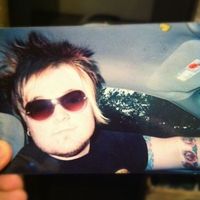
In 1997, I thought baggy jeans, bleached hair, and blasting Korn made me cool. Nobody else agreed. But looking back, I see something different…someone who didn’t wait for permission to be himself.

Laying eyes on me as I walked through the door, Grandma declared,

“BOY… are you some kind of fruit?!”

It was 1997.


That summer smelled like hot pavement, cheap cologne, and rebellion. I spent my days skating and blasting Korn, The Smashing Pumpkins, Foo Fighters, Third Eye Blind, Deftones, Green Day, and Rage Against the Machine. I even picked up Three Dollar Bill, Y’all before anyone knew what it would become. A backwards Yankees 59FIFTY fitted felt like armor. Baggy jeans, a ball chain, Etnies…I thought I was dialed in.


Reality? I looked like a sausage on wheels.


Back then, “cool” had rules, and I wasn’t following any of them.


Middle school was simple. You were either a jock, a waver, or… whatever we were. I had a crew, a ragtag group of misfits, and the truth is, we were not cool. None of us could get a girl’s number, let alone the courage to ask. We didn’t fit the mold, and we knew it. But somewhere in the middle of all that awkwardness and noise, I genuinely believed I was onto something.


I spray-painted “FREAK” across a white t-shirt. I took a spray bottle full of bleach to my black jeans and turned them into something that looked like neon cheetah print. The school security officer made me change, but it didn’t bother me. From where I stood, I was sticking it to the man…and that felt pretty damn dope.


There was something about those bands, those looks, that pulled me in. They didn’t ask permission. They didn’t wait for approval. They didn’t care what anyone thought. They decided what was cool, and they owned it. So I followed that thread. I cut my hair and tried to dye it platinum. It didn’t come out blonde…it came out Cisco-white. Thong Song white.


Which brings me back to my grandma, standing there in the doorway, looking at me like I had completely lost my mind. I looked her dead in the eyes and said, as seriously as I could muster, “I am no kind of fruit.” Then I laughed and went to my room. Probably fired up Street Fighter II Turbo, but I don’t quite remember.


Looking back now, I don’t see a kid who wasn’t cool. I see a kid who didn’t wait to be told he was. And I respect the hell out of that.


Because here’s the truth: most people never quite grasp…cool isn’t a fixed standard. It’s not something handed down by the crowd or defined by whatever’s trending at the moment. Cool is subjective. It always has been. But somewhere along the way, most of us forget that. We start watching instead of deciding. We start adjusting instead of committing. We start chasing what’s already been approved instead of trusting what resonates with us.

But the people we looked up to, the ones who actually shaped culture, they weren’t cool because someone told them they were. They were cool because they moved first. Because they committed fully. Because they owned it without flinching, even when people laughed or didn’t understand.


They didn’t wait for validation.

They created it.

That’s the shift.


If you spend your life chasing “cool,” you’ll always be late to it. You’ll always be one step behind whatever the world decides is acceptable next. But if you lean into what you think is cool…fully, unapologetically, and with intention, something starts to change. People can feel it. Not because you convinced them, but because you convinced yourself first.


And that kind of conviction is hard to ignore.


So wear the thing. Say the thing. Build the thing. Light the cigar no one else understands yet. Do it because it resonates with you…not because it’s been stamped with approval.


Because “cool” was never about fitting in.

It was always about standing firm long enough for the world to catch up.


Light Up & Lean In

Light Up & Lean In,

Joshua Stephens

More Posts

Liner Notes on Launch DateLiner Notes on Launch Date
Liner Notes on Launch Date

It's 1:27 a.m.


I'm sitting on the patio, smoking an Ecuadorian Habano by Camacho. Fitting, I suppose, if you know a little something about our DNA.


I'm not usually a night owl. Generally speaking, I'm pretty fond of my sleep. But tonight?


Tonight is different.


The world is asleep, and we're putting the finishing touches on something that's occupied just about every waking moment of our lives for the better part of 18 months.


In a few hours, Brolo Cigar Co. officially launches.


Even typing that feels strange.


There's a part of me that wants to write something profound about entrepreneurship. About taking risks, chasing dreams, making sacrifices, and all the other things people say when they're standing on the other side of something difficult.


But that's not really what's on my mind tonight.


People are.


A whole lot of people.


Somewhere along the way, this thing stopped being about cigars. Or maybe it was never really about cigars to begin with.


Over the last year, I've spent an extraordinary amount of time building community. Doing life with people. Showing up when things were good and leaning in when things got hard. I've met people who, whether they realize it or not, have fundamentally changed the trajectory of our lives.


And I don't mean that in some superficial, networking-event, exchanging-business-cards kind of way.


I mean the kind of people who become part of your story.


People like Will, Andrew, Ed, Pauly, Jay, Donald, and Adam. Time spent with Dru. A couple of Airbnbs shared with the Brolos. PT, Shaun, Doug, Devon, Mark and the banana caper.


Laughing so hard that your stomach hurts and waking up the next morning wondering how on earth you ended up surrounded by such a peculiar collection of human beings.


Somewhere out there, a group of people decided this little corner of the internet was worth investing in. Not just their time, but thousands of dollars of their own money to help grow our Discord community into something none of us could have imagined.


Braden, Coleangelo, Falcon, and the Steven's. You guys are something else.

Stefan, thank you for being such a constant encourager. Justin, Jonathan, Dixon, Skim, Fin, Frank, Devon, Dillon, David, and Garrett. Chaos Chat and the worldwide crew.


Good grief, what a cast of characters.


Then there are the people in this industry who extended a hand when they certainly didn't have to.


Matt Booth, Brandon Marsh, Todd Pribanic, Jared and Scott at Cayman, Zack Van Ingel at HDA. Daniel Lance, who came in clutch more than a few times. James and Angela, who believed in us from day one. The Kirchoffs at Bariay.


Our friends and media partners at Halfwheel, Cigar Journal, Cigar Dojo, and Cigar Coop.


You gave a couple of nobodies from Texas an opportunity to be heard, and that isn't something we take lightly.


Austin, Jen, Chris, and Brooke. We wouldn't be Brolo without you.


And then there's everybody else. The people who were part of our lives long before this crazy idea ever took shape.


Jim. Larry. Danny. Kevin. Stan at Paradox and the whole Renewal City crew. Andy and Andrew. Jordan, Kelly, Katie, Buddy, and Jeanine. Linda and Jeff. Our precious nieces and nephew. Aunt Jen and the seemingly endless supply of quilts you've sent our way.


Jake, Lilly, Noel, Gabe, and Todd. Michelle and Trinity. Mike Ford, you're a real one. Melissa, Andrea, Erin, and Jason, we love you. Aly and Chris. Clayton and Rebecca.


CG, you're the brother I wish I never had. 🤣


Justin Hunter and David Humes. The Smokin' Sounds crew. Dwayne, Valerie, Darryl, Vidal, and Jessica. Rebecca and Ian. Bryan Schmidt and Ron. Brad for the referrals, and both Glen(n)s.


Ben, who's been moderating this circus since day one.


Chef CP, Ben and LaTonia. The Bruces. Glove Guy and the Cohiba Cult Leader, Adam. Mr. Bosmer, whose kindness never seems to run out. Guffey and that green hat. Chunk, who wrote a letter that inspired me more than he probably knows.

The Four-Foot Man Eating ChickenThe Four-Foot Man Eating Chicken
The Four-Foot Man Eating Chicken

The other day I was burning cigars at six in the morning with some friends. One of them reminded me of a scene from 1994's The Little Rascals.


Essentially, Buckwheat and Porky set up a sideshow booth to raise money to rebuild their secret clubhouse. They hype up this mysterious, terrifying attraction. A hideous mutant. An incredible, four-foot man-eating chicken!


Naturally, people pay to see this monstrosity.


But when they open the little door, expecting some terrifying creature that devours human beings, they're greeted by a boy dressed like a grown man, eating a bucket of Kentucky Fried Chicken.


Technically, they delivered exactly what they advertised.


A four-foot man. Eating chicken.


How many times have we signed up for something with a particular expectation, only to get bamboozled? Hoodwinked? Flimflammed?


I remember being a kid, saving UPC codes from boxes of Honey Smacks for some sweet decoder ring that promised a world of mystery and intrigue. Only to discover that this magical piece of equipment was little more than a cheap piece of plastic.


Or, more seriously, I remember sitting in anonymous rooms surrounded by people who, through the very best decision-making abilities they possessed, had arrived at the end of their rope. People who spent years chasing something that promised them everything and eventually took nearly everything away.


I think this happens with TEMU purchases, too. But I wouldn't know. Maybe Kaitlyn could speak into that.


The point is, sometimes what we're sold and what we receive are two entirely different things.


But I've been wondering lately if the problem isn't always what we're being sold.


Maybe the problem is what we're expecting to get out of it.


In Proverbs 4:25, we're instructed to let our eyes look straight ahead and fix our gaze directly before us.


Pretty straightforward advice.


And yet, despite this nugget of wisdom being thousands of years old, I've apparently failed to fully digest it.

Because, much like a raccoon, I like shiny things.


And I get distracted. Easily.


In fact, while writing this, I went down a rabbit hole trying to figure out WHY raccoons are so fascinated with shiny objects. Which, when you think about it, is a pretty fitting example of the very thing I'm trying to write about.


Anyway.


Turns out, raccoons are incredibly curious and intelligent creatures. They explore much of their environment through touch, using remarkably sensitive front paws to investigate whatever catches their attention.


There's even an old trapping method built around the idea that a raccoon will reach into a small opening to grab something desirable and, rather than release it, remain caught.


Now, whether raccoons actually have some special affinity for shiny objects is debatable. But the illustration is too good to pass up.


What caught my attention wasn't the shiny object itself.


It was the unwillingness to let go.


Something catches their attention. They reach for it. They grab hold. And suddenly, the very thing they wanted becomes the thing holding them captive.


Ahh yes.


How I can relate.


I'll be on a good path. Working out. Eating right. Practicing spiritual principles. Being intentional with my time. Doing the things I know I ought to be doing.


And then BAM.


I've got my hands stuck in some proverbial trap.


These days, it doesn't look like drugs. But food, lust, ego, and a whole host of other things still have a way of taking me down side quests I've yet to fully surrender.


And sometimes, the side quests aren't even bad things.


Sometimes they're really good things.


Take, for instance, something that happened recently.


Some old friends of mine reached out about putting a band together. For the first time in a long time, that sounded like a whole lot of fun.


So what did I do?

The Slow Burn: Intention & ImpactThe Slow Burn: Intention & Impact
The Slow Burn: Intention & Impact

I was up at a cigar lounge recently and ran into an old buddy. Well, maybe buddy is a stretch. More of an acquaintance, but someone I've spent a fair amount of time with.


They were having a hard day, and I, unintentionally, was razzing them a bit too hard. You know how it goes. A little banter between guys, giving each other a hard time, nothing particularly malicious. Except this time, I apparently didn't read the room very well. Which, if you know me, probably isn't all that surprising. Sometimes I'm about as emotionally perceptive as a brick.


Anyway, I ended up causing offense.


Fortunately, we had a conversation about it. And while I won't get into the particulars, some of the feedback I received hit home. It was something along the lines of, "You have a narrow conversational scope. If people aren't talking about what you want to talk about, you change the subject."


Ouch.


Now, there's a part of me that wanted to immediately defend myself. Explain my intentions, provide some context, or point out the various ways that assessment wasn't entirely accurate. But instead, I tried to listen. Not to respond, but to understand. And the more I listened, the more I realized that, to a degree, they were right.


I mean...it's true.


There are plenty of things I have a hard time conversing about. Small talk, for instance. I've never been particularly good at it. I'd much rather learn about who someone is, where they've been, what they've overcome, where they hope to go, and what drives them. I want to know what makes someone tick. What keeps them up at night. What they're passionate about. What they've learned along the way. Those are the conversations that get me going. Not because I believe other conversations are beneath me, but because I'm far more interested in who someone is than what someone does.


In fact, I have a hard time talking about work. Not because I don't enjoy working. Quite the contrary. I love building things, creating things, and seeing ideas come to fruition. But I've spent a considerable amount of my life trying to separate my identity from my accomplishments. I've learned, sometimes the hard way, that what I do isn't necessarily who I am. And while I certainly don't want to dismiss someone's pedigree, accomplishments, or the things they've worked hard to achieve, I don't particularly want those things to be the foundation of our relationship either.


But alas...there I was. Causing offense with a brother.


After some retrospection, I started to recognize that perhaps there was more truth to the feedback than I initially wanted to admit. I've been in my head a lot lately. Cigars, blends, packaging, distribution, licensing, profit and loss, margins, inventory, retail relationships...the list goes on. Kaitlyn and I have been pouring an enormous amount of ourselves into building Brolo. And while it's something we're incredibly passionate about, it's also something that has consumed a considerable amount of my mental bandwidth.


And, although it's difficult to admit, I think my pride has started surfacing.


Not necessarily in the way we traditionally think about pride. I'm not walking around thinking I'm better than everyone else, or that what I'm doing is somehow more important than what someone else is doing. At least, I don't think I am. But there's a subtle kind of pride that can creep in when you're building something. A kind that convinces you that because your intentions are good, your actions must be too. That because you're working toward something meaningful, the things demanding your attention are somehow justified.


And somewhere in the process of building something centered around connection, I may have become a little disconnected myself.


That's a hard thing to admit.


Here's where it gets interesting...


As I was processing the conversation, I found myself mentally building a case for why this person's assessment of me wasn't entirely fair. I mean, I personally volunteer hours of my week serving in a local ministry. And it's not isolated to the things I'm particularly talented at, like music or connecting with people. It's unloading trucks at seven in the morning, running a service from 8:15 to 9:30, attending another service at ten, breaking everything down around 11:30, and finally getting home somewhere around 1:30 in the afternoon. It's early Saturday mornings spent studying Scripture with other men, being challenged, sharpened, and spiritually formed. It's helping people at the drop of a hat, showing up when it's inconvenient, and making myself available when there isn't much time to spare.


Surely that counts for something, right?


And then I caught myself.


I was using the good things I do as evidence that I couldn't possibly have gotten this one thing wrong.


As if serving someone on Sunday somehow excuses dismissing someone on Tuesday. As if being intentional in one relationship guarantees I'm being intentional in another. As if all the things I do behind the scenes somehow negate the experience someone has with me when we're sitting across from one another.


The reality is, this person doesn't see all of that. They don't see the early mornings, the late nights, the conversations, the service, or the countless other things that occupy my time. Nor should they have to. They only know the version of me they've experienced.


And apparently, at least in this particular instance, that version wasn't particularly flattering.


And that's on me.


I think there's something worth examining here, especially for those of us who consider ourselves people of faith. It's one thing to be intentional about serving others when we've specifically set aside time to serve. It's another thing entirely to carry that same posture into the ordinary, unplanned moments of our lives. The moments when we're distracted, tired, preoccupied, or simply trying to enjoy a cigar.


It's easy to love people when loving people is what we've set out to do. But what about when we're doing something else?


Maybe that's where some of the real spiritual formation happens. Not necessarily in the things we intentionally do for others, but in the way we treat people when we're not thinking about ourselves as servants.

And man...that's convicting.


With all that being said, there's another side to this that I think is equally important.


I can't be all things to all people. Because eventually, trying to be everything to everyone will make me someone to no one.


I've spent enough time on this earth to recognize that not every relationship is meant to become a lifelong friendship. Not every personality is going to mesh with mine. Not everyone is going to understand my sense of humor, my priorities, my passions, or the season of life I'm walking through. And that's okay. Some relationships are worth letting go. Others are worth pursuing. Some require a little distance, while others require a little more intentionality.

The Slow Burn: When Good Intentions Get in the WayThe Slow Burn: When Good Intentions Get in the Way
The Slow Burn: When Good Intentions Get in the Way

Picture this. It's a beautiful Texas fall day. High in the 90s, low in the 70s, and blue skies as far as the eye can see. You know, fall in Texas. Where the leaves change colors sometime around Christmas and you can still get a sunburn walking to your mailbox.


It just so happens that I have a little downtime between where I need to be and whatever the world has to offer. And today, the world has to offer one heck of a haircut.


I've had just about every haircut imaginable. Chili bowl, undercut, mohawk, fauxhawk, the Liam Gallagher, the Noel Gallagher, Nikki Sixx, and everything in between. At 42 years old, I find myself walking this strange tightrope between presenting myself as a respectable professional and expressing who I actually am.


Heck, at this point, I don't know that I care about looking professional anymore. I'd rather look like me.


But my mullet had gotten atrocious.


As I've aged, my grays have become increasingly wiry. I understand Jack Russell terriers so much more now. It's like every gray hair has developed its own personality, none of which have any interest in cooperating with the others.


The crazy thing is, although the mop top has changed over the years, I'm a creature of habit. My friend Jordan has cut my hair for nearly 20 years, and she's awesome at it. We both grew up in the emo scene. Ya know, tight black skinny jeans, emo swoops, guyliner, and "TONIGHT WILL BE THE NIGHT THAT I WILL FALL FOR YOU, OVER AGAIN" playing somewhere in the background.


Jordan isn't just my hairstylist. She's a close friend. So the thought of letting someone else cut my hair felt a little like Judas collecting his thirty pieces of silver.


But people want what people want.


Enter Manny.


Manny is a relatively new acquaintance. One of those guys you barely know but somehow feel like you've known your entire life.


Kaitlyn and I serve at a local startup church on Sundays and pretty much whenever we're needed in between. What a lot of people don't realize about a startup church is that, for the whole thing to work, you've got to serve. A LOT.


Setup team. Praise and worship.


Hospitality. Children's ministry. Babies. Elementary school.


Sometimes you're teaching kiddos about Jesus, and other times you're praying for your own deliverance from a room full of screaming toddlers.


Maybe that's too real. But sometimes that's ministry.


Anyway, about two months earlier, I was talking to our pastor about how I felt a little out of place at church. Not because anyone had made me feel unwelcome. Quite the opposite, actually. But because I couldn't shake the feeling that I was the odd man out.


Remember that old Sesame Street song? "One of these things is not like the others."

Yeah. That one.


At six feet tall, with long hair and a body that looks like it's survived a West Coast graffiti war, I don't exactly blend in with the PTA families. The suburbanites. The Costco purchasers and Target shoppers.


Nothing wrong with any of that. They're wonderful people. I just felt different.

As my friend Pauly likes to remind me, I look like a cross between Stephen Wilson Jr. and Jeffrey Dahmer.


Not exactly the prototype for suburban church leadership, but these are the genes I was given, so I digress.


And somewhere in the middle of all that, I met Manny.


Now, before getting my ears lowered, I decided to stop by a renowned cigar lounge. I had some time to kill, and there's hardly a better way to spend an afternoon than sitting down with a good cigar and absolutely nowhere to be.


I was wearing my Brolo hat. The one with our "Light Up & Lean In" mantra.

The owner noticed it and asked if I was a brand rep.


Now, I could have launched into the whole story about how Kaitlyn and I have poured our hearts, lives, and resources into this little cigar company. How we're betting on an idea that connection matters more than hype. How this thing is so much more personal than simply selling tobacco.


But I didn't.


"Yup. I rep cigars."


Truthfully, I wasn't there to sell Brolo. I was there as a consumer. Just a dude killing time before getting a haircut.


I picked up a Machetero, a budget-friendly Meerapfel cigar, and an Arayo. The owner asked a few high-level questions about Brolo, and I answered them, albeit somewhat vaguely. Not because I don't believe in what we're building, but because I wasn't interested in turning every interaction into a sales pitch.


Sometimes I just want to be a guy who enjoys cigars.


But then the train derailed.


This particular establishment has multiple lounges within the same business. Access depends on your level of investment. Spend enough money, and you can enjoy the privilege of sitting in a different room from everyone else.


Now, if you know anything about Brolo, you know our philosophy is pretty simple.


Everyone gets a seat at the table.


I've never been particularly fond of the velvet-rope mentality. The idea that the quality of your company should somehow be determined by the thickness of your wallet has always rubbed me the wrong way.


But hey, different strokes.


So I found myself in the main lounge. You know, with all the peasants.


As I sat there enjoying my cigar, I overheard a conversation between two gentlemen. They were talking about two brothers struggling with alcoholism.


Immediately, my ears perked up.


For those unfamiliar with my story, I've spent more than a decade in recovery. Addiction isn't something I've merely studied or observed from a distance. I've lived it. I've watched it destroy relationships, consume people I love, and nearly take everything from me.


So when I hear someone talking about alcoholism, particularly when they're talking about people they care about, something inside me leans in.


For about thirty seconds, I sat there listening. And then I started feeling uncomfortable. Not because of what they were saying, but because I felt like I was eavesdropping on something deeply personal.


So I got up, walked over, and introduced myself.


"Hey guys, I couldn't help but overhear your conversation. And honestly, it made me feel like I might be exactly where I'm supposed to be today. Mind if I join you?"


One of the gentlemen, Cabinet Selección in hand, looked at me and said:


"Actually, this is a client meeting, and we'd prefer to keep it that way."


Ouch.


I stood there for a moment, processing what had just happened.


"That makes sense," I responded.


And I quietly walked back to my corner, sat down, and continued smoking my Machetero.


Wondering what could have been.


Internally, though?


I was raging.


Do you know who I am?

I'm here to help.

I've lived through the very thing you're talking about.

You have no idea what I might have been able to offer.


And there it was.

My ego.

Not theirs.

Mine.


Now, don't get me wrong. I understand boundaries. I understand business meetings. Heck, I'm in the business of making sales myself. And I certainly understand that two strangers aren't obligated to invite some long-haired, tattooed guy into their conversation simply because he overheard something that resonated with him.


But in that moment, I didn't feel like I had been given a boundary.


I felt like I had been dismissed.


And there's a difference between what someone does to you and what you tell yourself they've done to you.


At least, that's what I'm learning.


My immediate reaction was to make assumptions. About their motives. Their character. Their priorities. I told myself they cared more about closing a sale than helping someone struggling with addiction.

But here's the uncomfortable truth.


I didn't actually know that.


I knew what I'd heard. I knew what I'd experienced. But everything else was a story I had written in my own head.

And wouldn't you know it, in that story, I was the good guy.


The compassionate one.

The one who cared.

The one who understood.


Funny how that works.


I had walked into that lounge already carrying some preconceived ideas about its culture. The private rooms, the hierarchy, the prestige. And the moment someone rejected my invitation to connect, I used it as confirmation of everything I already believed.


Prestige over patina.


At least, that's how I wanted to see it.

But the longer I sat there, the more uncomfortable I became with my own response.


Because if my intention was genuinely to help, why was I so offended that they didn't want my help?


If my desire was to serve, why did I suddenly feel the need to establish my credentials?


If I truly believed that everyone deserves a seat at the table, why was I so quick to judge the people sitting at another one?


That's the thing about ego.


It doesn't always show up wearing arrogance. Sometimes it shows up wearing good intentions.


Sometimes ego looks like wanting recognition. Sometimes it looks like needing to be right. Sometimes it looks like believing that because you've walked through something difficult, you've earned the right to speak into someone else's life.


And sometimes it looks like being offended when someone doesn't recognize the value you believe you bring.


I didn't need those gentlemen to know my story.


I wanted them to.


There's a difference.


And that realization stung considerably more than their rejection.


Because growth requires us to confront the parts of ourselves we'd rather explain away.


It's easy to recognize pride in other people. We can spot arrogance from across the room. We can identify entitlement, vanity, and self-importance without breaking a sweat.


But recognizing those same characteristics in ourselves?


That's a different animal.


Scripture tells us in Proverbs 16:18 that pride goes before destruction, and a haughty spirit before a fall.


I've heard that verse a thousand times.


But I think we often imagine pride as something loud. Something obvious. The guy pounding his chest, demanding respect, telling everyone how important he is.


Yet pride can be remarkably quiet.


It can sit in the corner of a cigar lounge, smoking a budget-friendly cigar, convincing itself that everyone else is the problem.


And the danger isn't simply that ego makes us unpleasant people.


It's that ego makes us unteachable.


When we're convinced that our intentions are pure, we stop examining our motives. When we're convinced that we're right, we stop listening. When we're convinced that we've been wronged, we stop asking what the situation might reveal about us.


And when we stop examining, listening, and learning, we stop growing.


I think about this a lot in recovery.


One of the greatest gifts recovery has given me is the understanding that I don't have to be the smartest guy in the room. I don't have to have all the answers. I don't have to turn every experience into an opportunity to prove that I've learned something.


Sometimes the most meaningful thing I can do is shut up and listen.


And sometimes the most humbling thing I can do is accept that someone doesn't need what I have to offer.


That doesn't make my experience less valuable.


It just means the world doesn't revolve around it.


The irony of that afternoon wasn't lost on me.


Earlier, I'd been wrestling with feeling out of place at church because I didn't look like everyone else. And now I was sitting in a cigar lounge, upset because someone hadn't welcomed me into their space. In both situations, I was allowing my perception of how other people saw me to influence how I saw myself.


And perhaps even more importantly, how I saw them.


All because I was so concerned with being understood.


Maybe that's where ego does some of its greatest damage.


It convinces us that being understood is more important than understanding.

That being respected is more important than respecting.


That having something valuable to say is more important than knowing when to say it.


I eventually finished my cigar and headed out to get that haircut.


And while Manny was working on my increasingly unruly mop, I kept thinking about that interaction.


Not because I had come up with some clever response I wished I'd delivered.

But because I realized the experience had exposed something in me that still needed work.


And isn't that the point?


Not the haircut. Not the cigars. Not the recognition.


The work.


The ongoing, uncomfortable, sometimes embarrassing process of becoming a better human being.


A better husband. A better friend. A better brother. A better follower of Christ.


I've spent years learning that transformation rarely happens when everything is going my way. More often, it happens when something rubs me the wrong way and I have to decide whether I'm going to defend myself or examine myself.


That afternoon, two strangers didn't invite me into their conversation.


And somehow, without even knowing it, they gave me something worth thinking about.


I went into that lounge believing I might have something to teach someone.


I left realizing I still had something to learn.


Maybe that's what growth looks like.


Not being the most important person at the table.


Not even being invited to the table.


But being humble enough to recognize that every encounter, even the uncomfortable ones, has something to teach us.


Because the moment we become too important to be corrected, we become too proud to grow.


And I'd rather spend the rest of my life growing than the rest of my life being right.

The Slow Burn:  BlacktopsThe Slow Burn:  Blacktops
The Slow Burn: Blacktops

When I heard “dress for the job you want,” I grabbed the flare cuts and snip toes, layered a tank under a leather jacket, and let the locks fly beneath a high-crown trucker hat. Aspiring to more than a normal nine-to-five, I was going to be a rockstar, come hell or high water.


And boy…there was quite a bit of hell and high water.


Touring the country is a lot more romantic on paper and film. You tend to capture the highlights: audiences singing along to your songs, road shenanigans, funny skits, packed rooms. High-energy dopamine hits delivered moment after moment.


But that’s not the full picture.


Dreams require sacrifice.


Like driving a tour bus through Iowa at 3:30 in the morning. Or getting a social media notification of wedding photos from one of your best friends...another wedding you weren’t able to attend, laid at the altar of dreams pursued.


You drift a little farther from your closest circle with each passing zip code.


You watch friends behind screens build lives. They get married, have children, buy houses, get promotions, while you’re washing jeans in a Love’s sink. But you tell yourself living as a musical gypsy is freer than surrendering to some construct built by “the man.”


Then the microwave beeps, waking you from the autopilot life has become. You grab your $2.99 burrito and head back outside.


A slave to truck stops and blacktops.


The show must go on at all costs.


The American Dream doesn’t feel so dreamy.


So you embrace the struggle, pursuing what could be.


But if you pay attention, there are beautiful moments between those yellow lines. A sunrise on the horizon kissing the tips of corn stalks. Stumbling onto a melody somewhere between miles of asphalt while the rest of the band sleeps. Windows cracked, wind rolling through a van full of exhausted souls singing Waylon Jennings at the top of their lungs.


Crowds responding to your art in unison.


The venues get bigger. Eventually, you’re not loading in anymore. Road crews take over. Things start looking a little more like the dream you imagined.


Yet somehow, in the middle of all that magic, you can still miss the forest for the trees.

The Slow Burn: Kansas City Cigar FestivalThe Slow Burn: Kansas City Cigar Festival
The Slow Burn: Kansas City Cigar Festival

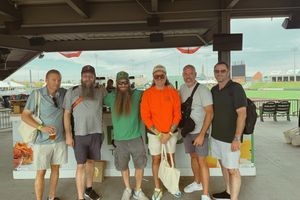
Last week, several of the Brolos and I attended the Kansas City Cigar Festival. The festival was Saturday, but we decided to make a weekend out of it. Because apparently a bunch of grown men with an unhealthy amount of cigars can't simply arrive at an event, attend it, and go home like normal people.


We left Dallas around 6-ish Friday morning and pulled into Kansas City around 4:45 that afternoon. In between were gas stations, snacks, questionable decisions, lunch at Bite Me BBQ in Wichita, and a quick stop at Old Town Cigars. Shoutout to Old Town, by the way. They had an awesome selection of boutique cigars, including some of the old-school Metapas from before Foundation rebranded them as Aksum. Those aren't exactly sitting on every shelf anymore.


But I'm getting ahead of myself.


Shawn arrived at my place a few minutes late and blamed traffic. In his defense, he wasn't lying. 380 in the morning is a complete nightmare. North Texas has grown at a ridiculous pace, and it seems like no amount of construction can keep up. Every road is simultaneously being expanded and somehow getting worse.


We loaded Shawn up and headed to a bougie neighborhood in Prosper to grab Justin. We made it through the gate, pulled up to the house, and there he was...sitting in a camp chair, bags packed, already smoking a cigar.


It was a sight for sore eyes.


Naturally, we immediately started roasting him for not even making it to 6:00 a.m. before lighting one up. His defense was that he was "afraid he would be left out." Justin is the newest cigar smoker in the group, but the man put the first number on the board that weekend. Kudos.


Next up was Mr. Babyface himself, Mark. Picture this: it's roughly 5:30 in the morning and Mark is standing outside next to his truck, bags packed, looking like his parents just told him they were taking him to Disney World. Everybody was ready. And for the next eight hours, we absolutely destroyed my car.


Four men. A few boxes of cigars. Windows cracked. Ash everywhere. I don't think it will ever smell the same again. But that's the price you pay for making memories around something you love.


We put Justin in charge of picking lunch.


This was our first mistake.

The Slow Burn: MaineThe Slow Burn: Maine
The Slow Burn: Maine

A reflection on Maine and the fear, pressure, and freedom that come with finally letting go of something you created.

Heritage: Recently, I’ve been thinking quite a bit about heritage and what that word actually means to me.Heritage: Recently, I’ve been thinking quite a bit about heritage and what that word actually means to me.
Heritage: Recently, I’ve been thinking quite a bit about heritage and what that word actually means to me.

It’s an all-encompassing term.


There are the tangible things and the intangible ones. The personal and the cultural. Traditions, values, stories, recipes, land, names, beliefs, habits, and physical objects passed from one generation to the next.


Some things are handed to us intentionally.

Others just arrive.


Building Brolo has me thinking about heritage quite a bit.


The cigar industry, maybe more than most, loves heritage. Many brands benchmark their quality against generational pedigrees, old-world traditions, luxury positioning, or some combination of the three. Families who have worked with tobacco for generations. Names that stretch back a hundred years or more. Stories with roots deep enough to make whatever they're selling today feel connected to something much older.

And there's something beautiful about that.


But where does that leave a kid like me?


I didn't grow up with a mother and father.


There isn't some great family enterprise being handed down to me. I didn't serve in the Armed Forces, and the only time I was involved with law enforcement was usually in the back of a squad car.


What the heck is my heritage?


And if heritage matters so much, how am I supposed to compete with that?


So I started digging.


Not through ancestry records or old family photographs, but through the things that got me here. The memories. The scars. The people. The failures. The things I learned accidentally and the things life taught me, whether I wanted the lesson or not.


I started asking myself:


What makes Brolo, Brolo?


The first image that came to mind wasn't tobacco.


It was a hay bale.


I was probably six or seven years old.


During the summer, my Grandma would drop me off for a week at my birth mother's trailer in East Texas, back behind the Pine Curtain.


Every summer, I dreaded it.


My second stepdad was quite a doozy...a real piece of work. Abusive. Violent. Looking back now, I can see he was probably just an angry boy trapped inside a man's body.


But when you're six, you don't have that kind of perspective.


You just know you're scared.


They lived in the country....or, as East Texans pronounce it, the cunnnn-trrrryyyyyyyy.


The acreage seemed to stretch forever, with a little creek running along the back of the property. My mother worked all day as a nurse, and my stepdad worked as a carpenter, taking odd jobs here and there.

I don't remember him being particularly great at woodworking.


But the man sure knew how to rip a doobie.


Wherever they were, I wasn't.


Most days, I was on my own, traversing the countryside. Climbing hay bales. Jumping hay bales. Falling off hay bales.


And, eventually, crying next to hay bales.

I remember getting hurt out there once.

And I remember being angry with myself for getting hurt.


Scared because I didn't know if I'd be able to survive a sprained ankle, let alone another week unsupervised.


Broken because I was alone and hurting.

And nobody showed up that day to help me.


Although that was the first time I remember feeling it, it certainly wasn't the last.


Those experiences taught me independence.


Eventually, they also taught me control.

If nobody is coming, you learn to handle things yourself. You learn to anticipate problems. You learn not to need much. You learn how to survive.


Useful skills.

Until they're not.


Because somewhere along the way, independence can become isolation. Self-reliance can become control. And learning not to need anyone can leave you desperately wanting someone.


Maybe that's heritage, too.


Not everything passed down comes in a box.


A few weeks ago, I went to the doctor for a regularly scheduled checkup. Somewhere between the blood pressure cuff and the usual questions, she started asking about my family.


Heart disease?

Cancer?

Diabetes?

High blood pressure?


She was trying to understand my family history...to identify the things buried somewhere in my DNA that might eventually become part of my story.


In other words, she wanted to know:

What runs in your family?


It's a clinical question.

But I've thought about it differently ever since. Because a lot more than disease runs in families.


Work ethic runs in families.

Faith runs in families.

Temper runs in families.

Generosity runs in families.

Addiction runs in families.

The way we handle money. The way we argue. The way we love. The way we apologize....or don't. The things we celebrate and the things we refuse to talk about.


Somewhere along the way, all of it becomes inheritance.


We tend to romanticize heritage.


Grandpa's watch. Dad's old truck. Mom's recipe written in her handwriting. The family Bible with names and dates scribbled across pages yellowed by time.

And those things matter.


But heritage has a shadow side, too.


Some things are worth preserving.

Some things are worth restoring.


And some things need to end with us.


My childhood was a lonely one through no fault of my own.


As I got older, I started pursuing people.

At first, probably because I was afraid to be alone.


I was tired of being alone.

I was starving for belonging.

But somewhere in that pursuit, I discovered something much better than simply not being alone.


I found connection.


If this were one of my gospel-centered recovery pieces, this is probably where I'd spend the next thousand words talking about how human beings were created for connection.


And I believe that.


I believe true connection begins vertically...with God...and that healthy relationships with one another are a by-product of that relationship.


But that's another rabbit hole for another day.


Back to connection.


Because that's what Brolo is about.


Not heritage manufactured through some bullshit origin story.


Not luxury for luxury's sake.


Not pretending we've been making cigars since 1873.


Connection.


It's the early-morning text from a friend encouraging you to succeed while simultaneously making light of your many proclivities.


It's the random Tuesday-night HERF where, for whatever reason, the whole crew shows up, and you belly laugh until your face hurts.


It's an early-morning coffee where somebody finally stops saying they're "good" and tells you what's actually going on.


It's spending so much time smoking cigars together that you know your buddy's palate almost as well as your own. You know what he's going to love. You know what he's going to hate. And occasionally, you make a recommendation that he actually likes.


It's getting bombed by one of the Brolo's.


It's seeing the UPS truck turn onto your street....or maybe even chasing it down, and feeling that little dopamine hit because you know there's a box headed your way.


It's knowing that whatever ails you, somebody is rooting for you.


It's complete strangers finding each other in some random corner of Discord or Reddit, sharing a cigar through a screen, and eventually becoming friends in real life.


Those things probably don't sound like heritage.


At least not the way the word is usually sold to us.


There aren't any centuries-old family photographs.


No tobacco fields passed from father to son.


No crest.

No pedigree.


But maybe I've been thinking about heritage all wrong.


Maybe heritage isn't just about where you came from. Maybe it's about what you carry forward.


And maybe the things we weren't given are sometimes the very things we become most determined to give away.


I didn't inherit a great legacy of connection.


So I built my life around finding it.


And now we're building Brolo around giving it away.


Maybe that's my heritage.


Not the kind printed on the inside of a cigar box. Not a family crest, a famous last name, or some romantic story about generations of men who came before me.


It's messier than that.


There's some good in it. There's some bad. There are things I'm proud to carry forward and others I've spent most of my adult life trying to put down.


But all of it got me here.


And I suspect the same is true for you.


What's your heritage?


Not just where your family came from or the traditions you grew up with.


What did you inherit?

What runs in your family?

What did someone teach you without ever sitting you down to teach it?


What wounds shaped you?

What values stuck?

What traditions still matter?


What parts of the people who came before you can you see when you look in the mirror?


And maybe more importantly:

What are you doing with it?


Because at some point, we stop being merely the recipients of heritage.


We become responsible for it.

We decide what gets carried forward.

What gets restored.

What gets rewritten.

And what ends with us.


Heritage isn't just the story of the people who came before you.


It's happening right now.


In the way you raise your kids. The way you love your spouse. The way you treat your friends. The work you put your hands to. The things you make time for. The things you refuse to compromise. The table you build and the people you invite to sit around it.


Whether you realize it or not, you're leaving something behind.


When I think back to that little boy sitting alone in East Texas, hurt and scared and wondering if anybody was going to show up, I can't change his story.


Nobody came that day.


But I can decide what I do with what he gave me.


Maybe that's why showing up matters so much to me now.


Maybe that's why the table matters.

Maybe that's why connection matters.

Maybe that's why Brolo exists in the first place.


So maybe the better question isn't simply:

What's your heritage?


Maybe it's:

What will someone else inherit because you were here?


What impact have you made, or lack thereof?


And maybe that's convicting...if so...that was my intention.


Kaitlyn and I don't make cigars to avoid life. We make cigars to fully embrace it. The good, the bad...the hurt and the wins.


All around a shared smoke.

About This BlogAbout This Blog
About This Blog

I wrote this back in 2017 and never published it. I found it again. And reading the words of the man I was has been an uncomfortable experience. This post is a multipart post about shame and where we can find hope. Stay tuned for the next post in the series...