The Slow Burn: A Little Love from Louisiana
Recently, I received a care package from an online cigar brother with a note that read:
“Joshua, a little love from Louisiana. I lost my sister to addiction in 2018. I admire your strength and conviction to choose a better path daily. Some local sticks from LACC — Gris Gris + Padre Eligio. From Habano Port — 15th Anniversary (blended by Eladio Diaz) + a Lagniappe. Plus, a Connie for your lovely wife.”
For the new ones around here, I’ve been in recovery for nearly a decade.
After admitting I was powerless over my addiction and that my life had become unmanageable, I checked into a 30-day inpatient treatment facility on June 12th, 2017. The first couple of years in recovery were the hardest years of my life. Finding a new way to live required everything to change: people, places, and things.
Friends from active addiction. Bars. Clubs. Old hangouts. Even specific streets where I used. Music. Movies. Credit cards. Everything had to go.
I learned quickly that the brain is fascinating. Drugs alter neural pathways by hijacking natural reward systems, creating long-lasting neuroplastic changes. Neuroplasticity, the brain’s lifelong ability to reorganize its structure and function, is what drives the transition from voluntary use to compulsive addiction.
At least… that’s one component.
Then there’s Step Two:
“We came to believe that a Power greater than ourselves could restore us to sanity.”
A lot can be said here, but I’ll sum it up through my own experience.
I believe humans have an innate function to worship. Many associate “worship” strictly with religion: Christianity, Islam, Hinduism, Buddhism, etc. But Ed Welch, in Addictions: A Banquet in the Grave, proposes something deeper: addiction is ultimately a disorder of worship, where we elevate our desires above God.
He describes addiction as bondage …when a substance, activity, or state of mind becomes the center of life, defending itself against truth even in the face of consequences. In other words:
Addiction is idolatry.
The worship of created things (substances, validation, pleasure, escape, etc.) instead of the Creator.
Child Protective Services seized me from my home as a kid and placed me into the care of the State of Texas. I spent years in foster care before eventually being placed with my grandmother. She did the best she could, but the damage had already been done.
Abused. Confused. Unwanted. Left out.
Grief and loss shaped my early identity. Fear of abandonment turned into attachment challenges. Even though I longed for deep connection, forming secure relationships felt nearly impossible. Anxiety, depression, and emotional dysregulation weren’t occasional visitors; they were a way of life.
Research shows adopted individuals carry a higher risk of substance abuse disorders due to genetic predisposition, early trauma, and pre-birth exposure:
Amphetamines — 3.14× higher risk
Hallucinogens — 2.85× higher risk
Cocaine — 2.54× higher risk
Opioids — 2.21× higher risk
Alcohol — 1.84× higher risk
So there I am, a statistical poster child for addiction. A lot could be unpacked about the contributing factors and how I responded to my environment…but this isn’t a recovery blog.
It’s a cigar blog.
I say that because although addiction is part of my story, “addict” is not my identity. But it does play a major role in my why. Why did I create Brolo? What’s the real purpose behind it?
Haters will say it’s an opportunistic ploy for money, but that couldn’t be further from the truth. Startup costs are high. Profitability can take years. It’s a nickel-and-dime business model with heavy labor and razor-thin margins.
Brolo came to me in a dream.
Literally.
I saw a landscape of people desiring connection but not knowing how to achieve it. Lonely faces scattered across back patios, garages, and apartment balconies…smoking alone. I thought about the guys who walk into cigar lounges, make a purchase… and leave. Never staying for camaraderie. Never feeling like they belonged.
And I sensed a calling.
I saw outcasts. The marginalized. The broken. The misunderstood. The ones who feel… lost.
And eventually I realized something:
I wasn’t just seeing them.
I was searching for the younger version of myself, the one before I found tribe, before recovery, before purpose. The version that was barely hanging on by a thread. Spiritually bankrupt. Desperate for connection, but terrified to step into it.
Cigars didn’t save my life.
Recovery did. Faith did. Brotherhood did.
But cigars became the bridge.
They gave me a table to sit at. A reason to slow down. A space where conversation wasn’t forced…it unfolded naturally. You can sit in silence with another person for 90 minutes smoking, and somehow say more than words ever could.
No phones. No masks. No pretending.
Just presence.
And I realized something powerful:
Connection heals what addiction tries to counterfeit. Addiction promises belonging but delivers isolation. Brotherhood requires vulnerability but produces freedom.
Brolo was built to close that gap.
Not just to sell cigars… but to create spaces where people feel seen. Where the lonely find seats. Where the outcasts find tribe. Where conversations go deeper than wrapper shades, blends, and burn lines.
So when I opened that box from Louisiana… it wasn’t just cigars.
It was proof.
Proof that connection travels. Proof that brotherhood exists beyond geography. Proof that something born from brokenness can still build community.
Inside that package were incredible sticks, blends with story, craft, and heritage. But what I really received was love. Love from someone who understood loss. Someone who recognized the road I’ve walked because he’s walked his own. Someone who chose generosity over silence.
That’s the part that hit me.
Because years ago, I was the guy smoking alone…spiritually bankrupt, emotionally isolated, searching for something I couldn’t name. I had the ritual… but not the brotherhood.
And now… here I am.
Receiving care packages from brothers I’ve never met in person. Sharing cigars that carry stories deeper than tobacco. Building something rooted not in profit but in purpose.
Brolo was never just about the leaf.
It was — and always will be — about connection.
So to my brother in Louisiana… thank you. Not just for the cigars, but for the reminder that none of us have to smoke alone anymore.
Light Up & Lean In.

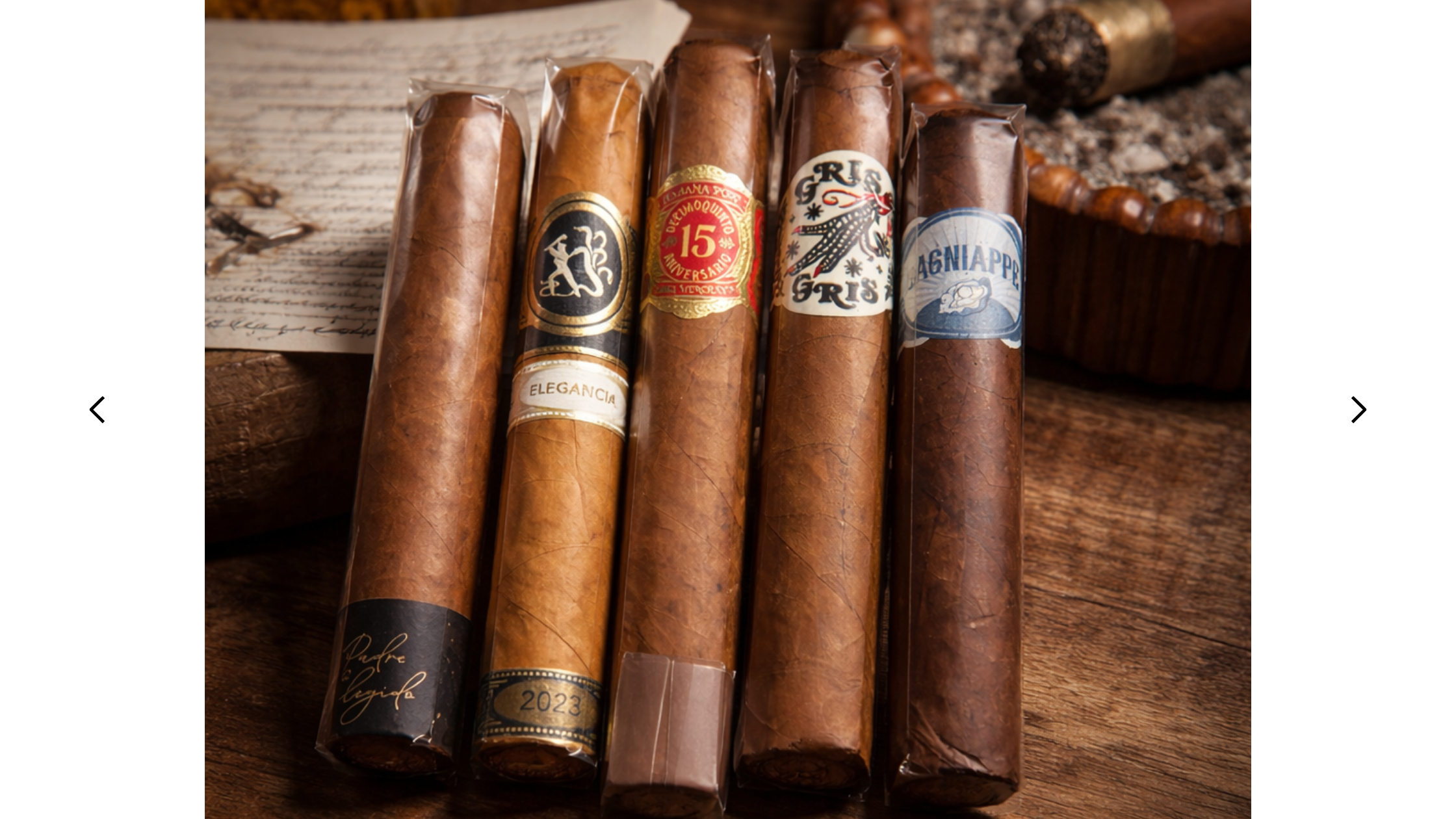
My cigar care package - THANK YOU, BROTHER!